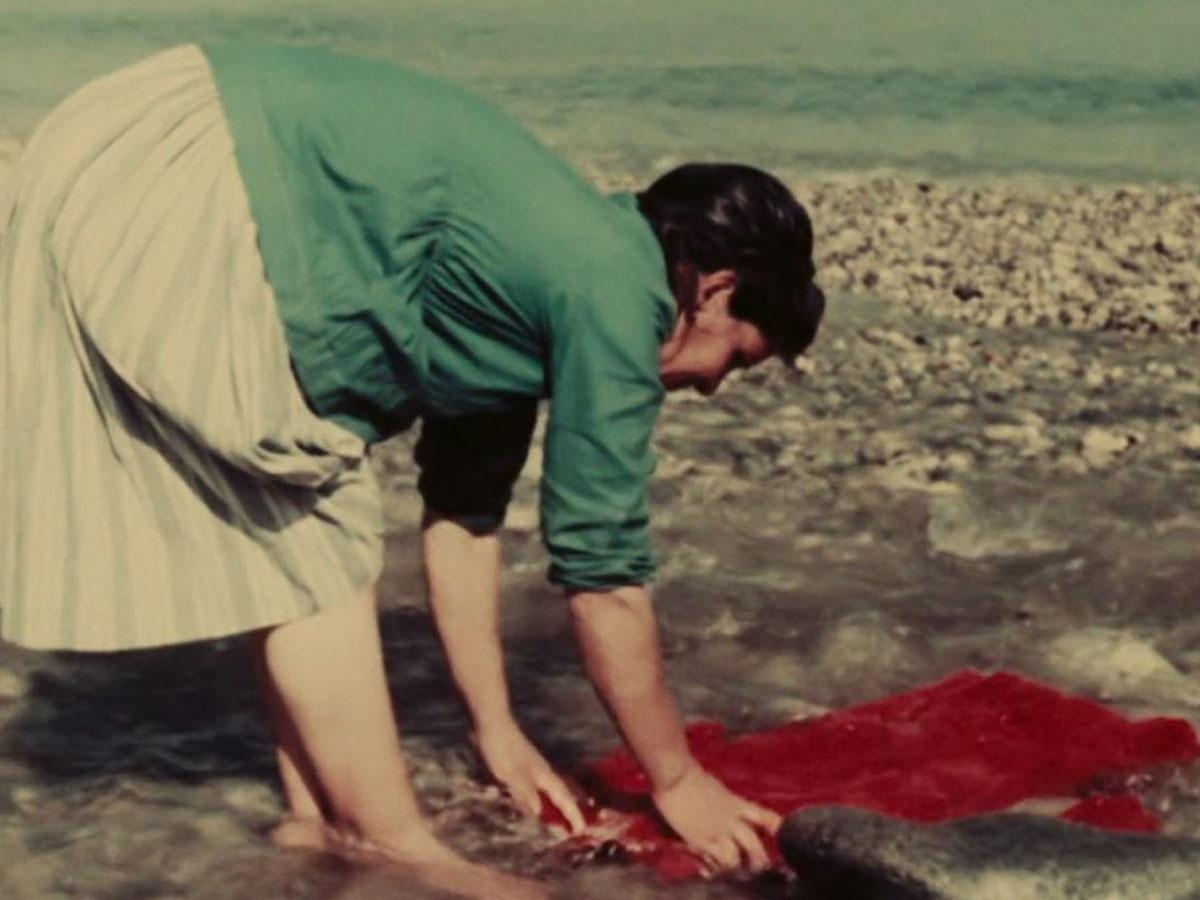
Two small wooden boats sail across the Strait of Messina. Beneath the water’s surface, swordfish swim towards them. They are right on time for the breeding season but unaware of the throwing spear that awaits them. Women wash clothes on the banks and sing traditional work songs.
This video diary depicts a young woman’s flat, the fears and fantasies about her body plainly revealed as she wakes up with a bloated face, full of self-loathing after a night of compulsive over-eating.
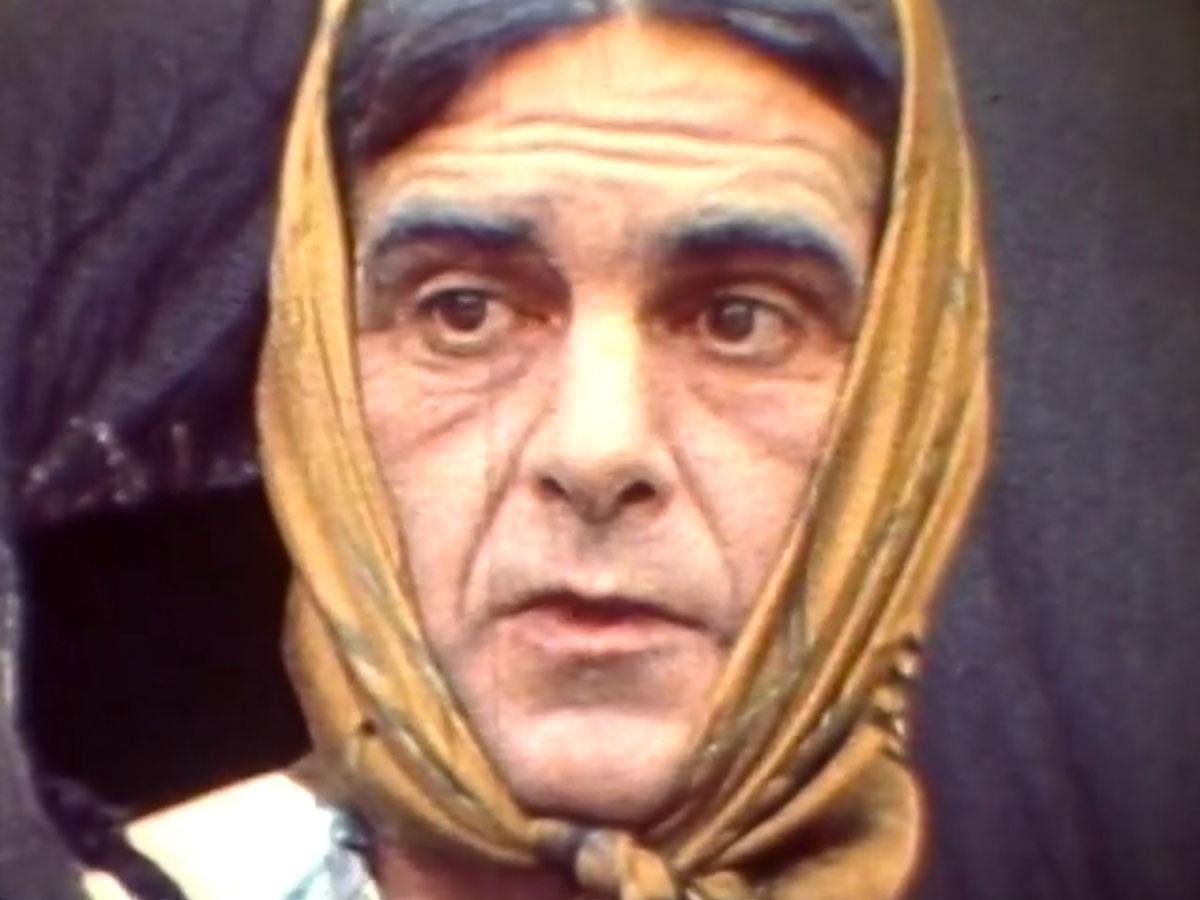
Immersed in the community of artists and local residents on the island, Nicola L. approached Ibiza as a living landscape, shaped by mythology and shared experiences. In Les têtes d’Ibiza, fiction and documentary flow seamlessly into one another.
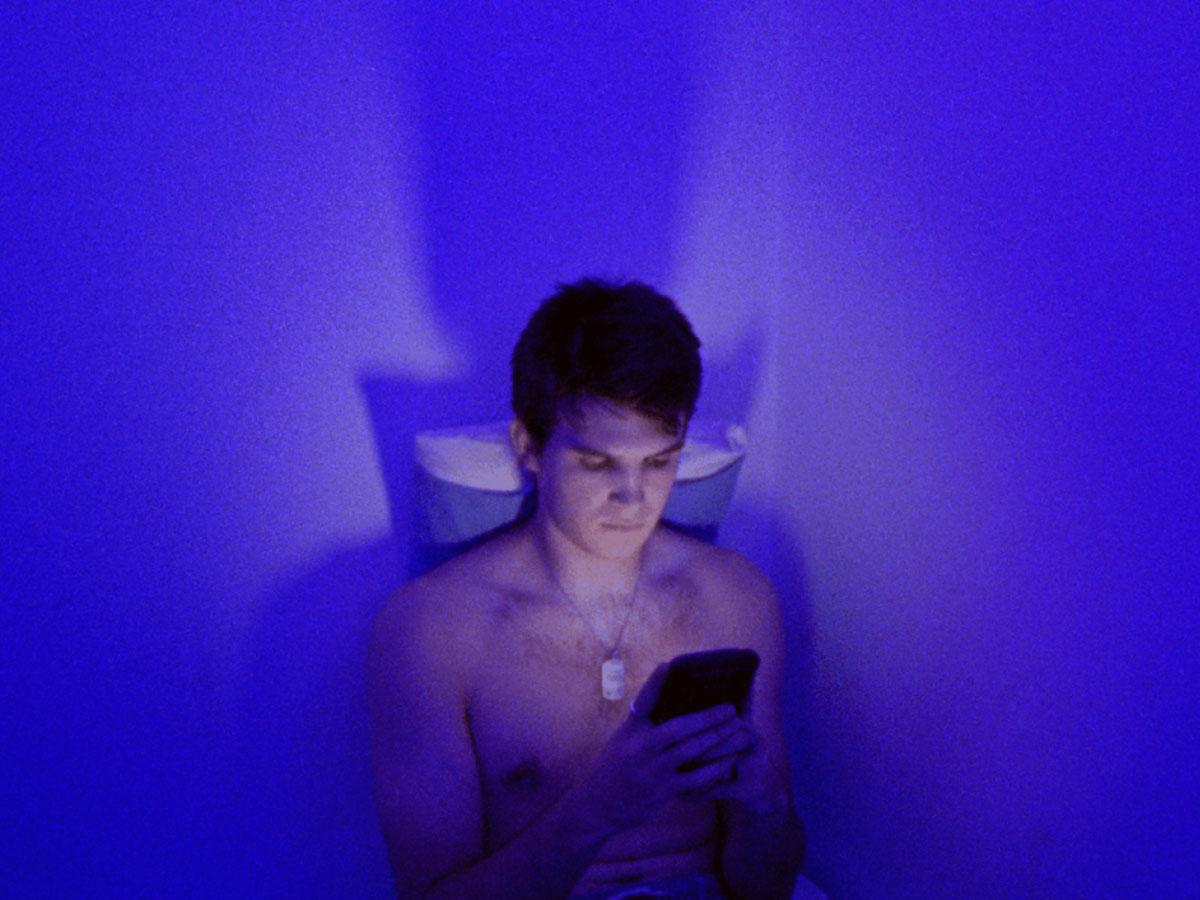
Pol Gasco Robles is enchanted by the golden mountains that tech capitalists and crypto bros promise him online. Material luxury is not a by-product of success, but a goal in itself. Gala Hernández Lópezasks him critical questions.
The routines of two women fuse together over time. One is busy with her bread, the other with her memories. Their similar gestures, repeated again and again, slowly unfold the special bond that unites them.
The endearing observation Spaghetti Aza paints not only the portrait of a sleepy boy but also, indirectly, of two doting parents. A one-minute home movie by Ken Jacobs, a pioneer of the American avant-garde film of the 1960s and ’70s.
Through the lens of her father’s camcorder, she looks back on a period she can no longer remember. Twenty years after surviving childhood cancer, she searches for traces of illness between scars and desires.
Marthe Peters seeks in her beloved cat Henry something soft and tender to inhabit, a little fur to retreat into. Between bedsheets and freckles, a love declaration emerges. An ode to the intimate worlds where we learn to live and to rest.
A sparing and minimal travelogue of Istanbul. A foreigner meditates on the unraveling of a relationship while moving from hotel room to hotel room. In a city simultaneously devoted to Islam and secular nationalism, she finds refuge in the frailty and severity of rituals.
In Emmanuel Marre’s vérité film, not the filmmaker or his camcorder dictate the mise-en-scène, but an alternating montage of Brussels-based parents styling their children’s hair with whatever they have at hand. Their direct but intimate instructions and the bathrooms, kitchens and living rooms that function as ephemeral hair salons sculpt the decor, rhythm, and imagery.
In this documentary-cum-survey made in 1979, basic existential questions are asked in the form of a street survey probe. Forty-four selected Poles, representing various professions and ranging in age from seven to a hundred years old, answer three questions: When were you born? Who are you? What do you want (in life)?
In this Second Wave Feminist pamphlet, Agnès Varda invites women, young and old, dressed and nude, proletarian and upper-class, to answer the question: What does it mean to be a woman?
Filmmaker António Reis (with the help of Margarida Cordeiro, his wife) portrays the life of Jaime Fernandes, a peasant diagnosed with paranoid schizophrenia. They focus on the artistic legacy he left behind.
A day in the life of a camel, endlessly walking in circles in a sesame mill: a gloomy, small space. But this remarkable film also has humour. Those who wish to can see a parallel between the emotional life of the dromedary and that of censored filmmakers in Sudan. Both dream of freedom.
In this expression of gendered pain, joy, and hardship, Chick Strand collaborates with five women who share their experiences through direct, frank stories. Throughout these testimonies, Soft Fiction considers the identification and representation of womanhood, and the sense of possession and dispossession through consensual and abusive sexuality.
Everything in Anticipation of the Night is shown in a multitude of aspects, at varying speeds, with crucial changes in lighting and graininess. This film bids farewell to the protagonist’s last dying thought and to all the primitive “point of view” tricks of narrative cinema.
A poetic amalgam of Yuri Norstein’s memories, hopes, and fears for the future. Tale of Tales depicts his post-war childhood, remnants of the personal tragedies of war, and the little wolf character in the lullaby his mother used to sing.
Ousmane Sembène’s first film uses a mixture of documentary and fiction techniques to tell the story of a young cart-driver in Dakar. The Wagoner illustrates the continent’s poverty, showing that independence has not solved the problems of its people.
This postmodern retelling of Karen Carpenter’s affliction by anorexia enraged her family and initially got the film banned. Blending archival material, artificial talking heads, and Barbie-doll reenactments, Todd Haynes criticises the objectification of female celebrities.
A polemical, avowedly personal video documentary on the American Black gay experience. Marlon Riggs celebrates Black men loving Black men as a revolutionary act.
A girl from a shantytown travels to the city to become an itinerant newspaper vendor. Mambety’s richly textured view of urban life fuses fiction and documentary, displaying the rampant poverty and endemic misogyny in the modernising capital of Dakar.
What is Senegal exactly? Reassemblage: From the Firelight to the Screen is a film about its people and, at the same time, a reflection on the conventions of ethnographic cinema. It shows the mechanisms of manipulation in the seventh art form.
Zuza Banasińska reinvents the famous Slavic witch Baba Yaga through a clever montage of films from the Polish Educational Film Studio archive, containing sexist content. Questioning their own non-binary identity, they unleash the queer dimension of found footage tasked with conveying a normative conception of identity.
While in San Francisco to promote her latest film, Agnès Varda gets a tip from an acquaintance. In Sausalito, a town in the San Francisco Bay Area, there lives a Greek painter named Jean Varda. Could they be related?
In 1976, the announcement of the imminent eruption of La Soufrière, Guadeloupe’s main volcano, left Basse-Terre completely depopulated. Werner Herzog travels there with his team and two cameramen as the danger reaches its peak.
During her vacation in Cuba in 1963, four years after Fidel Castro came to power, Agnès Varda made a photo report about Cuban society and culture after the revolution. This delightful black-and-white composition makes the edit resemble a choreography and intermingles the photos with catchy Cuban rhythms.
A cat is half-sleeping, half-listening to Federico Mompou’s “Pájaro triste”. This first tape in Chris Marker’s Bestiaire trilogy, a series of short films devoted exclusively to animals, features his beloved cat, Guillaume-en-Egypte.
A poetic documentary in the form of a letter from a son to his mother, but read by her to him. What begins as an attempt to tell her story, slowly transforms into something else.
In this saturated film, Varda captures 1950s tourism on the Côte d'Azur: clear skies, burning sun, and cheeky parasols. A touristic tour on the French Riviera’s exoticism, full of captivating imagery, bathed in an atmosphere of nostalgia.
Old Child depicts the fragmented story of Hazem, who had to flee Gaza. Throughout this stream-of-consciousness montage of dreams and reminiscences, he searches for order but also for the beauty he left behind.
In what one could call Jonas Mekas’ first video blog, the Lithuanian avant-garde filmmaker reflects on his life and the art of cinema and representation.
In Magic, a portrait of Joris, images sourced from different periods in time are glued together. Worn-out VHS footage filmed by the artist’s father is placed beside 8mm images she filmed herself. Both have the same subject: one boy, both a son and a brother. Connecting images of then and now, a new narrative of remembering opens up.
Winter. A fifteen-year-old girl in a remote Georgian town tries to get closer to her older brother just as he decides to leave home in search of work abroad.
Oman’s vast plains look so much like Mars that they are used as a training ground for astronauts. Two local girls gaze at the starry sky like curious scientists while the astronauts philosophise about living on the Red Planet.
In The Seasons, Artavazd Pelechian captures a reclusive farming community in its incessant struggle against the elements of nature. The film shows humanity trapped in a cruel but stunningly beautiful existence.
This satirical ethnographic film shows eating Belgians in diverse contexts.Dinner scenes at weddings, funerals, Christmas, and New Year’s Eve portray a country: loneliness and community alternate, just as wealth and poverty.
An introspective essay about the search for a place between reality and imagination: a placeless place made up out of dreams and a longing for fluidity. Slowly, the grains of the compressed image become the sands of the atopic beach, revealing an imaginary place.
In this urgent diary film about longing for freedom and community, the filmmaker reflects on the individual yet collective experience of growing up queer in Tunisia today.
A portrait of contemporary suburban youth seeking to invent new contours of collective identity, against the backdrop of France in the throes of recession.
Symen and Sam pass their time in the monotony of a post-industrial suburb. They seem to linger in a kind of perpetual twilight countered by the invisible presence of ‘hardcore’. While gaming, they end up searching for the core of their desires.
Drawing on digital memories and using online tools such as Google Maps, Aulona Fetahaj reflects on how it feels to be the child of refugees in the digital age.
The Brazilian trans woman Gisberta lived as an immigrant in Portugal. After she was brutally murdered, she became an icon for the transgender rights cause.
Pierre, 25 years old and on a scholarship for a prestigious Parisian university, is lodged by Francine, who is 75, disabled, and confined to her wheelchair. Both puzzled and disoriented, they witness the French presidential elections of 2017 play out.
In 1962, beloved and controversial poetess Forugh Farrokhzad went to Azerbaijan and made her only short film: a portrait of a leper colony. The House is Black is an empathetic portrait that illuminates a world burdened by tragedy, yet sustained by community.
In Athens, five youngsters avoid waiting for an empty future by seeking entertainment in the luxurious Airbnb establishments that one of them is cleaning for a meagre fee.
A portrait of young skateboarders growing up in a Flemish suburban town. We meet different characters going through their daily routines: riding around on their skateboards, waiting, hanging out, daydreaming...
In the dressing room of Cabaret Mademoiselle, Brussels’ hotspot for drag queens, four queer performers are getting ready in front of the mirror. It’s the perfect moment to talk and open up: an intergenerational conversation about coming out and a mother’s love.