
Subscribe for €30 and get one-year access to the 70+ films in our streaming library. This supports not only our magazine but also the filmmakers we represent.
The Age of Swordfish
Lu tempu di li pisci spata
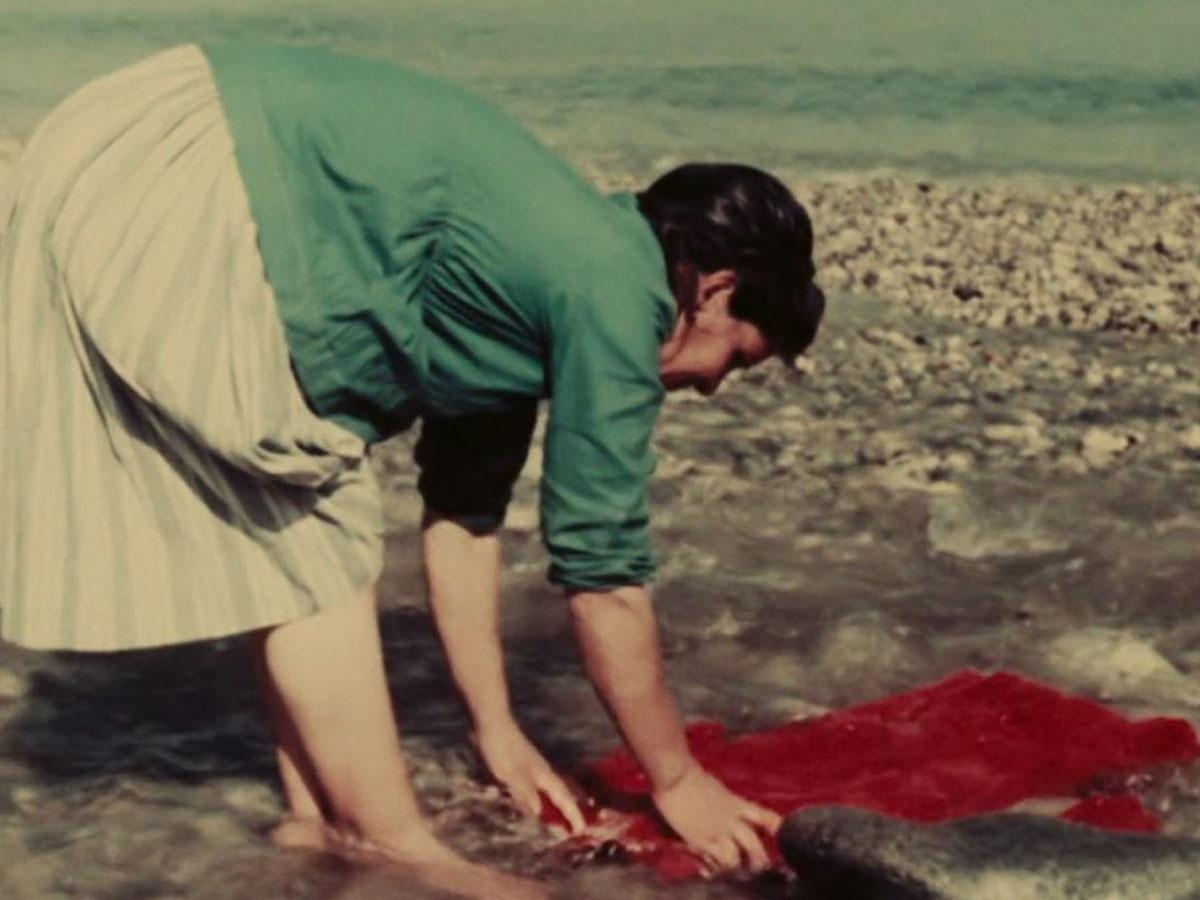
Sicily, 1954. Vittorio De Seta and the morning sun cast silhouettes of fishermen onto the legendary Ferrania colour film. Two small wooden boats sail across the Strait of Messina. Beneath the water’s surface, swordfish swim towards them. They are right on time for the breeding season but unaware of the throwing spear that awaits them. Women wash clothes on the banks and sing traditional work songs to ease that hard labour. In the evening, the whole village gathers to celebrate the catch. A few years later, mass emigration wipes this centuries-old culture and its traditions off the map.
Despite its vivid blue and orange colours, The Age of Swordfish feels like a documentary elegy to a way of life that no longer exists. But this was never De Seta’s intention: with the ten short films he made in the region, he sought to do nothing more than capture the place and its people truthfully. He recorded sound directly on location, despite the Italian studio system’s dubbing tradition, and kept the crew small to preserve a natural atmosphere. Within this neorealist style, he injects a sense of playfulness through sharp editing. His film feels more like a time capsule than an indictment. Martin Scorsese sums it up beautifully: “De Seta is an anthropologist with the eye of a poet.”
I wanted to blend into the environment, to become a part of it and shoot these scenes. I would gradually build the documentary while working in contact with reality. Almost instinctively, I created a rather exhaustive representation of work in southern Italy: shepherds, miners, fishermen, peasants, the volcano.