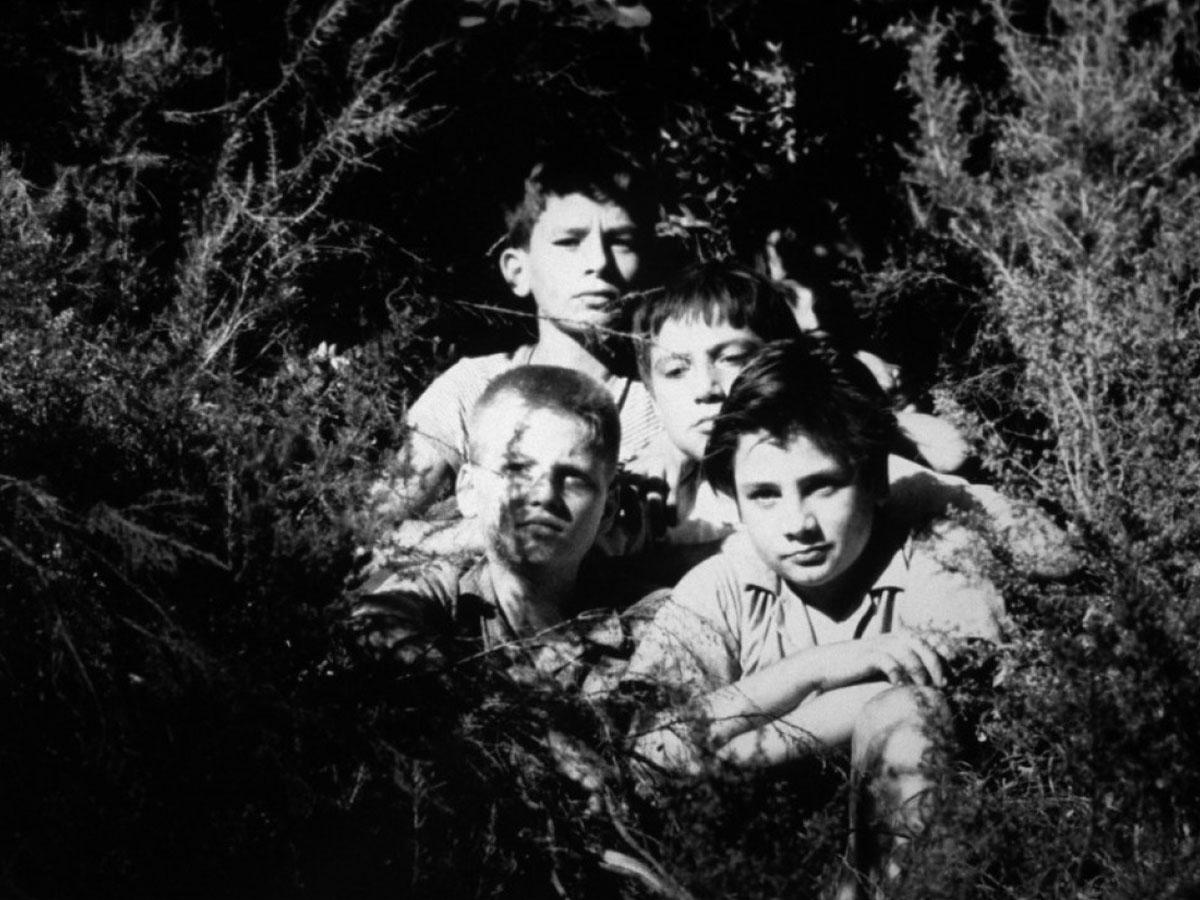
In François Truffaut’s debut film, the beautiful Bernadette cycles over the bridges and through the scrublands of Nîmes. Wherever she goes, five mistons (local slang for brats) are hot on her heels. They see her as the embodiment of their budding, prepubescent desires.
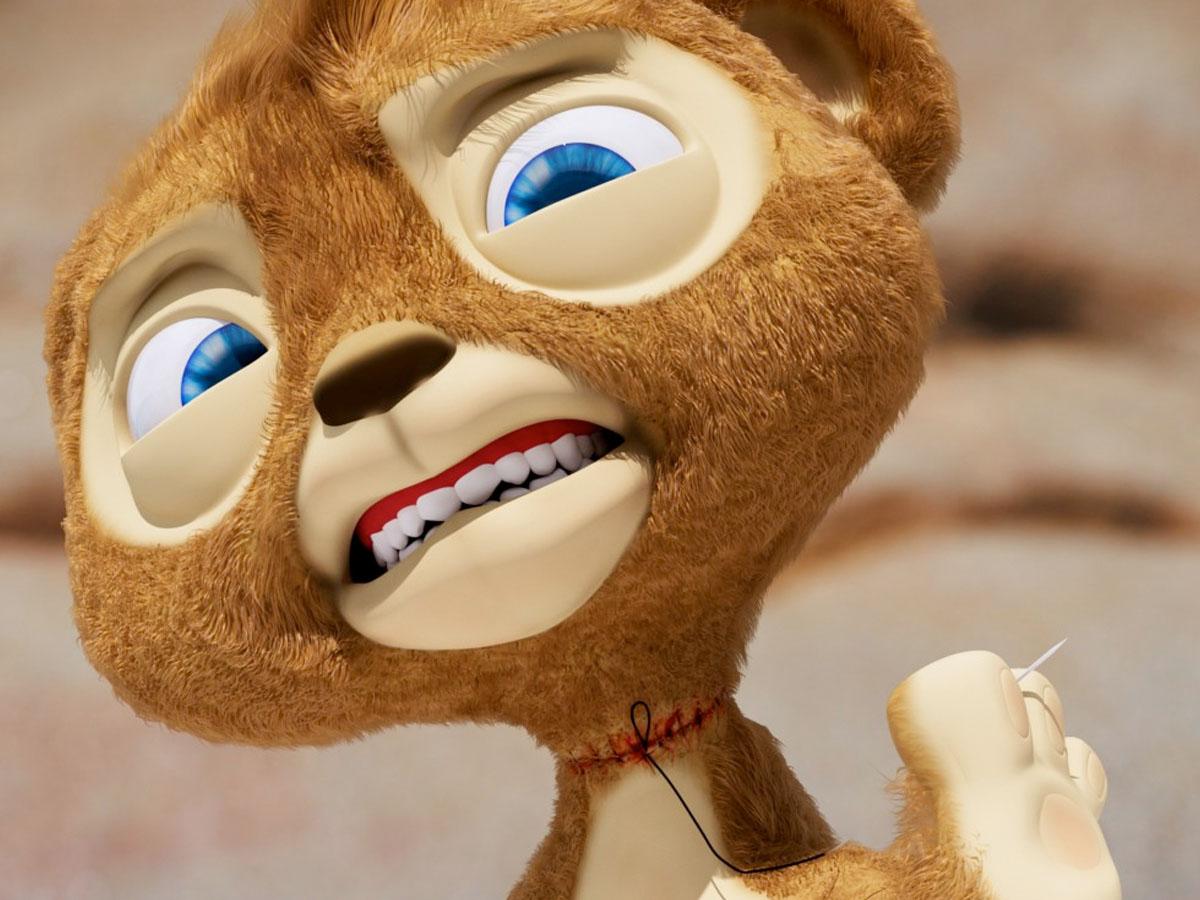
In this hybrid 3D animated film, a pseudo-intellectual menagerie reflects on the contemporary political landscape on the other side of the Corsican Sea through dry wit and Disney fonts.
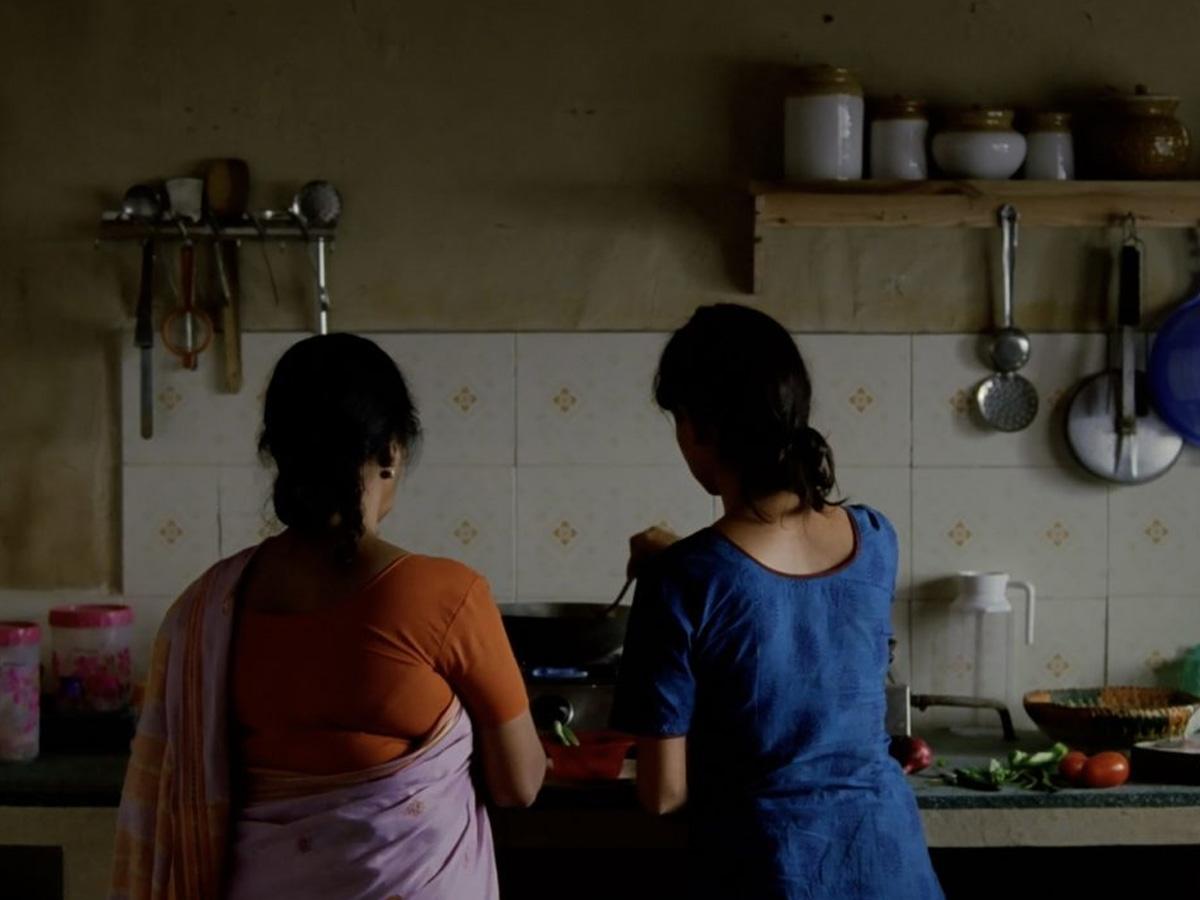
Kaki is a 60-year-old widow who lives with her Nepali maid, Malti. The film takes place on one afternoon in their house, where a flower blossoms on the balcony.
A journey to the underworld begins within our own entrails. This film explores the intimate rhythm of digestion only to next investigate the becoming of geological eras, inspired by Gamaliel Churata’s El Pez de Oro, in which he states, “we all carry the dead alive; that the dead live.”
On a hot summer day, five teenagers go to a river to cool off. They swim, they sleep, they eat snacks and ice cream. As music and dialogue are missing, everyday sounds attract attention: bicycles riding on gravel, feet gliding through water, gasps and splutters.
Immersed in the community of artists and local residents on the island, Nicola L. approached Ibiza as a living landscape, shaped by mythology and shared experiences. In Les têtes d’Ibiza, fiction and documentary flow seamlessly into one another.
Three years after the publication of Marguerite Duras’ children’s book Ah! Ernesto, Jean-Marie Straub and Danièle Huillet pull the titular protagonist from its pages for an unconventional retelling of the short story.
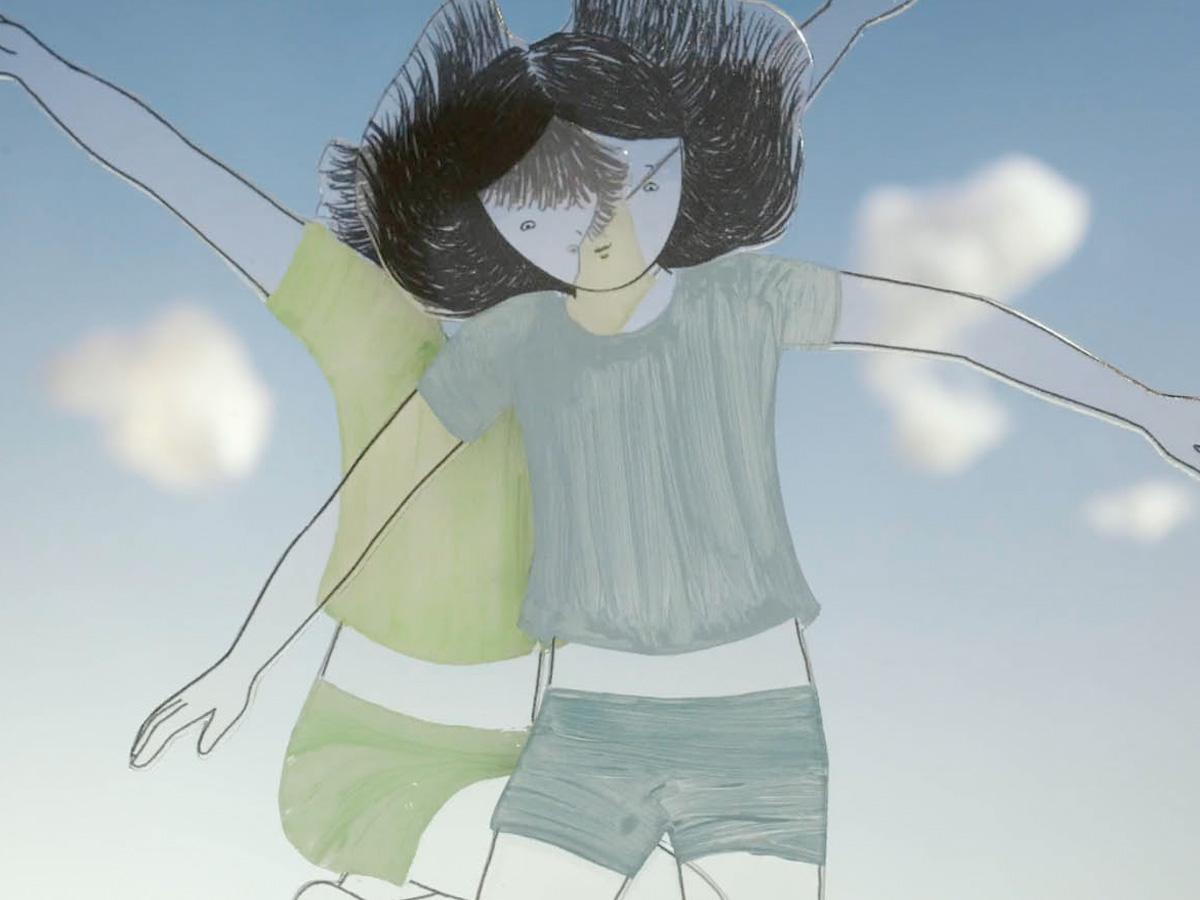
Inseparable best friends spend their last summer holiday of childhood amusing themselves around the house. As summer progresses, their bodies start to morph and shift, and an awkwardness descends on their friendship. Puberty seems determined to interrupt their bond.
The routines of two women fuse together over time. One is busy with her bread, the other with her memories. Their similar gestures, repeated again and again, slowly unfold the special bond that unites them.
In this fictional epistolary film, writer Marguerite Duras, a member of the French Resistance during the Second World War and partner to a Holocaust survivor, uses her titular alter ego to voice a deeply personal grief.
Like an animal in one of Eadweard Muybridge’s scientific photo experiments, five undramatic moments in a man’s life are observed by a woman. A study in visual obsession and a twist on the notion of the “gaze”.
Blight revolves around the building of the M11 Link Road in East London, which provoked a long and bitter campaign by local residents to protect their homes from demolition. What is presented is simultaneously fact and fiction.
A tale of first love. Romeo and Polly sit in separate cars outside a pub, waiting for their parents. They're bored until they notice each other—at first, they bicker and play it cool, but by the time they have to say goodbye, the sparks of first love are flickering.
Maryam Tafakory creates an intimate inner world that moves between the concrete and the abstract. Layers of found and original footage are superimposed to fill in some of the cracks, the deletions, the limits of representation. Mast-del is a love song that would never pass through censorship.
A little girl is taken on a mind-bending tour of her distant future. An element of childhood whimsy is integral to balancing out the film’s dark absurdism, paving the way for its core theme: life is precious, and the sadness permeating our day-to-day is a reminder to cherish it.
llusions is a gripping critique of cinema’s power to shape perception, exploring the myth of racial identity. Julie Dash’s drama shows the instrumentalisation of Hollywood during wartime.
This bittersweet film from Jean Renoir, based on a story by Guy de Maupassant, is a tenderly comic idyll about a city family’s picnic in the French countryside and the romancing of the mother and grown daughter by two local men.
In a shopping mall, two women sing about their favourite items but are quickly pursued by a masked cannibal who is intent on forcing his way to their love. Possibly in Michigan is an operatic fairy tale of cannibalism and dread in America.
Ousmane Sembène’s first film uses a mixture of documentary and fiction techniques to tell the story of a young cart-driver in Dakar. The Wagoner illustrates the continent’s poverty, showing that independence has not solved the problems of its people.
Norman McLaren applies the principles used to animate drawings or puppets to animate live actors. Neighbours is a parable about two people who come to blows over the possession of a flower. The political context shifts depending on the viewers’ personal positions.
A girl from a shantytown travels to the city to become an itinerant newspaper vendor. Mambety’s richly textured view of urban life fuses fiction and documentary, displaying the rampant poverty and endemic misogyny in the modernising capital of Dakar.
On a lonely planet, a musical is enacted in a modern marketplace. The employees of various commercial venues, portrayed as anthropomorphic animals, cope with boredom and existential anxiety by performing cheerful showtunes.
In the Oscar-winning The Wrong Trousers, the kind-hearted, cheese-loving bachelor and inventor Wallace rents out his loyal and intelligent anthropomorphic dog’s bedroom to a penguin.
In the dream-like narrative of At Land, a woman, played by filmmaker Maya Deren herself, is washed up on a beach and goes on a strange journey, encountering other versions of herself. Deren described the film as about the struggle to maintain one’s personal identity.
At the outskirts of a city, a group of people stands around a lorry. Naked men, women, and children are herded in through the rear door of the vehicle. Once the door is locked, a gentleman takes a hose and connects it from the exhaust pipe to the lorry’s interior.
The Vampires of Poverty is an action film masquerading as a documentary about filmmakers who exploit poverty for profit, with a touch of black humour, but most of all a scathing critique against ‘misery porn’ and the opportunism of those filmmakers who make ‘socio-political’ films in the Third World to make money and win prizes in Europe.
A red balloon with a mind of its own follows a little boy around the streets of Paris. This beguiling allegory of innocence and transcendence is the only short film ever to win an Oscar for best original screenplay.
Wasp follows a single mother too young to have four children, and too poor to feed them. This Oscar-winning short film was shot in Dartford, a south-east London working-class suburb, where filmmaker Andrea Arnold grew up.
The black-and-white science fiction film from 1902 has since become a canonical work. A Trip to the Moon was hugely popular upon its original release and used animation and visual effects that were very innovative at the time.
Two young men in a pickup truck, from different parts of the world, discover each other through the use of a camera. As the camera lenses change, a landscape of rice fields and a cinema crew get into the frame. The camera then reshoots the road and the men, as if we were witnessing a film rehearsal.
Germaine Dulac’s The Seashell and the Clergyman was arguably the first surrealist film ever made. The film tells the story of a clergyman who falls madly in love with a beautiful woman, but must defeat an equally eager rival.
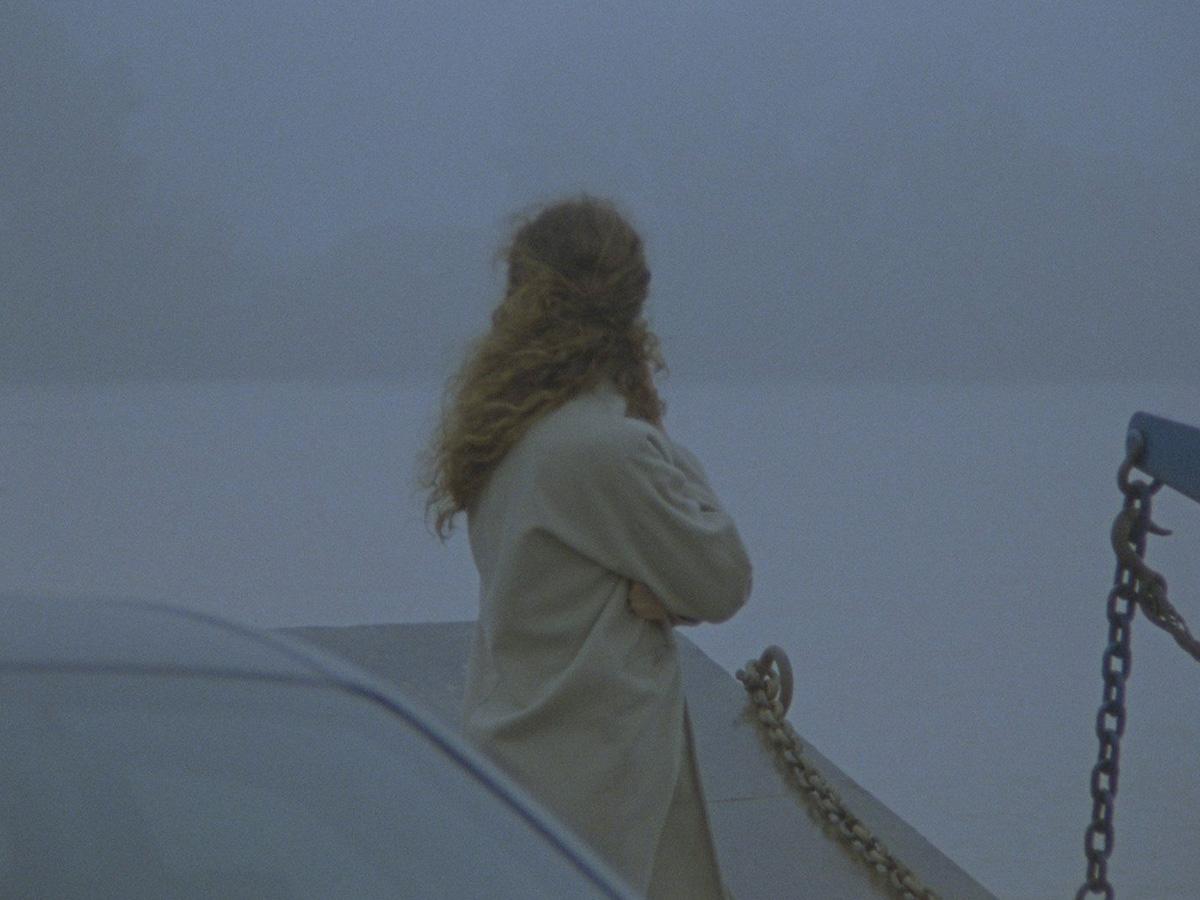
Manuel Muñoz Rivas turns the daily passage of a ferry on a Spanish river into a ritual crossing of sacred beauty, as the passengers’ souls wander through suspended narrations of everyday life.
Filmed over a single unbroken take, this work brings together slice-of-life vignettes. On a busy street corner, three young men have a conversation over food. Suddenly, a motorcycle crash occurs nearby. As the crowd clears, a young boy performs street tricks and a beer girl plies her trade.
A pristine white bathroom soon becomes a site of crimson-stained shaving carnage in Martin Scorsese’s daring student film, a potent and disturbing allegory for the horrors of the Vietnam War. What starts out as a pleasant morning soon goes horribly wrong, turning into a bloody spectacle of self-mutilation.
The War Game presents a fictional scenario concerning the consequences of an explosion in Kent following the escalation of an East-West conflict. The BBC withdrew its support, stating that “the effect of the film is considered too horrific for television broadcast”. The film had a significant impact on the growing campaign for nuclear disarmament.
A rich boy is playing alone with his enormous collection of expensive toys. When he looks out the window, he sees a poor boy on the street, also playing alone. They duel, each showing off their toys in a bid to outdo the other. Satyajit Ray called Two a ‘film fable’.
In Ever is Over All, Pipilotti Rist juxtaposes the field and its flowers with her magically powerful wand, and transposes acts of aggression and annihilation into benevolent and creative ones. An anarchic young woman gleefully breaks windows.
Jean-Marie Straub and Danièle Huillet’s first major film introduced their grippingly sparse, elliptical style to international audiences. Not Reconciled brought an intense sense of the present to this narrative of three architects reckoning with their family’s traumatic wartime history.
Filmed in Shatila, a refugee camp built in Lebanon when thousands of Palestinians fled their country in 1948. At an undetermined moment in the future, the refugees’ dream of returning to Palestine becomes a reality.
In his contribution to the omnibus film RO.GO.PA.G (1963), Pier Paolo Pasolini depicts Orson Welles making a film about the crucifixion of Jesus, while he, the cast, and the crew behave quite unholy. La Ricotta is a short, apocalyptic tirade against the conventions of filmmaking and the unchristian coldness of contemporary Christianity.
Yes, Nobel Prize winner Samuel Beckett also made a film once, archetypically titled Film. A man tries to escape the gaze of an all-seeing eye. The disorienting camerawork comes from Oscar winner Boris Kaufman, whose brothers Dziga Vertov and Mikhail Kaufman created the legendary self-reflective masterpiece Man With a Movie Camera (1929).
The work of French activist, novelist, and essayist Jean Genet was considered controversial in the forties and fifties, because of its explicit homosexuality. Genet made only one film in his entire life, but Un Chant d’amour went on to inspire both David Bowie and Rainer Werner Fassbinder.
Zinal, a small town in the Swiss Alps, looks straight up toward the melting glaciers of the Couronne Impériale. The townspeople struggle with nihilistic indifference. When the threat is so immediate, and their powerlessness so great, can their response be anything other than cynicism? Then a paraglider falls mysteriously from the sky, and Zinal starts to change.
Almost a decade after her in 2022 crowned “best film of all time”, Jeanne Dielman, 23 quai du Commerce, 1080 Bruxelles, Chantal Akerman made the twelve-minute I’m Hungry, I’m Cold. In it, two young chain-smoking Brussels girls run away from home, to Paris.
In So Can I, Iranian filmmaker Abbas Kiarostami combines live-action and animation. While two schoolboys watch animated animals (such as jumping kangaroos and swimming fish) on TV, one boy says, “I can do that too,” and then imitates the actions.
Winter. A fifteen-year-old girl in a remote Georgian town tries to get closer to her older brother just as he decides to leave home in search of work abroad.
In Jacques Rozier’s second short film, Rentrée des classes, a little boy throws his school bag into the river on the first day of school, which leads to a thrilling adventure.
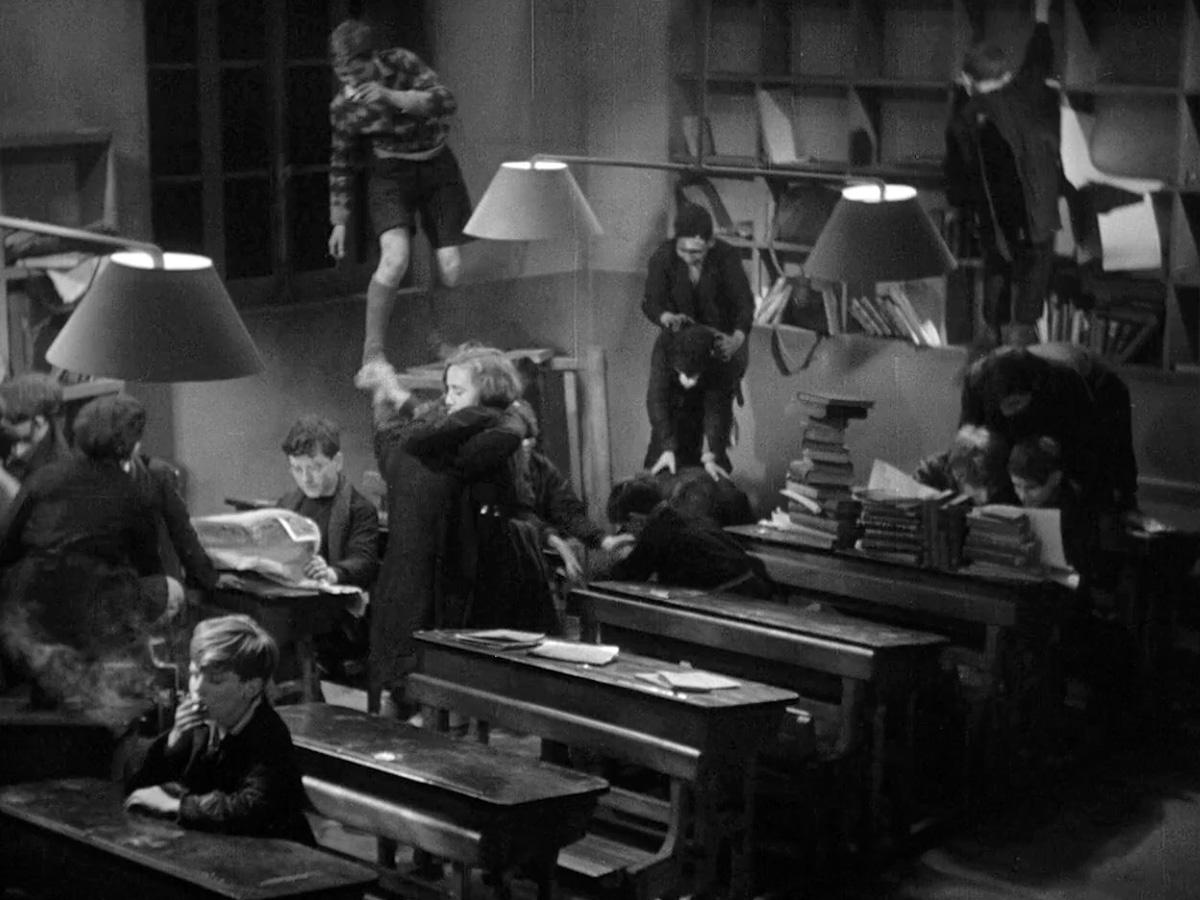
In Zero for Conduct, four rebellious pupils plan a revolt to take over the school. The film was first shown in Paris in 1933, but shocked so many viewers that it was subsequently banned from screens until the end of World War II.
Sofia is panicky again. The Universe decides to contact her—an other-worldly dialogue. Jacqueline Lentzou’s short film is a planet symphony for Mars, where people dream awake and fight for love.
A young woman, played by Chantal Akerman herself, enters her flat in Brussels and begins a household routine that gradually degenerates. Parodying the everyday, she mops the floor, polishes her shoes, and sticks tape over the cracks in the door, thereby giving domestic life an explosive twist.
During his heyday, Buster Keaton was also known as The Great Stone Face. The American comedian is best known for his silent films, which focus on physical comedy and his deadpan facial expressions.
An introspective essay about the search for a place between reality and imagination: a placeless place made up out of dreams and a longing for fluidity. Slowly, the grains of the compressed image become the sands of the atopic beach, revealing an imaginary place.
A woman trips and falls while rushing around the house. She gets up only to discover that her home has unusual features—it is built from paradoxes, filled with illusions, and covered with patterns.
Emma De Swaef, Marc James Roels, Belgium, 2011, 17’
A gentle, middle-aged man returns to the nudist colony he grew up in to visit his elderly mother. Her sudden death leaves Willy in a state of sadness. He soon finds himself lost in the midst of a savage wilderness, trying to find comfort.
Confused about German bureaucracy and questioning her sexuality, Hoda, an Iranian asylum seeker in Berlin, finds herself hooked on Magdalena, who promised to ensure her asylum by marrying her. Due to changes in Magdalena’s private life, her decision to marry Hoda becomes more complex.
Dilan pays with her life for her forbidden love for a young man in a neighbouring village—a powerful poetic portrait of an honour killing in the rural Kurdish southeast of Turkey.
Spanish surrealist Luis Buñuel wrote his first feat together with Salvador Dalí, based on their dreams. Don’t get stuck on the plot. Buñuel deliberately omits chronology and opts for Freudian dream logic, in which scenes do not necessarily follow one another logically.
Mexico, October 2011. A mysterious dream gives birth to Cuco, a transgender latex pirate activist. This essayistic film follows their quest to create more recognition for the queer community.