An artificial summer rules the greenhouse. Workers tend to carnations. In a multitude of splendid colours, they grow towards the sun until they’re ready to fulfill their cut-flower destiny. Carnations is an audiovisual meditation on movements within a carnation nursery close to filmmaker Martijn van de Wiele’s home.
Swollen Stigma is a visual, surrealistic narrative about a woman travelling both literally and psychically through several rooms. Memories, or fantasies, of another woman, fill her imagination. The film proposes lesbian imagery, and its shifting points of view jump between the protagonist, fantasy spaces, and her lover, making an internal world leak into what is external.
In Suzan Pitt’s cult classic Asparagus, the indomitable growth of an asparagus plant is associated with female sexuality. As the urbane world turns absurdist, the green fruit transforms this reality.
By means of visual material gathered from online sources, filmmakers Olivia Rochette and Gerard-Jan Claes create a unique poetic realm in which thoughts, fears, desires, and worries are shared via webcam, and merge together.
In what one could call Jonas Mekas’ first video blog, the Lithuanian avant-garde filmmaker reflects on his life and the art of cinema and representation.
Panning shots in a repeating full-circle movement show a room as a succession of still lives: a chair, some fruit on a table, a collection of solitary, waiting objects. There is the presence of a young woman: filmmaker Chantal Akerman herself, sitting on the bed eating an apple.
Old Child depicts the fragmented story of Hazem, who had to flee Gaza. Throughout this stream-of-consciousness montage of dreams and reminiscences, he searches for order but also for the beauty he left behind.
Filmmakers Paul Shemisi and Nizar Saleh embark on a journey from the Democratic Republic of Congo to Germany to screen their latest film. However, during a layover in Angola, their trip takes a harrowing turn when airport authorities question the authenticity of their documents.
In this saturated film, Varda captures 1950s tourism on the Côte d'Azur: clear skies, burning sun, and cheeky parasols. A touristic tour on the French Riviera’s exoticism, full of captivating imagery, bathed in an atmosphere of nostalgia.
Zinal, a small town in the Swiss Alps, looks straight up toward the melting glaciers of the Couronne Impériale. The townspeople struggle with nihilistic indifference. When the threat is so immediate, and their powerlessness so great, can their response be anything other than cynicism? Then a paraglider falls mysteriously from the sky, and Zinal starts to change.
With a single camera movement, this film explores humankind’s relationship to the ground. The viewpoint continuously changes. Places, objects, people, and events come in and out of focus. These observations gradually speed up and reveal a double-sided ground, flipping like a tossed coin, which then slows again to oscillate around the Earth’s edge.
The work of French activist, novelist, and essayist Jean Genet was considered controversial in the forties and fifties, because of its explicit homosexuality. Genet made only one film in his entire life, but Un Chant d’amour went on to inspire both David Bowie and Rainer Werner Fassbinder.
Yes, Nobel Prize winner Samuel Beckett also made a film once, archetypically titled Film. A man tries to escape the gaze of an all-seeing eye. The disorienting camerawork comes from Oscar winner Boris Kaufman, whose brothers Dziga Vertov and Mikhail Kaufman created the legendary self-reflective masterpiece Man With a Movie Camera (1929).
A woman, played by Maya Deren herself, returns home, falls asleep, and has vivid dreams that may or may not be happening in reality. Through repetitive images and a complete mismatch with the objective view of time and space, the woman’s dark inner desires play out on-screen.
In his contribution to the omnibus film RO.GO.PA.G (1963), Pier Paolo Pasolini depicts Orson Welles making a film about the crucifixion of Jesus, while he, the cast, and the crew behave quite unholy. La Ricotta is a short, apocalyptic tirade against the conventions of filmmaking and the unchristian coldness of contemporary Christianity.
Filmed in Shatila, a refugee camp built in Lebanon when thousands of Palestinians fled their country in 1948. At an undetermined moment in the future, the refugees’ dream of returning to Palestine becomes a reality.
Using images shared on the Internet by Israelis during the Gulf War, the First Intifada, and trance music gatherings, Shuruq Harb paints the portrait of a Palestinian teenager in the 1990s. In the midst of Israeli pop culture and the political climate of the Oslo Accords, she comes to grips with her anxiety.
Eva Giolo silently and patiently portrays the same action over and over again. Her own body and those of her loved ones merge anonymously in a series of embraces, captured on blue-gray, faded 16mm film. Gazes are buried in necks and fingers intertwine or caress the contours of the other.
In what is widely considered his greatest film, Len Lye reduces cinema to its most basic elements by scratching onto black and white film, using a variety of means ranging from dental tools to an ancient Native American arrowhead. The title references modern physics: ‘free radicals’ are particles of energy.
A cat is half-sleeping, half-listening to Federico Mompou’s “Pájaro triste”. This first tape in Chris Marker’s Bestiaire trilogy, a series of short films devoted exclusively to animals, features his beloved cat, Guillaume-en-Egypte.
Begone Dull Care brings a wild piece of music to life with abstract expressionist animation. Evelyn Lambart and Norman McLaren painted colours, shapes, and transformations directly onto their filmstrip, impossible to simulate with digital tools.
A woman lies awake at night. Nearby, a set of theatre backdrops unspools itself, unveiling two alternate landscapes. Upon the woman’s blue sheet, a flicker of light reflects and illuminates her realm of insomnia.
During her vacation in Cuba in 1963, four years after Fidel Castro came to power, Agnès Varda made a photo report about Cuban society and culture after the revolution. This delightful black-and-white composition makes the edit resemble a choreography and intermingles the photos with catchy Cuban rhythms.
Irani Bag is a split-screen video essay that questions the alleged innocence of handbags in post-revolutionary Iranian cinema. In doing so, Maryam Tafakory provides a robust political analysis of censorship and intimacy.
Jean-Marie Straub and Danièle Huillet’s first major film introduced their grippingly sparse, elliptical style to international audiences. Not Reconciled brought an intense sense of the present to this narrative of three architects reckoning with their family’s traumatic wartime history.
In this short animated film by Wallace and Gromit creator Nick Park, various zoo animals are interviewed about their living conditions. The film points to issues regarding the living conditions of wild animals, but succeeds in doing so with a lot of humour.
In Ever is Over All, Pipilotti Rist juxtaposes the field and its flowers with her magically powerful wand, and transposes acts of aggression and annihilation into benevolent and creative ones. An anarchic young woman gleefully breaks windows.
Letters from a Palestinian woman living in war-torn Lebanon to her daughter, whom she has not seen for years, and a series of photographs convey the effects of war and exile on their personal and cultural life, with a nuanced look at family relationships.
After the revolution in 1979, Iran prohibited the depiction on the silver screen of men and women touching. Since then, directors have relied on every cinematic trick in the book to mirror ecstatic tension—but often the game of glances is enough to set a scene ablaze. Nazarbazi collages these intense cinematic moments into a poem about love and desire in Iranian film, which also echoes our own pandemic time of physical distancing.
A man is sitting on a picnic blanket in a Chicago park on Lake Michigan. He is filmed from above. Every 10 seconds, the camera zooms out by a factor of 10. Finally, we see the entire universe, with constellations floating around like clouds of cream in ink-black coffee.
A rich boy is playing alone with his enormous collection of expensive toys. When he looks out the window, he sees a poor boy on the street, also playing alone. They duel, each showing off their toys in a bid to outdo the other. Satyajit Ray called Two a ‘film fable’.
In 1976, the announcement of the imminent eruption of La Soufrière, Guadeloupe’s main volcano, left Basse-Terre completely depopulated. Werner Herzog travels there with his team and two cameramen as the danger reaches its peak.
Between 2020 and 2021, the Icelandic filmmaker Hlynur Pálmason filmed his three children building a tree house in their backyard. Using a fixed frame, his lockdown project yielded a fascinating study of the seasons grounded in the leisurely rhythms of kids at play.
The War Game presents a fictional scenario concerning the consequences of an explosion in Kent following the escalation of an East-West conflict. The BBC withdrew its support, stating that “the effect of the film is considered too horrific for television broadcast”. The film had a significant impact on the growing campaign for nuclear disarmament.
During the Cold War, the Thai village of Nabua was accused of harbouring communists. Its inhabitants were subject to violent reprisals. Phantoms of Nabua evokes these atrocities, but does so under a luminous guise.
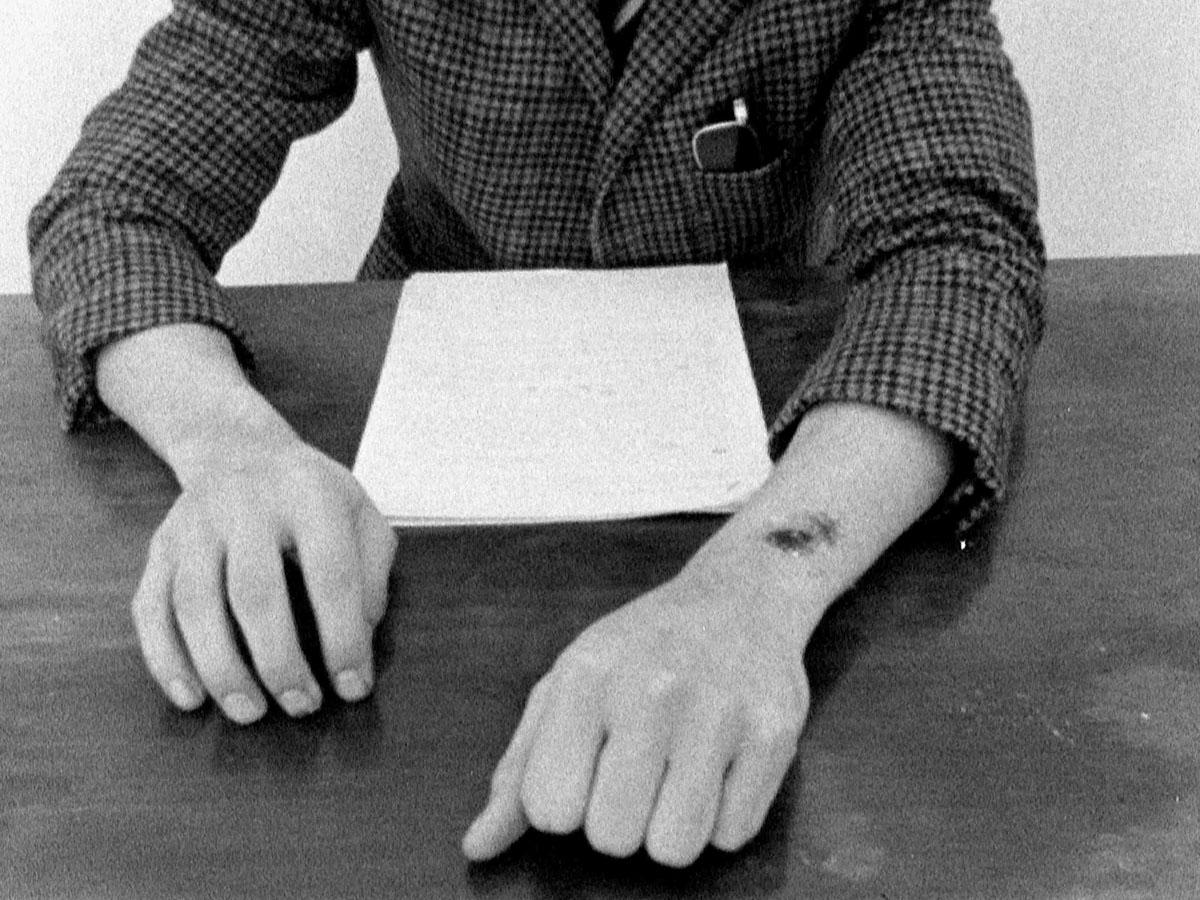
A pristine white bathroom soon becomes a site of crimson-stained shaving carnage in Martin Scorsese’s daring student film, a potent and disturbing allegory for the horrors of the Vietnam War. What starts out as a pleasant morning soon goes horribly wrong, turning into a bloody spectacle of self-mutilation.
Each Saturday, historian and activist Alicia Vega transforms the chapel of Lo Hermida into a screening room for about a hundred children. They have never seen an actual movie, and in her workshop, they learn more about cinema. Through watching films, the children discover a larger reality and a different world.
Filmed over a single unbroken take, this work brings together slice-of-life vignettes. On a busy street corner, three young men have a conversation over food. Suddenly, a motorcycle crash occurs nearby. As the crowd clears, a young boy performs street tricks and a beer girl plies her trade.
All My Life is a 3-minute pan movement that opens on an old picket fence framed by the blue sky above and a stretch of summer-brown grass below. On the soundtrack, you can hear the crackle and hiss of an old record. Soon, Ella Fitzgerald starts singing “All My Life” in a 1936 session with the pianist Teddy Wilson.
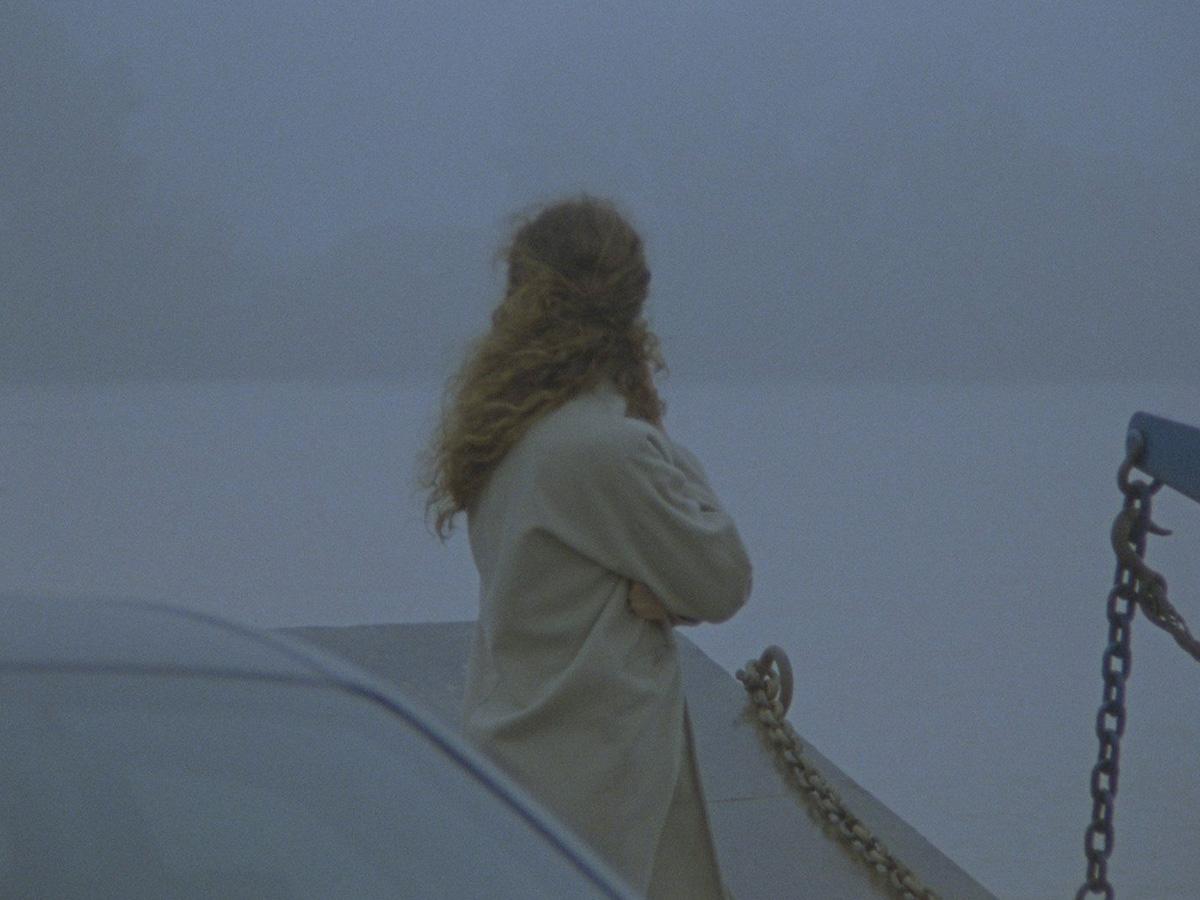
Manuel Muñoz Rivas turns the daily passage of a ferry on a Spanish river into a ritual crossing of sacred beauty, as the passengers’ souls wander through suspended narrations of everyday life.
A film on the Dare strike of the early 1970s. Hundreds of feet and legs marching and picketing with the word ‘solidarity’ superimposed on the screen. Like Wieland’s earlier films, Solidarity uniquely combines political awareness with an aesthetic viewpoint and a sense of humour.
While in San Francisco to promote her latest film, Agnès Varda gets a tip from an acquaintance. In Sausalito, a town in the San Francisco Bay Area, there lives a Greek painter named Jean Varda. Could they be related?
Today, the flicker film Arnulf Rainer is still a landmark in the history of cinema. In this radical work, Peter Kubelka reduced cinema to its simplest form of expression: each frame is composed of light or darkness, silence or sound.
Zuza Banasińska reinvents the famous Slavic witch Baba Yaga through a clever montage of films from the Polish Educational Film Studio archive, containing sexist content. Questioning their own non-binary identity, they unleash the queer dimension of found footage tasked with conveying a normative conception of identity.
Germaine Dulac’s The Seashell and the Clergyman was arguably the first surrealist film ever made. The film tells the story of a clergyman who falls madly in love with a beautiful woman, but must defeat an equally eager rival.
In 2014, artist and forensic audio analyst Lawrence Abu Hamdan examined audio files of the shots that killed Nadeem Nawara and Mohamed Abu Daher in the West Bank of Palestine. Rubber Coated Steel does not preside over the voices of the victims but seeks to amplify their silence.
Two young men in a pickup truck, from different parts of the world, discover each other through the use of a camera. As the camera lenses change, a landscape of rice fields and a cinema crew get into the frame. The camera then reshoots the road and the men, as if we were witnessing a film rehearsal.
Alain Resnais combines poignant black-and-white archive footage of the Holocaust, such as mass graves and systematic destruction, with colour footage of the empty camp grounds of Auschwitz and Majdanek in 1955. Night and Fog raises critical questions about collective memory and the tendency to forget.
Wavelength consists of almost no action. The film’s spine is its famous zoom from a fixed camera position. The spectator is led to concentrate on this central element, the photograph, until the image is washed out and the film comes to an end.
An authoritative voice-over pre-empts the events in the image, seeming to order not only the people, cars, and moving objects on the screen but also the actual camera movements on the street in view. John Smith draws attention to how controlling and directional the practice of voice-over actually is.
In Outer Space, a woman no longer fights an unknown entity, but that portion of the filmstrip that is normally unseen when film is projected—the “outer space” of the film’s image, consisting of the optical soundtrack and its perforations.
The black-and-white science fiction film from 1902 has since become a canonical work. A Trip to the Moon was hugely popular upon its original release and used animation and visual effects that were very innovative at the time.
Wasp follows a single mother too young to have four children, and too poor to feed them. This Oscar-winning short film was shot in Dartford, a south-east London working-class suburb, where filmmaker Andrea Arnold grew up.
Zbigniew Rybczynski worked eight hours a day for ten months on the Oscar-winning Tango. He brings together a jumble of cut-out photos featuring countless figures of all kinds and ages in a flawlessly synchronised animation. The work was formally highly innovative at the time.
Dimensions of Dialogue doesn’t present us with models of meaningful human understanding; on the contrary, we are given three examples which clearly demonstrate that communication can and will break down. During this 12-minute magnum opus, Jan Švankmajer demonstrates his virtuosity and limitless invention by shifting his artistic style and animation techniques three times.
Made early in the prolific artist's nearly fifty-year career, The Inextinguishable Fire is a critique of the Vietnam War and the role of industry in the production of chemical weapons. In analysing the production, dissemination, and consumption of images, Harun Farocki reveals the inextricable links between media culture, politics, technology, and violence.
A red balloon with a mind of its own follows a little boy around the streets of Paris. This beguiling allegory of innocence and transcendence is the only short film ever to win an Oscar for best original screenplay.
The Vampires of Poverty is an action film masquerading as a documentary about filmmakers who exploit poverty for profit, with a touch of black humour, but most of all a scathing critique against ‘misery porn’ and the opportunism of those filmmakers who make ‘socio-political’ films in the Third World to make money and win prizes in Europe.
Isle of Flowers shows the cycles of modern life. Very soon, it becomes evident that something is rotten in the capitalist system as a whole. Since its release, the film has lost none of its visual significance or topicality.