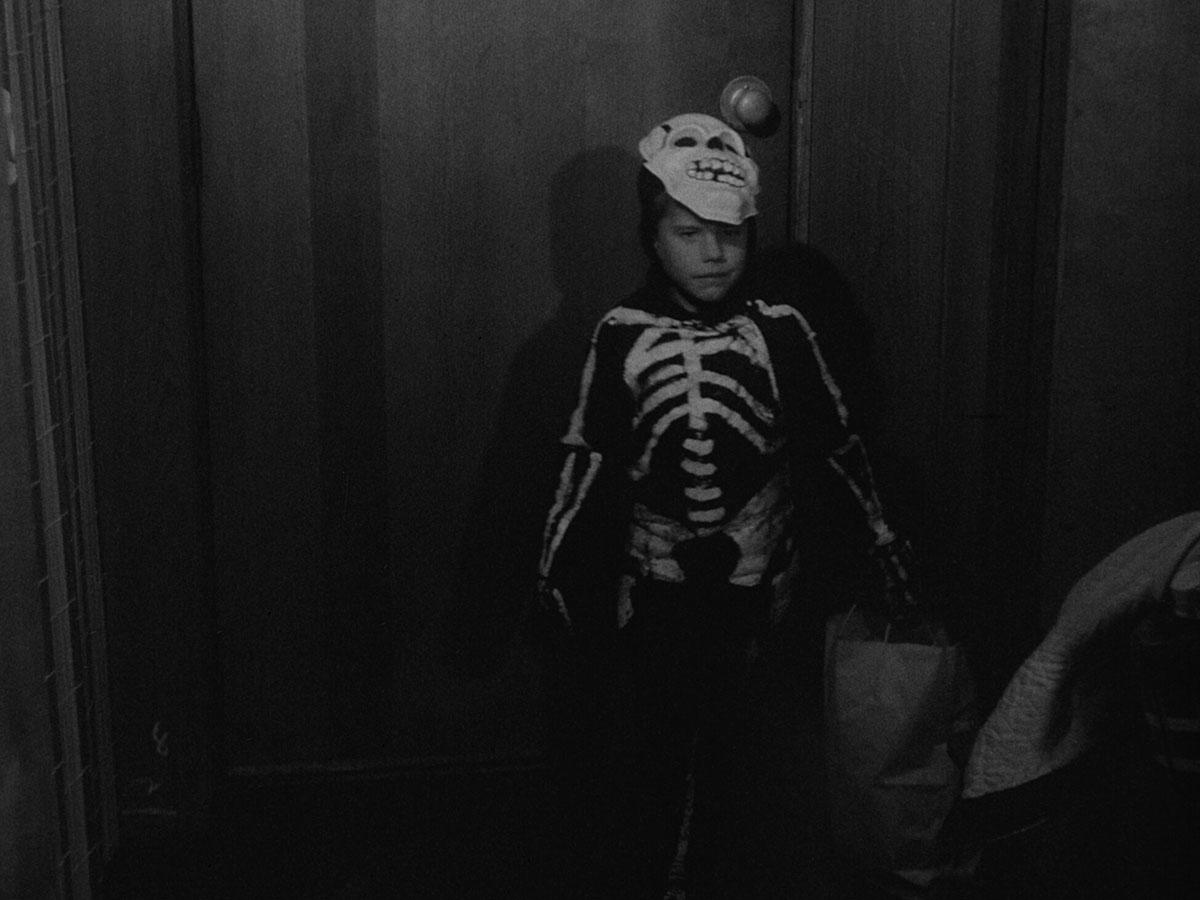
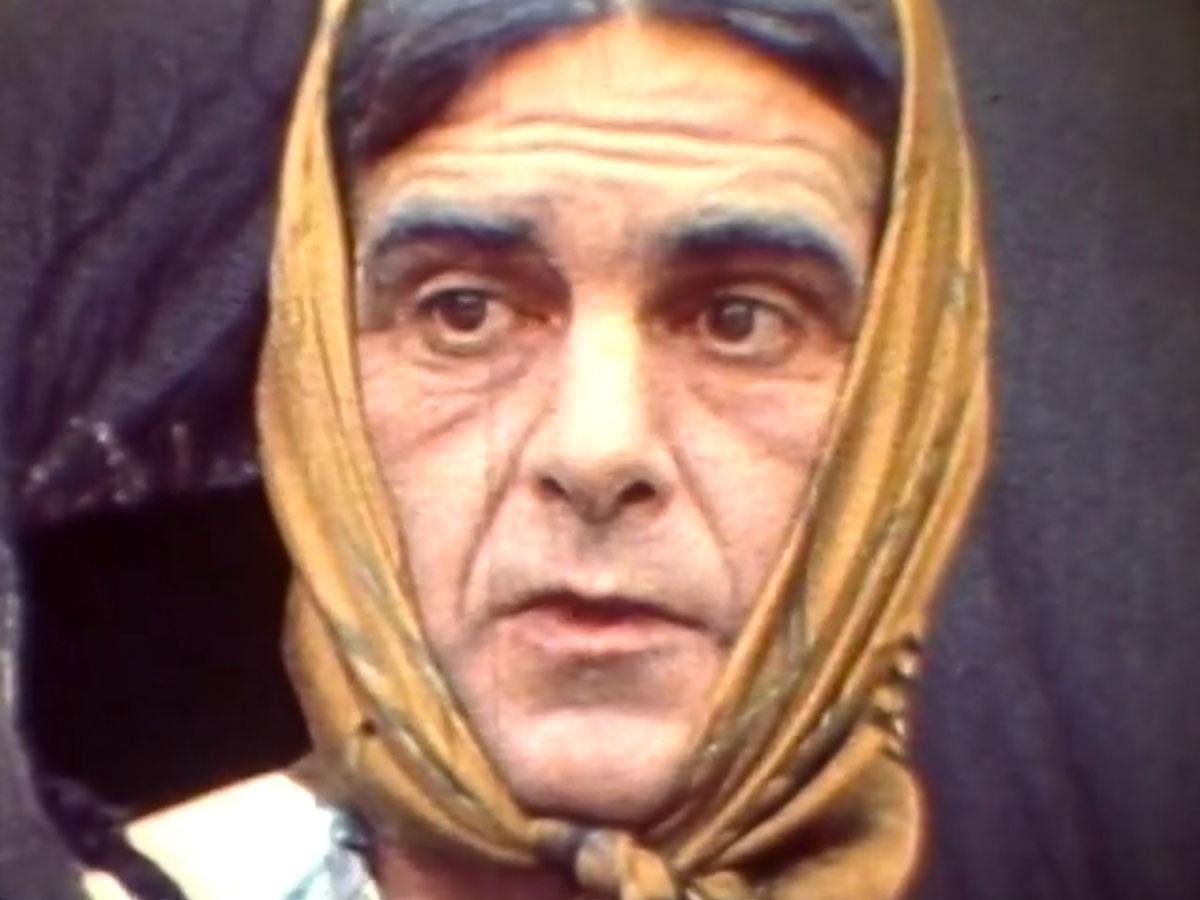
A young lad dresses up for an annual round of trick-or-treating with his school friends in this 1960 public service announcement. However, their night’s haul won’t benefit themselves.
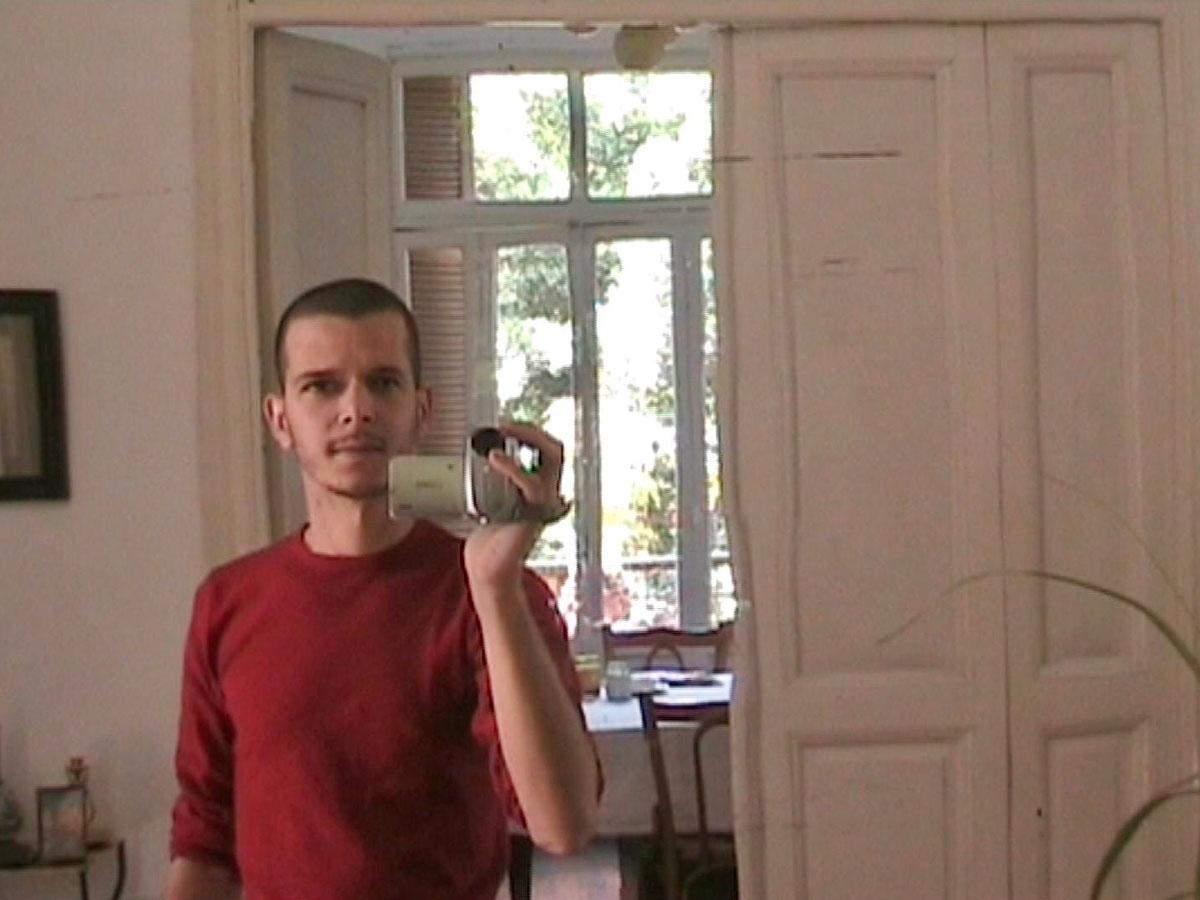
Moroccan writer and filmmaker Abdellah Taïa wanders through Cairo. His impatient handycam scans the Egyptian city. Eighteen years later, Taïa looks back on the memories he and his lost love shared there.
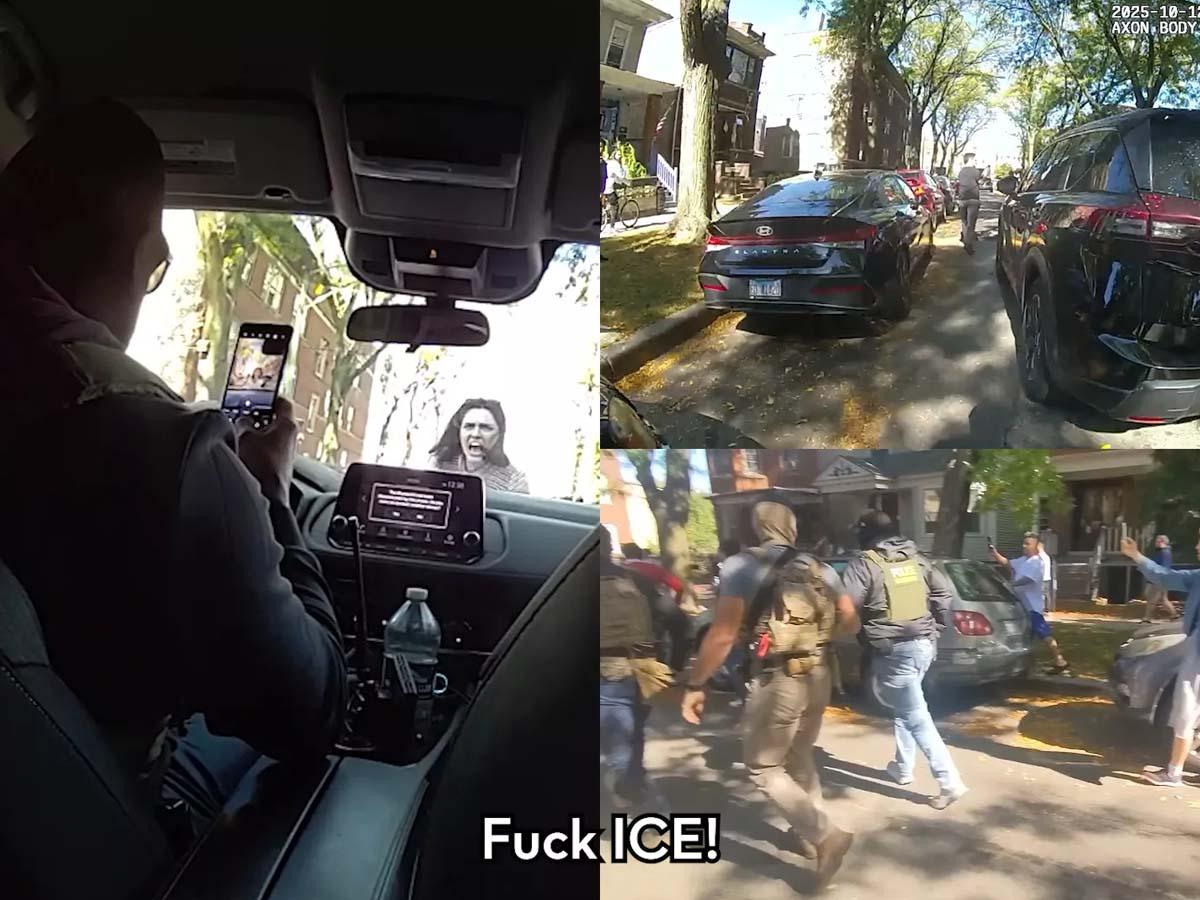
In Sawyer Avenue, Sunday Afternoon, Bill Morrison presents a chronology of an ICE raid and the civil resistance that follows it. A found-footage collage of mobile phone and bodycam footage.
A series of cameo portraits of Barbara Hammer’s friends and lovers intercut with a playful celebration of fruits and vegetables in nature. The culminating footage evokes a tantric painting of sustained sexuality.
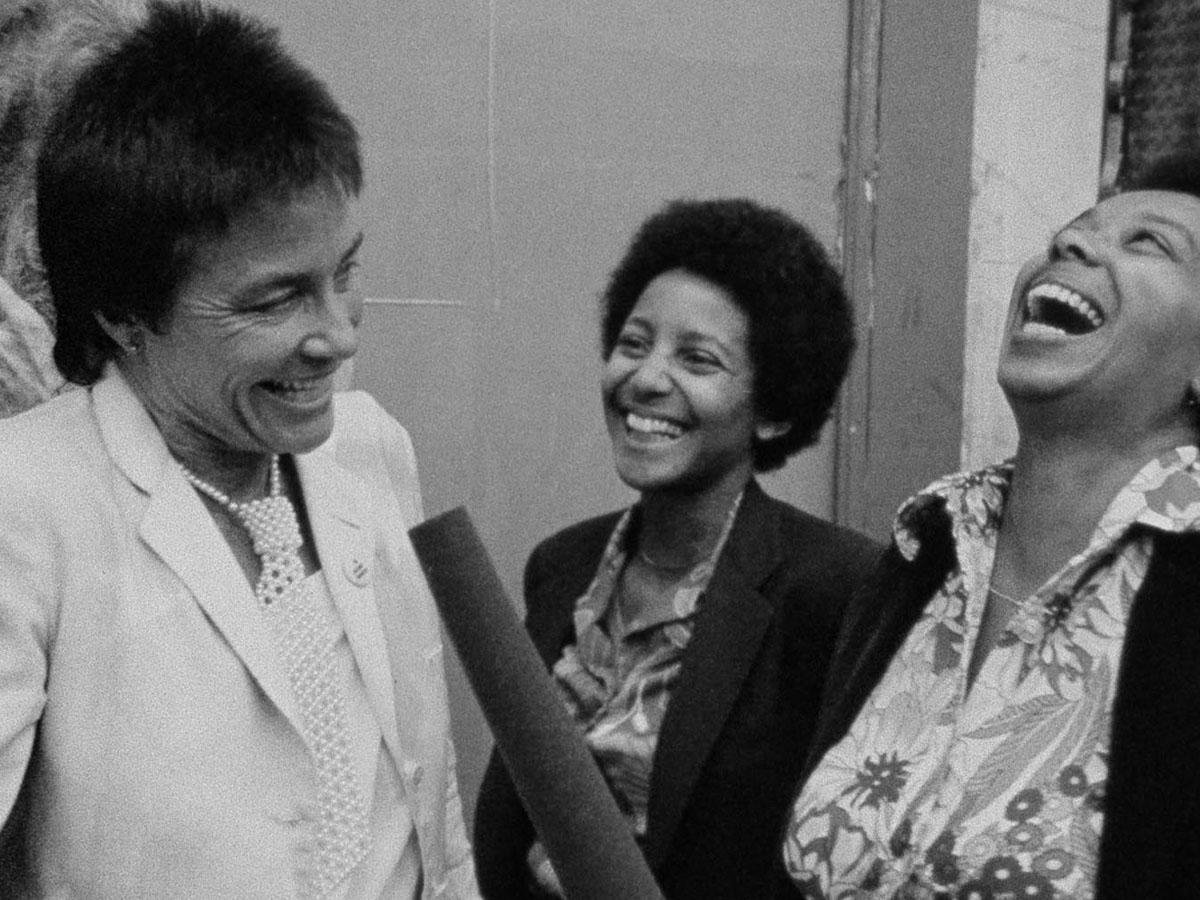
Barbara Hammer takes out her camera to film audiences at screenings of her films. She wanted to show the diversity in a women’s audience: the sophistication, the thoughtfulness, the fun-loving spirit, the flirtations, the detailed, the subtle.
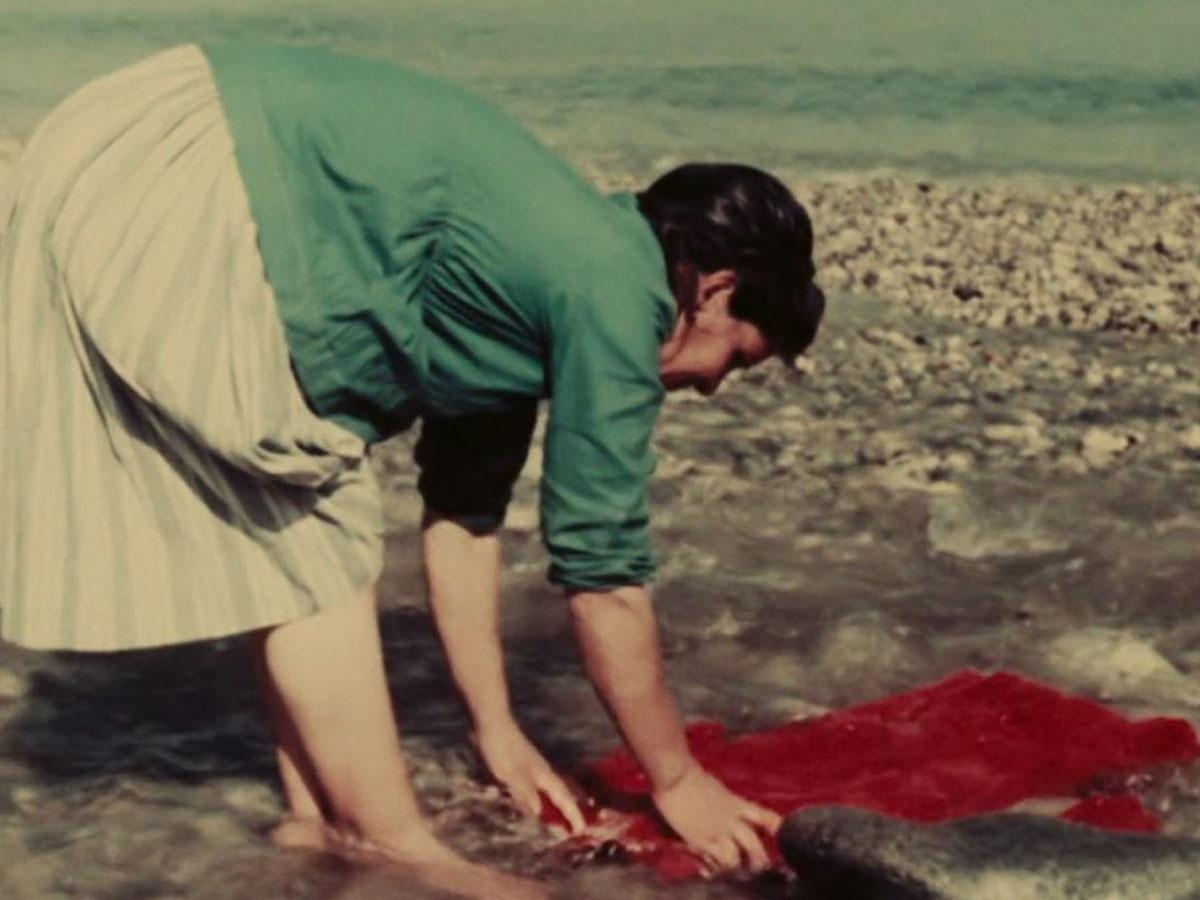
Two small wooden boats sail across the Strait of Messina. Beneath the water’s surface, swordfish swim towards them. They are right on time for the breeding season but unaware of the throwing spear that awaits them. Women wash clothes on the banks and sing traditional work songs.
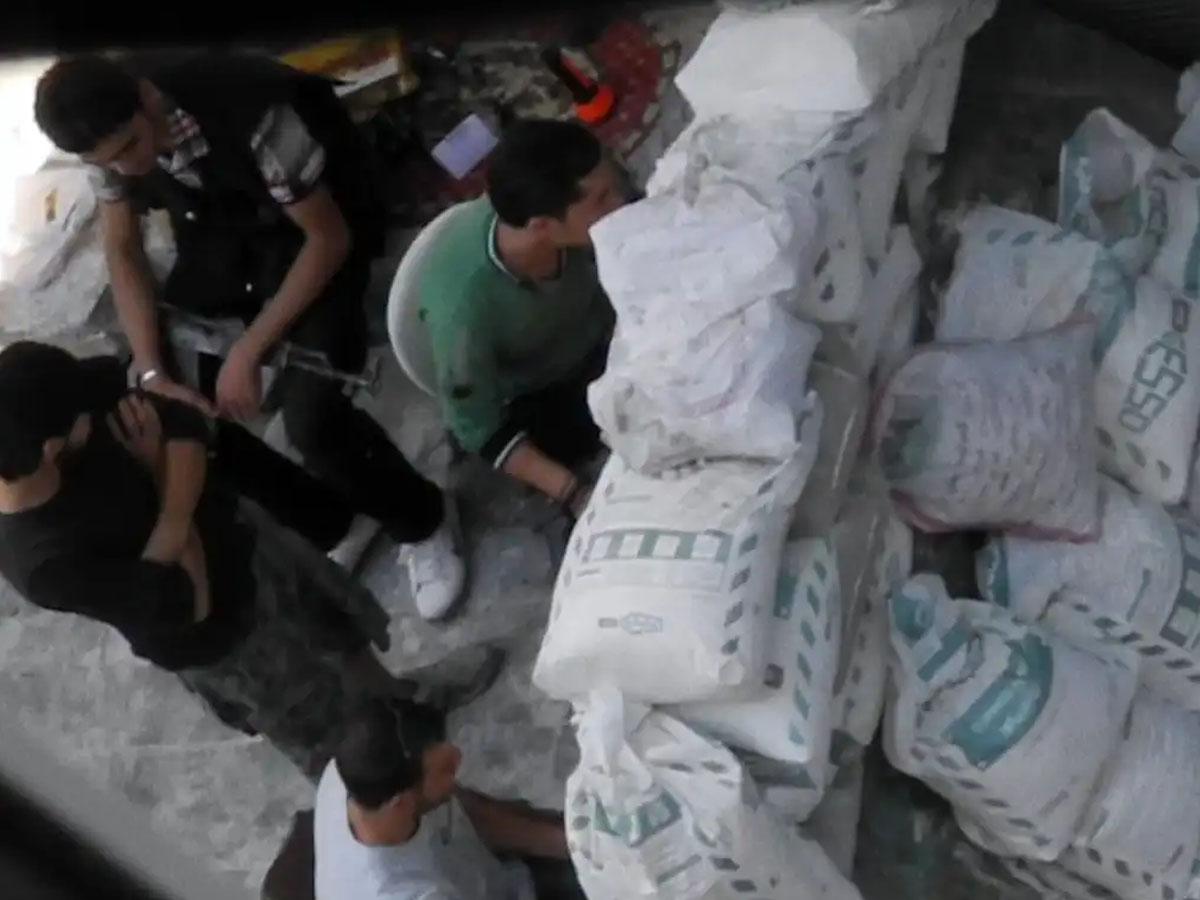
One morning in August 2012, renowned Syrian photographer Issa Touma saw young men lugging sandbags into his street. It turned out to be the start of the Syrian uprising in Aleppo.
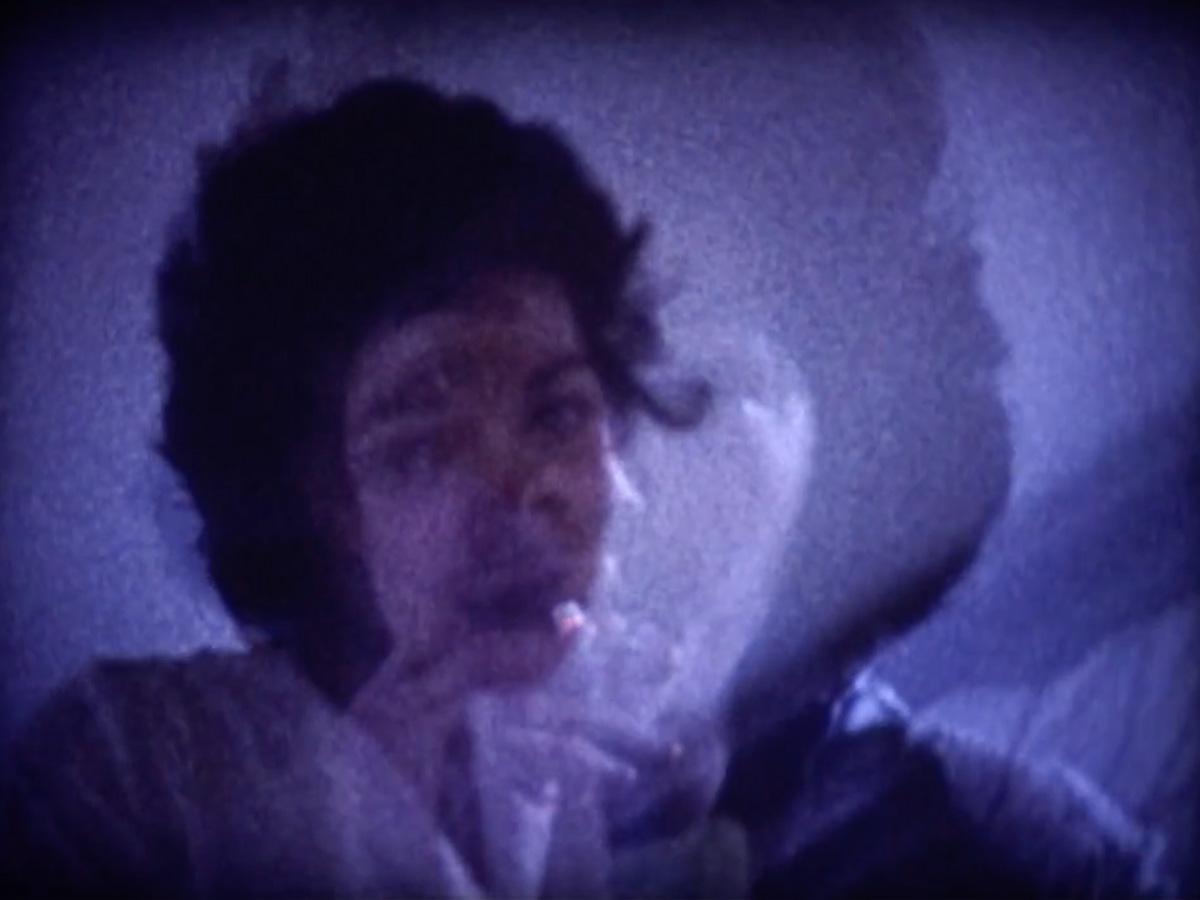
This video diary depicts a young woman’s flat, the fears and fantasies about her body plainly revealed as she wakes up with a bloated face, full of self-loathing after a night of compulsive over-eating.
After twenty years of silence, filmmaker Olga Lucovnicova returns to her great-grandparents’ home, where she endured traumatic experiences that left a lasting impression on her memory.
Immersed in the community of artists and local residents on the island, Nicola L. approached Ibiza as a living landscape, shaped by mythology and shared experiences. In Les têtes d’Ibiza, fiction and documentary flow seamlessly into one another.
Pol Gasco Robles is enchanted by the golden mountains that tech capitalists and crypto bros promise him online. Material luxury is not a by-product of success, but a goal in itself. Gala Hernández Lópezasks him critical questions.
Obtaining official documents is a symbol of coveted freedom and security for migrants. But how do you navigate the administrative labyrinth? This film explores the relationship between identity, race, and European bureaucracy.
Through a mix of stop motion and long takes, Vukica Đilas compiles an encyclopedia of the mundane, spanning almost thirty years and filled with memories of loved ones, travels, and sociopolitical sidelines. Her observations are like those of a child, awed by her surroundings and the details they reveal.
The routines of two women fuse together over time. One is busy with her bread, the other with her memories. Their similar gestures, repeated again and again, slowly unfold the special bond that unites them.
The endearing observation Spaghetti Aza paints not only the portrait of a sleepy boy but also, indirectly, of two doting parents. A one-minute home movie by Ken Jacobs, a pioneer of the American avant-garde film of the 1960s and ’70s.
Rana Nazzal Hamadeh’s colourful, low-resolution imagery searches for indigenous plants, ravaged by settlement colonialism. More than a condemnation, Hamadeh’s docu-essay feels like a reappraisal of the (political) power that lies within crops like deerhorn and sumac.
After managing to scrape together money to pay for an abortion, the director decides to celebrate with a party. In attendance are her geriatric ska musician neighbor, semi-retired gang affiliates, her gay roommate, and ever-present bedbugs.
Through the lens of her father’s camcorder, she looks back on a period she can no longer remember. Twenty years after surviving childhood cancer, she searches for traces of illness between scars and desires.
Marthe Peters seeks in her beloved cat Henry something soft and tender to inhabit, a little fur to retreat into. Between bedsheets and freckles, a love declaration emerges. An ode to the intimate worlds where we learn to live and to rest.
A silent film of collaged and painted sequences of lovemaking between artist Carolee Schneemann and her then partner, composer James Tenney, observed by their cat, Kitch.
Eighty years later, Theo Panagopoulos sheds a bitter light on archival footage. The director builds a dystopian bridge between the harbinger of the Nakba in 1948 and today’s genocide. Where are the plants and the people now? Do they still colour the regions?
Martí arrives in Bilbao for an artistic residency. In his new room, his clothes occupy only a small portion of the enormous wardrobe. But when he meets someone, the wardrobe slowly begins to fill up. Where has the emptiness gone, the free space, the little corner that was his?
A broken phone and the digital memory of a broken queer relationship. Through the careful manipulation of discarnate metal components and the filmmaker’s attentive look at an intimate archive, a fading first love surfaces. Loveboard is a playful reflection on what remains.
A sparing and minimal travelogue of Istanbul. A foreigner meditates on the unraveling of a relationship while moving from hotel room to hotel room. In a city simultaneously devoted to Islam and secular nationalism, she finds refuge in the frailty and severity of rituals.
Every year on the 10th of November, at 09:05 in the morning, individuals across Turkey cease all activities. Cars pull over, and pedestrians stop and stand still, in remembrance of Mustafa Kemal Atatürk (founder and first president of the Republic of Turkey), who died on this day and time in 1938. Els Opsomer captures such a moment on film.
Every form of communication involves deciphering codes. In Before Then, Mengzhu Xue attempts to confess a secret in the form of a letter in English, which she writes out phonetically in Chinese, and asks her grandmother to read out loud.
A wistful but witty account of a trip to Beijing by filmmaker Viv Li, a Chinese art student who has been living abroad for ten years. Her stay with her family mercilessly exposes how uprooted she has become by her life abroad.
In Emmanuel Marre’s vérité film, not the filmmaker or his camcorder dictate the mise-en-scène, but an alternating montage of Brussels-based parents styling their children’s hair with whatever they have at hand. Their direct but intimate instructions and the bathrooms, kitchens and living rooms that function as ephemeral hair salons sculpt the decor, rhythm, and imagery.
Blight revolves around the building of the M11 Link Road in East London, which provoked a long and bitter campaign by local residents to protect their homes from demolition. What is presented is simultaneously fact and fiction.
In this documentary-cum-survey made in 1979, basic existential questions are asked in the form of a street survey probe. Forty-four selected Poles, representing various professions and ranging in age from seven to a hundred years old, answer three questions: When were you born? Who are you? What do you want (in life)?
Using newsreel footage and a song by Lena Horne, Cuban filmmaker Santiago Alvarez fired off Now!, one of the most powerful bursts of 1960s propaganda. Made almost entirely from existing newsreel footage, the film tackled the pressing political issues of the time, from racism to imperialism.
In 1954, on a Calais beach, Agnès Varda took a photograph of a man, a boy and a dead goat. Almost thirty years later, she returns to that image, the moment she made it, the way she remembers it (sometimes incorrectly, as she finds out), and the interconnections between past, present and future.
A silent meditation on death depicting bodies lying in a morgue, this is one of the starkest works of body horror in which Brakhage makes the monster our very own perception.
Brakhage’s avant-garde classic is an intimate impression of the birth of his first child. The film features the first contractions, the actual delivery, and the cutting of the umbilical cord.
In this Second Wave Feminist pamphlet, Agnès Varda invites women, young and old, dressed and nude, proletarian and upper-class, to answer the question: What does it mean to be a woman?
Filmmaker António Reis (with the help of Margarida Cordeiro, his wife) portrays the life of Jaime Fernandes, a peasant diagnosed with paranoid schizophrenia. They focus on the artistic legacy he left behind.
A day in the life of a camel, endlessly walking in circles in a sesame mill: a gloomy, small space. But this remarkable film also has humour. Those who wish to can see a parallel between the emotional life of the dromedary and that of censored filmmakers in Sudan. Both dream of freedom.
In this expression of gendered pain, joy, and hardship, Chick Strand collaborates with five women who share their experiences through direct, frank stories. Throughout these testimonies, Soft Fiction considers the identification and representation of womanhood, and the sense of possession and dispossession through consensual and abusive sexuality.
Everything in Anticipation of the Night is shown in a multitude of aspects, at varying speeds, with crucial changes in lighting and graininess. This film bids farewell to the protagonist’s last dying thought and to all the primitive “point of view” tricks of narrative cinema.
Ousmane Sembène’s first film uses a mixture of documentary and fiction techniques to tell the story of a young cart-driver in Dakar. The Wagoner illustrates the continent’s poverty, showing that independence has not solved the problems of its people.
This postmodern retelling of Karen Carpenter’s affliction by anorexia enraged her family and initially got the film banned. Blending archival material, artificial talking heads, and Barbie-doll reenactments, Todd Haynes criticises the objectification of female celebrities.
Mati Diop’s experimental documentary Atlantiques is a precursor but also a narrative sidestep to what would become her feature debut, Atlantics, ten years later. A group of young Senegalese men discusses a possible attempt to cross the ocean to Spain.
A polemical, avowedly personal video documentary on the American Black gay experience. Marlon Riggs celebrates Black men loving Black men as a revolutionary act.
Marguerite Duras takes us on a nighttime car ride through an unpopulated Paris in mid-August, in a single, uninterrupted shot from inside the car. From the end of night till dawn, a depopulated Paris soothes itself with Duras’ affecting voice-over, accompanied by cello accords.
A girl from a shantytown travels to the city to become an itinerant newspaper vendor. Mambety’s richly textured view of urban life fuses fiction and documentary, displaying the rampant poverty and endemic misogyny in the modernising capital of Dakar.
What is Senegal exactly? Reassemblage: From the Firelight to the Screen is a film about its people and, at the same time, a reflection on the conventions of ethnographic cinema. It shows the mechanisms of manipulation in the seventh art form.
In 1967, Agnès Varda was living in California when one of the Black Panthers founders, Huey P. Newton, was arrested during a traffic stop for killing a police officer—a clear case of racial injustice, according to the Panthers. The following summer, Varda took her 16mm camera to a “Free Huey” demonstration in Oakland.
A man opens the large gate of the Lumière factory in Lyon, France, in 1895. Through the gate and a smaller door next to it, workers stream out for lunch. Once all the workers have left the factory, the gatekeeper closes the gate again.
Isle of Flowers shows the cycles of modern life. Very soon, it becomes evident that something is rotten in the capitalist system as a whole. Since its release, the film has lost none of its visual significance or topicality.
Alain Resnais combines poignant black-and-white archive footage of the Holocaust, such as mass graves and systematic destruction, with colour footage of the empty camp grounds of Auschwitz and Majdanek in 1955. Night and Fog raises critical questions about collective memory and the tendency to forget.
Two young men in a pickup truck, from different parts of the world, discover each other through the use of a camera. As the camera lenses change, a landscape of rice fields and a cinema crew get into the frame. The camera then reshoots the road and the men, as if we were witnessing a film rehearsal.
While in San Francisco to promote her latest film, Agnès Varda gets a tip from an acquaintance. In Sausalito, a town in the San Francisco Bay Area, there lives a Greek painter named Jean Varda. Could they be related?
A film on the Dare strike of the early 1970s. Hundreds of feet and legs marching and picketing with the word ‘solidarity’ superimposed on the screen. Like Wieland’s earlier films, Solidarity uniquely combines political awareness with an aesthetic viewpoint and a sense of humour.
Manuel Muñoz Rivas turns the daily passage of a ferry on a Spanish river into a ritual crossing of sacred beauty, as the passengers’ souls wander through suspended narrations of everyday life.
Each Saturday, historian and activist Alicia Vega transforms the chapel of Lo Hermida into a screening room for about a hundred children. They have never seen an actual movie, and in her workshop, they learn more about cinema. Through watching films, the children discover a larger reality and a different world.