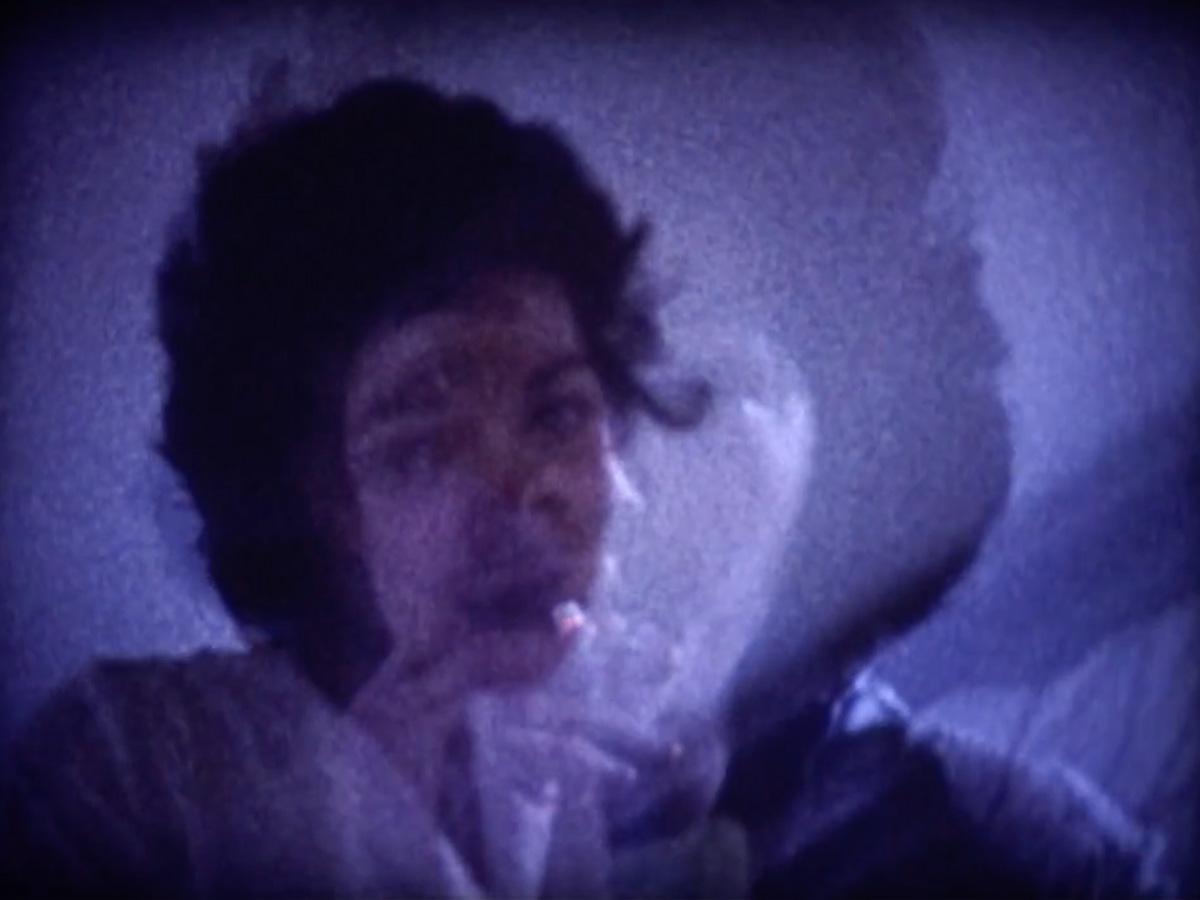
This video diary depicts a young woman’s flat, the fears and fantasies about her body plainly revealed as she wakes up with a bloated face, full of self-loathing after a night of compulsive over-eating.
After twenty years of silence, filmmaker Olga Lucovnicova returns to her great-grandparents’ home, where she endured traumatic experiences that left a lasting impression on her memory.
Immersed in the community of artists and local residents on the island, Nicola L. approached Ibiza as a living landscape, shaped by mythology and shared experiences. In Les têtes d’Ibiza, fiction and documentary flow seamlessly into one another.
Pol Gasco Robles is enchanted by the golden mountains that tech capitalists and crypto bros promise him online. Material luxury is not a by-product of success, but a goal in itself. Gala Hernández Lópezasks him critical questions.
Obtaining official documents is a symbol of coveted freedom and security for migrants. But how do you navigate the administrative labyrinth? This film explores the relationship between identity, race, and European bureaucracy.
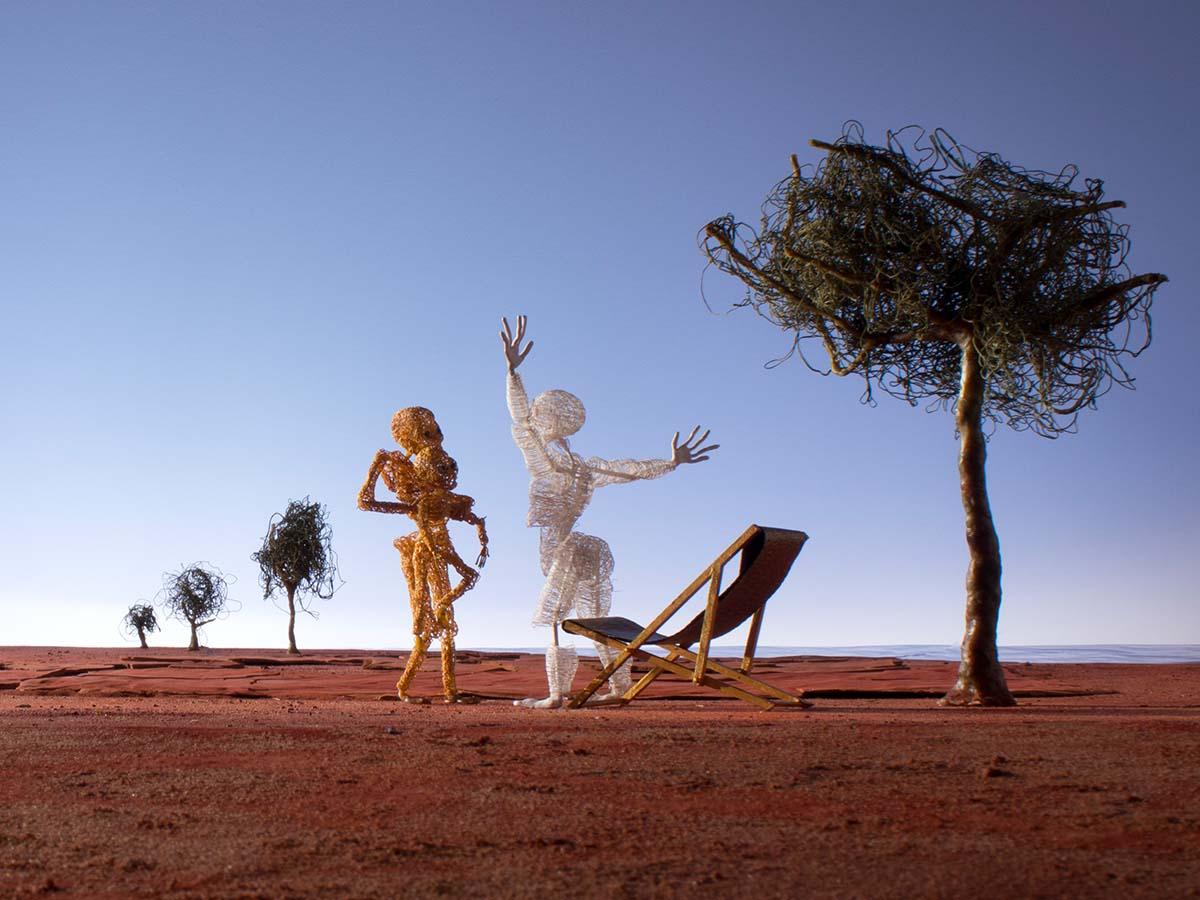
People are heading for a better place on either side of the ocean. Although their paths do cross at times, they never really seem to meet. Paradise is a light-hearted yet critical reflection on the ethics of tourism.
Artist Eva Giolo films her friends in their own homes and asks them to perform a few simple actions: gestures that reflect the fragile balance of everyday life, and, at times, become more aggressive. A cinematic poem in response to the global pandemic of 2020.
Three years after the publication of Marguerite Duras’ children’s book Ah! Ernesto, Jean-Marie Straub and Danièle Huillet pull the titular protagonist from its pages for an unconventional retelling of the short story.
Through a mix of stop motion and long takes, Vukica Đilas compiles an encyclopedia of the mundane, spanning almost thirty years and filled with memories of loved ones, travels, and sociopolitical sidelines. Her observations are like those of a child, awed by her surroundings and the details they reveal.
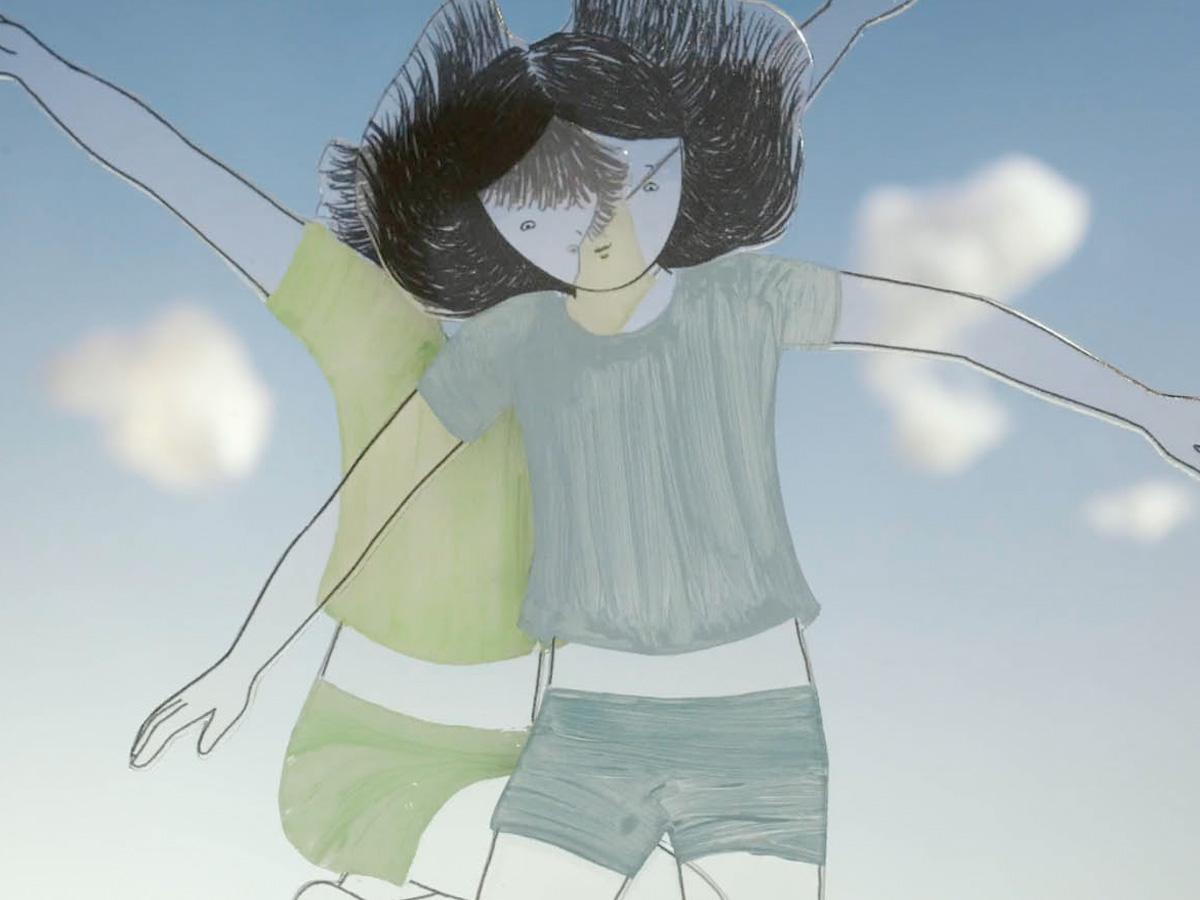
Inseparable best friends spend their last summer holiday of childhood amusing themselves around the house. As summer progresses, their bodies start to morph and shift, and an awkwardness descends on their friendship. Puberty seems determined to interrupt their bond.
By interweaving esoteric texts and images, Working Knowledge of Ritual underscores the interconnectedness of spirituality and nature. The film muses on our energies alongside the natural world, inspired by the writings of Leonard Jones.
The routines of two women fuse together over time. One is busy with her bread, the other with her memories. Their similar gestures, repeated again and again, slowly unfold the special bond that unites them.
The endearing observation Spaghetti Aza paints not only the portrait of a sleepy boy but also, indirectly, of two doting parents. A one-minute home movie by Ken Jacobs, a pioneer of the American avant-garde film of the 1960s and ’70s.
Rana Nazzal Hamadeh’s colourful, low-resolution imagery searches for indigenous plants, ravaged by settlement colonialism. More than a condemnation, Hamadeh’s docu-essay feels like a reappraisal of the (political) power that lies within crops like deerhorn and sumac.
In this fictional epistolary film, writer Marguerite Duras, a member of the French Resistance during the Second World War and partner to a Holocaust survivor, uses her titular alter ego to voice a deeply personal grief.
After managing to scrape together money to pay for an abortion, the director decides to celebrate with a party. In attendance are her geriatric ska musician neighbor, semi-retired gang affiliates, her gay roommate, and ever-present bedbugs.
Long still frames, text, and sound are woven together to unfold the narrative of an anonymous group that fills its time by plotting distances. Innocent measurements give way to political ones, examining how image and sound communicate history.
Through the lens of her father’s camcorder, she looks back on a period she can no longer remember. Twenty years after surviving childhood cancer, she searches for traces of illness between scars and desires.
Marthe Peters seeks in her beloved cat Henry something soft and tender to inhabit, a little fur to retreat into. Between bedsheets and freckles, a love declaration emerges. An ode to the intimate worlds where we learn to live and to rest.
This experimental animated film delves into feelings of loss and helplessness, remnants of a traumatic experience. The emotional wounds are visually translated into a pulsating presence that embodies a dark and disturbing image of femininity.
A silent film of collaged and painted sequences of lovemaking between artist Carolee Schneemann and her then partner, composer James Tenney, observed by their cat, Kitch.
Eighty years later, Theo Panagopoulos sheds a bitter light on archival footage. The director builds a dystopian bridge between the harbinger of the Nakba in 1948 and today’s genocide. Where are the plants and the people now? Do they still colour the regions?
Martí arrives in Bilbao for an artistic residency. In his new room, his clothes occupy only a small portion of the enormous wardrobe. But when he meets someone, the wardrobe slowly begins to fill up. Where has the emptiness gone, the free space, the little corner that was his?
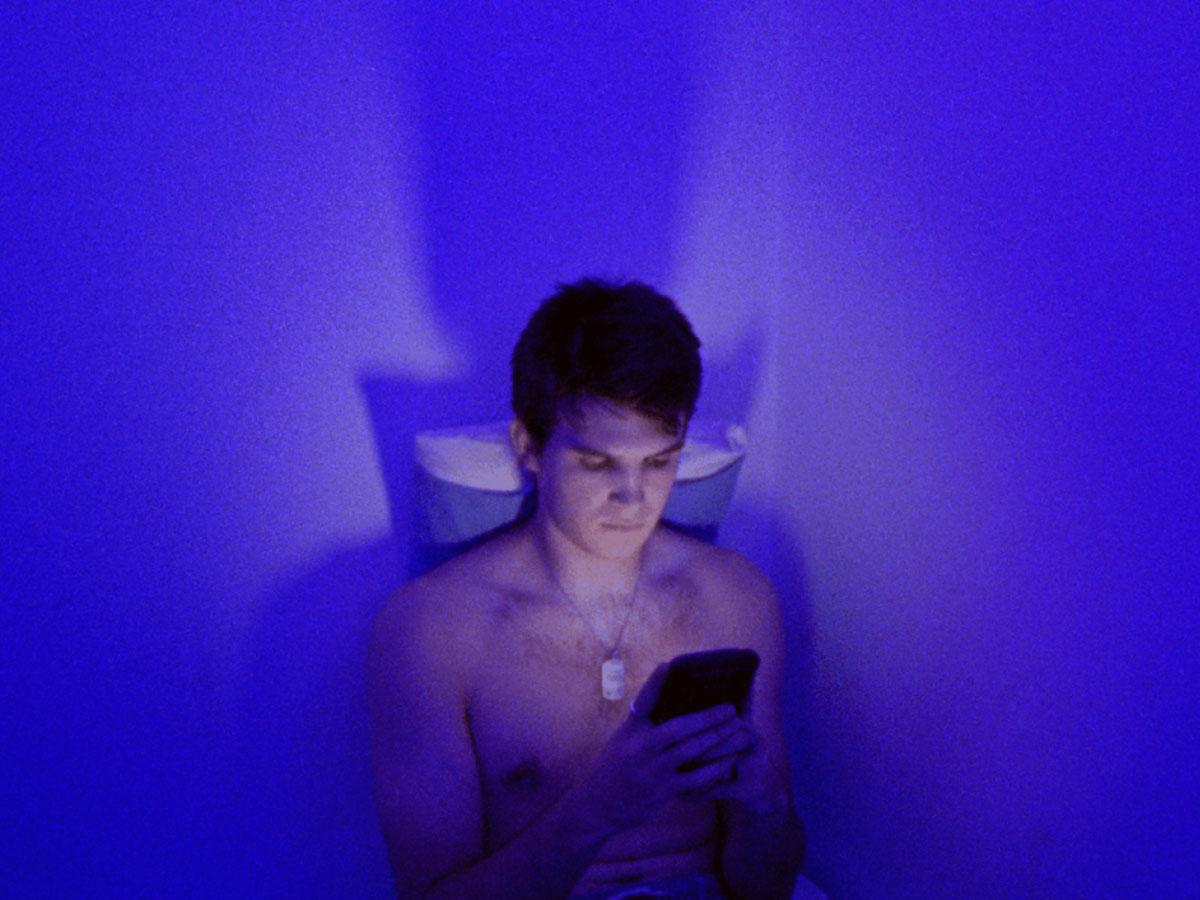
A broken phone and the digital memory of a broken queer relationship. Through the careful manipulation of discarnate metal components and the filmmaker’s attentive look at an intimate archive, a fading first love surfaces. Loveboard is a playful reflection on what remains.
Like an animal in one of Eadweard Muybridge’s scientific photo experiments, five undramatic moments in a man’s life are observed by a woman. A study in visual obsession and a twist on the notion of the “gaze”.
A sparing and minimal travelogue of Istanbul. A foreigner meditates on the unraveling of a relationship while moving from hotel room to hotel room. In a city simultaneously devoted to Islam and secular nationalism, she finds refuge in the frailty and severity of rituals.
Every year on the 10th of November, at 09:05 in the morning, individuals across Turkey cease all activities. Cars pull over, and pedestrians stop and stand still, in remembrance of Mustafa Kemal Atatürk (founder and first president of the Republic of Turkey), who died on this day and time in 1938. Els Opsomer captures such a moment on film.
Through dancing, The Motherfucker’s Birthday shows the evil of the dictator and the horror people endure under powerful political leaders. The film presents dancing, a universal and uniquely human activity often representing joy, with eerie footage of Saddam and his sons’ torture tools while they dance.
The Hymns of Muscovy is a trip to the eponymous planet, which is an upside-down space twin of the city of Moscow. Gliding along its surface, we look down at the sky and see historic architectural styles fly by—the exuberant Socialist Classicism, aka the Stalinist Empire, the laconic and brutalist Soviet Modernism, and the hodgepodge of their contemporary knock-offs and revivals.
Every form of communication involves deciphering codes. In Before Then, Mengzhu Xue attempts to confess a secret in the form of a letter in English, which she writes out phonetically in Chinese, and asks her grandmother to read out loud.
A wistful but witty account of a trip to Beijing by filmmaker Viv Li, a Chinese art student who has been living abroad for ten years. Her stay with her family mercilessly exposes how uprooted she has become by her life abroad.
Hand-painted watercolours explore bodies, desire, and the tension between both in this experimental animated film. Due to an explosion of colour and movement that escapes classical animation, an unusual sensorial force is achieved. Alternating colours, lines, and density, the drawings question pornography and normative sexuality.
It is sometimes said that if a man places a pearl under the skin of his penis, he will bring the woman the greatest pleasure. He grants her the greatest of all pleasures, while she will give him anything he desires. After a playful love dance, she melts into him, at the cost of losing themselves in each other to arrive at their deepest desires.
On the outskirts of the city, the new modern buildings are silent, and the motorway bridge drones. Birds are circling in the sky, and a young man, concealed by his hoodie, is riding his e-scooter along a park path. The only irritating element is the rifle over his shoulder. Cyclepaths conveys a mood of high alert, even though the disaster has, in fact, already happened.
In Emmanuel Marre’s vérité film, not the filmmaker or his camcorder dictate the mise-en-scène, but an alternating montage of Brussels-based parents styling their children’s hair with whatever they have at hand. Their direct but intimate instructions and the bathrooms, kitchens and living rooms that function as ephemeral hair salons sculpt the decor, rhythm, and imagery.
Blight revolves around the building of the M11 Link Road in East London, which provoked a long and bitter campaign by local residents to protect their homes from demolition. What is presented is simultaneously fact and fiction.
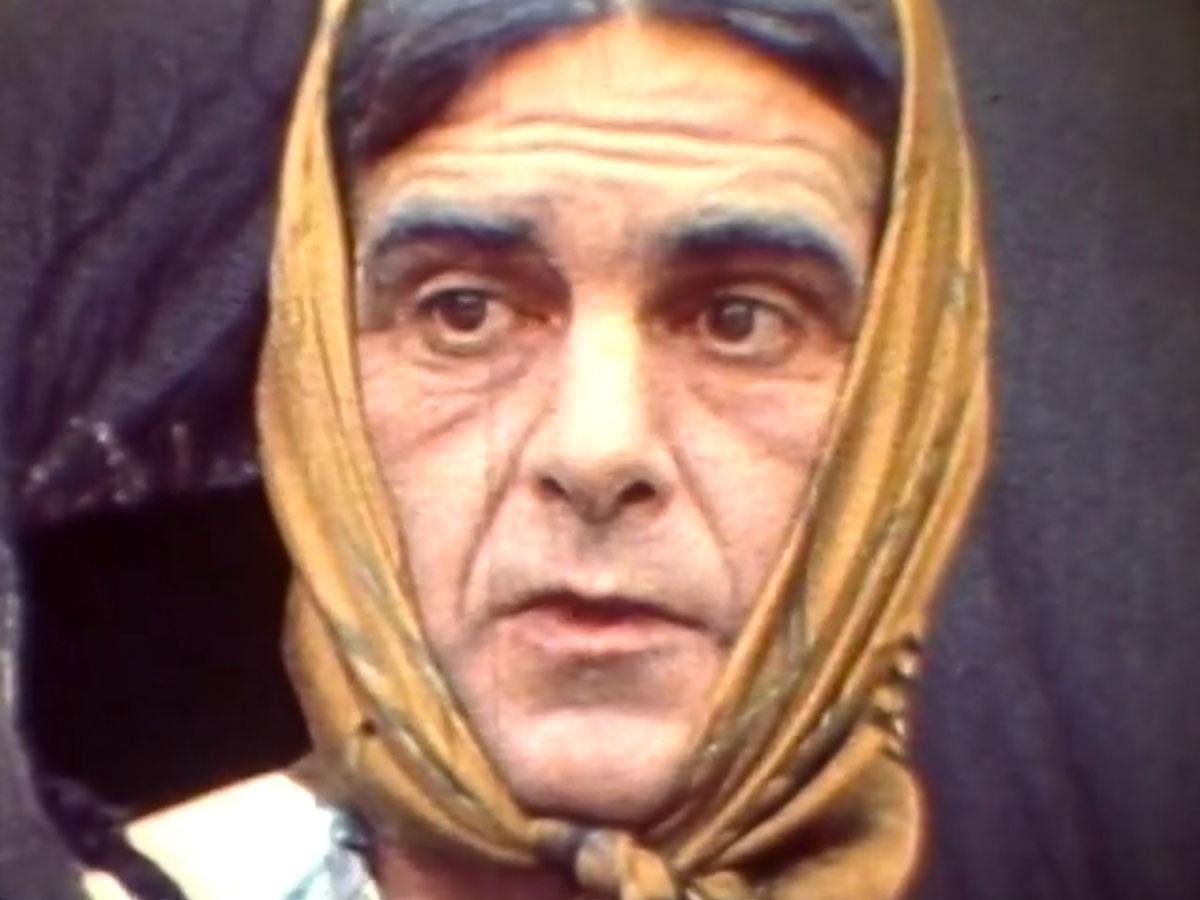
In this documentary-cum-survey made in 1979, basic existential questions are asked in the form of a street survey probe. Forty-four selected Poles, representing various professions and ranging in age from seven to a hundred years old, answer three questions: When were you born? Who are you? What do you want (in life)?
Using newsreel footage and a song by Lena Horne, Cuban filmmaker Santiago Alvarez fired off Now!, one of the most powerful bursts of 1960s propaganda. Made almost entirely from existing newsreel footage, the film tackled the pressing political issues of the time, from racism to imperialism.
In 1954, on a Calais beach, Agnès Varda took a photograph of a man, a boy and a dead goat. Almost thirty years later, she returns to that image, the moment she made it, the way she remembers it (sometimes incorrectly, as she finds out), and the interconnections between past, present and future.
A silent meditation on death depicting bodies lying in a morgue, this is one of the starkest works of body horror in which Brakhage makes the monster our very own perception.
Of the more than eighty moving-image works that Barbara Hammer created, her 1974 film Dyketactics remains her most iconic. A four-minute paean to lesbian sexuality, the film publicly announced Hammer’s blossoming sexual identity.
A tale of first love. Romeo and Polly sit in separate cars outside a pub, waiting for their parents. They're bored until they notice each other—at first, they bicker and play it cool, but by the time they have to say goodbye, the sparks of first love are flickering.
Maryam Tafakory creates an intimate inner world that moves between the concrete and the abstract. Layers of found and original footage are superimposed to fill in some of the cracks, the deletions, the limits of representation. Mast-del is a love song that would never pass through censorship.
Clips sampled from films, newscasts, sporting events, music videos, and citizen videos traverse the twentieth century, focusing on the lives of Black people set against the backdrop of systemic racism and White supremacism. Taken as a whole, Jafa’s montage comprises a poignant, visceral meditation on African American identity and history.
Brakhage’s avant-garde classic is an intimate impression of the birth of his first child. The film features the first contractions, the actual delivery, and the cutting of the umbilical cord.
A little girl is taken on a mind-bending tour of her distant future. An element of childhood whimsy is integral to balancing out the film’s dark absurdism, paving the way for its core theme: life is precious, and the sadness permeating our day-to-day is a reminder to cherish it.
In this Second Wave Feminist pamphlet, Agnès Varda invites women, young and old, dressed and nude, proletarian and upper-class, to answer the question: What does it mean to be a woman?
With a 16mm Bolex camera, French-Peruvian filmmaker Rose Lowder developed her own unique way of filming. In her cinema of perception, she interweaves time and space. Her famous “Bouquets” consist of a series of one-minute compositions whose 1440 frames are interlaced so that each bouquet of flowers also becomes a bouquet of images.
Filmmaker António Reis (with the help of Margarida Cordeiro, his wife) portrays the life of Jaime Fernandes, a peasant diagnosed with paranoid schizophrenia. They focus on the artistic legacy he left behind.
Joris Ivens films Amsterdam during a rain shower. This poetic city symphony, a “cine-poem” per the film’s opening title cards, shifts moods, following the gradual transformation from sunny Amsterdam streets to raindrops in the canals and on windows, umbrellas, and trams, until it clears and the sun breaks through once again.
A day in the life of a camel, endlessly walking in circles in a sesame mill: a gloomy, small space. But this remarkable film also has humour. Those who wish to can see a parallel between the emotional life of the dromedary and that of censored filmmakers in Sudan. Both dream of freedom.
In this expression of gendered pain, joy, and hardship, Chick Strand collaborates with five women who share their experiences through direct, frank stories. Throughout these testimonies, Soft Fiction considers the identification and representation of womanhood, and the sense of possession and dispossession through consensual and abusive sexuality.
llusions is a gripping critique of cinema’s power to shape perception, exploring the myth of racial identity. Julie Dash’s drama shows the instrumentalisation of Hollywood during wartime.
This bittersweet film from Jean Renoir, based on a story by Guy de Maupassant, is a tenderly comic idyll about a city family’s picnic in the French countryside and the romancing of the mother and grown daughter by two local men.
This short animated film seems playful only at first glance—in fact, it tells the story of a life on the margins of society in a no less disturbing way. While the filmmaker is reading quotes from conversations with an invalid man from eastern Germany, a mechanical ballet of light switches and plastic dolls is set in motion.
Everything in Anticipation of the Night is shown in a multitude of aspects, at varying speeds, with crucial changes in lighting and graininess. This film bids farewell to the protagonist’s last dying thought and to all the primitive “point of view” tricks of narrative cinema.
Made in 1993, when the Bosnian War was at its apex, this film compresses untold hours of action into two minutes. A static photograph is revisited once and again. Hail, Sarajevo is a morsel of history in and of itself.
In a shopping mall, two women sing about their favourite items but are quickly pursued by a masked cannibal who is intent on forcing his way to their love. Possibly in Michigan is an operatic fairy tale of cannibalism and dread in America.