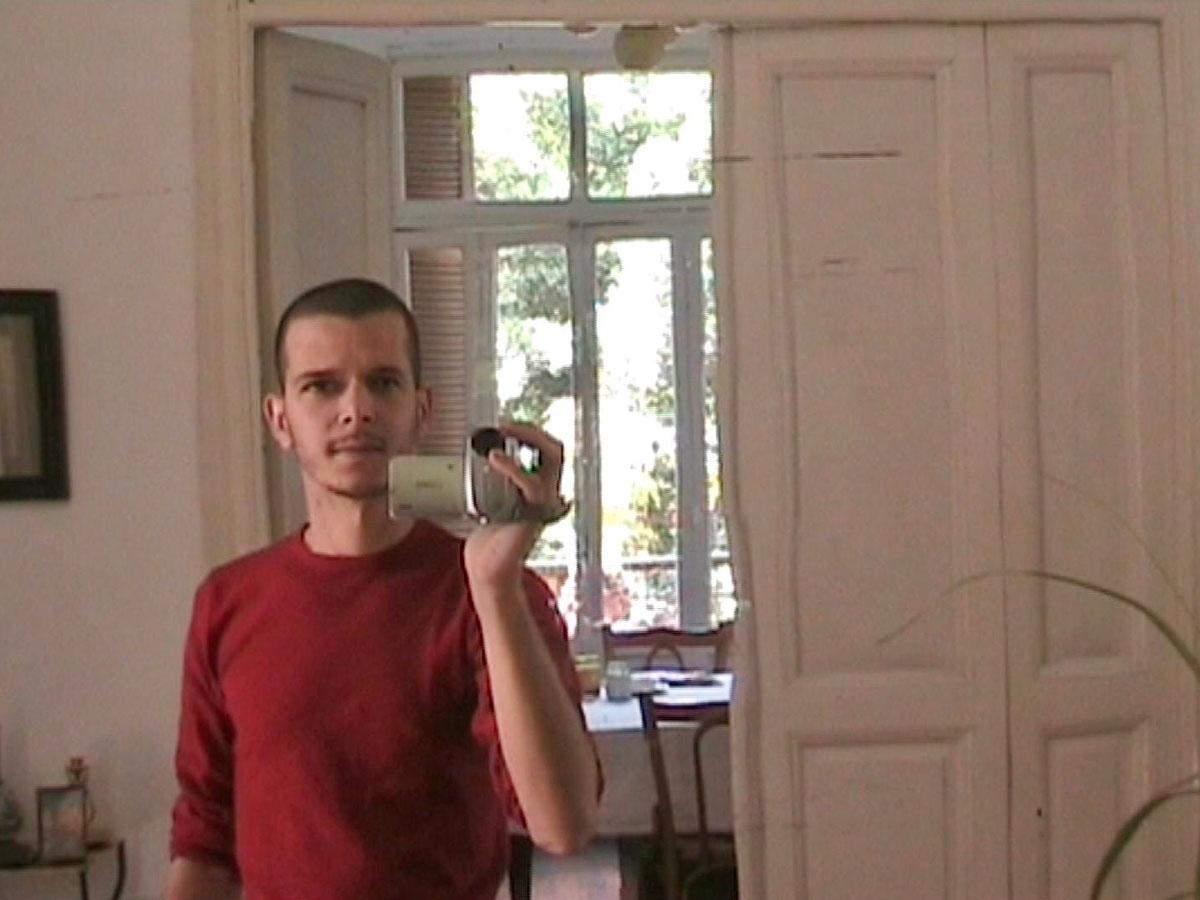
Moroccan writer and filmmaker Abdellah Taïa wanders through Cairo. His impatient handycam scans the Egyptian city. Eighteen years later, Taïa looks back on the memories he and his lost love shared there.
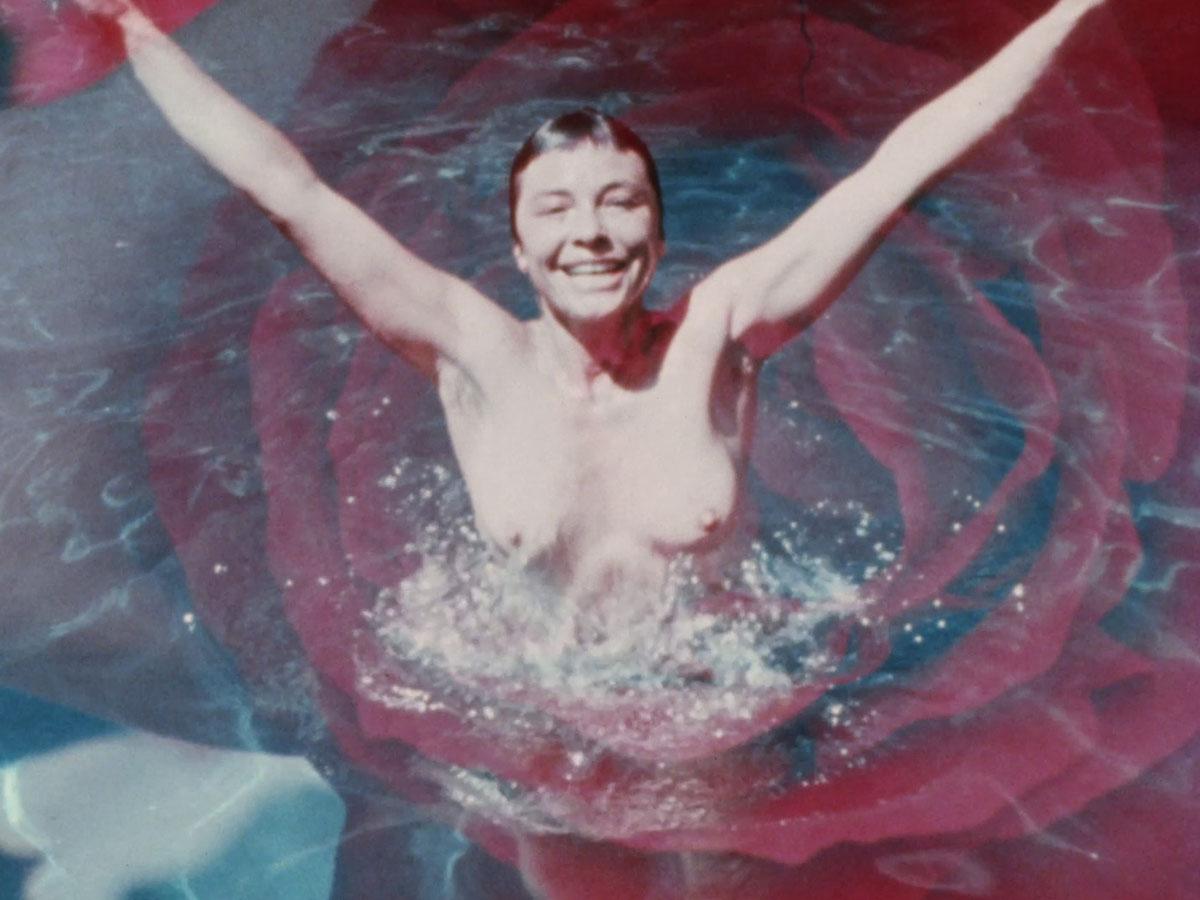
A series of cameo portraits of Barbara Hammer’s friends and lovers intercut with a playful celebration of fruits and vegetables in nature. The culminating footage evokes a tantric painting of sustained sexuality.
Using the sixth century B.C. lyricist’s poetry, a group of women unwrap the papyrus gauze of the lesbian goddess and bring her to life. Made by Barbara and six students at the Women’s Building in Los Angeles.
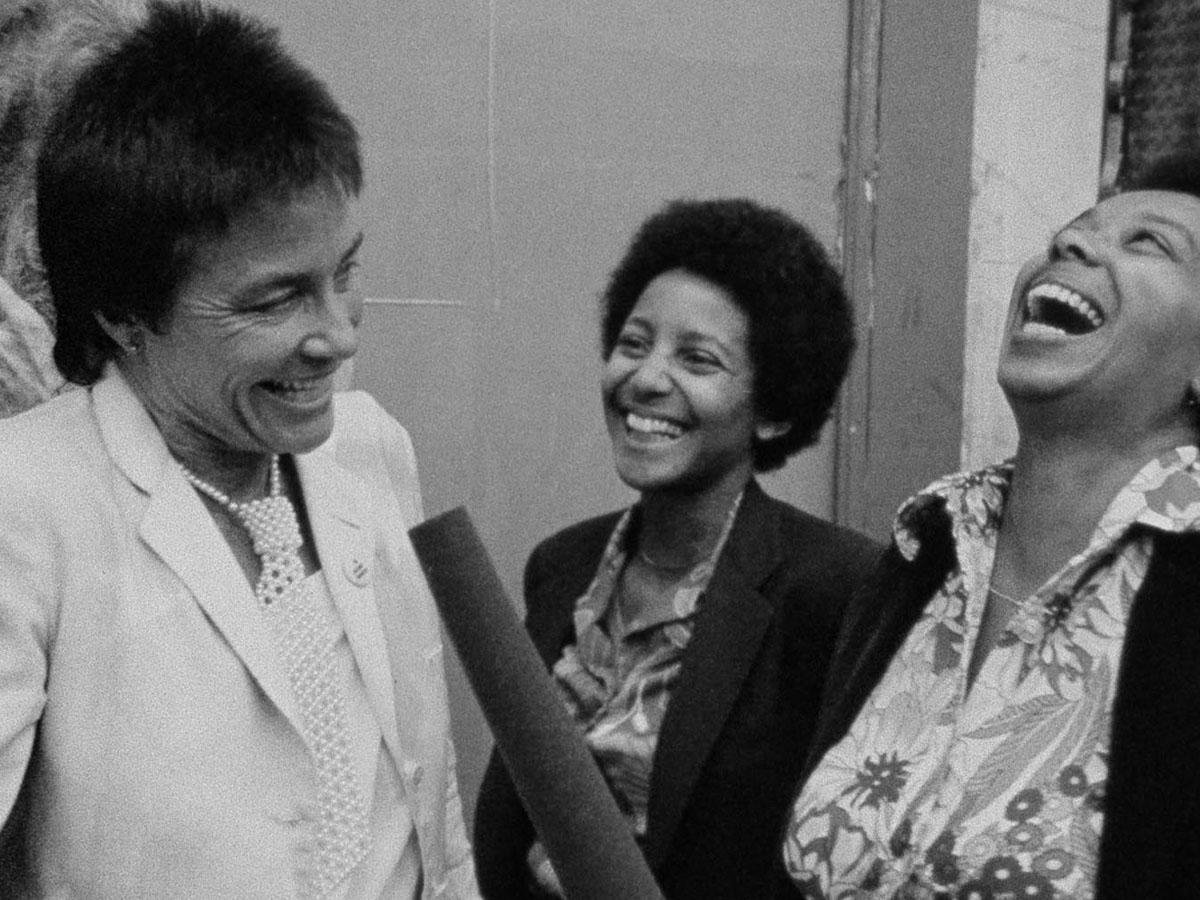
Barbara Hammer takes out her camera to film audiences at screenings of her films. She wanted to show the diversity in a women’s audience: the sophistication, the thoughtfulness, the fun-loving spirit, the flirtations, the detailed, the subtle.
Martí arrives in Bilbao for an artistic residency. In his new room, his clothes occupy only a small portion of the enormous wardrobe. But when he meets someone, the wardrobe slowly begins to fill up. Where has the emptiness gone, the free space, the little corner that was his?
A broken phone and the digital memory of a broken queer relationship. Through the careful manipulation of discarnate metal components and the filmmaker’s attentive look at an intimate archive, a fading first love surfaces. Loveboard is a playful reflection on what remains.
Every form of communication involves deciphering codes. In Before Then, Mengzhu Xue attempts to confess a secret in the form of a letter in English, which she writes out phonetically in Chinese, and asks her grandmother to read out loud.
Hand-painted watercolours explore bodies, desire, and the tension between both in this experimental animated film. Due to an explosion of colour and movement that escapes classical animation, an unusual sensorial force is achieved. Alternating colours, lines, and density, the drawings question pornography and normative sexuality.
Of the more than eighty moving-image works that Barbara Hammer created, her 1974 film Dyketactics remains her most iconic. A four-minute paean to lesbian sexuality, the film publicly announced Hammer’s blossoming sexual identity.
Maryam Tafakory creates an intimate inner world that moves between the concrete and the abstract. Layers of found and original footage are superimposed to fill in some of the cracks, the deletions, the limits of representation. Mast-del is a love song that would never pass through censorship.
A polemical, avowedly personal video documentary on the American Black gay experience. Marlon Riggs celebrates Black men loving Black men as a revolutionary act.
Zuza Banasińska reinvents the famous Slavic witch Baba Yaga through a clever montage of films from the Polish Educational Film Studio archive, containing sexist content. Questioning their own non-binary identity, they unleash the queer dimension of found footage tasked with conveying a normative conception of identity.
The work of French activist, novelist, and essayist Jean Genet was considered controversial in the forties and fifties, because of its explicit homosexuality. Genet made only one film in his entire life, but Un Chant d’amour went on to inspire both David Bowie and Rainer Werner Fassbinder.
Punk author Kathy Acker’s work is the starting point for a conversation about gender identity and body transformation and is linked to the punk movement of the 1970s and 1980s.
An introspective essay about the search for a place between reality and imagination: a placeless place made up out of dreams and a longing for fluidity. Slowly, the grains of the compressed image become the sands of the atopic beach, revealing an imaginary place.
Scorpio Rising is perhaps Kenneth Anger’s best-known work. Set to the beats of 1960s pop music, the film follows a group of bikers and explores the occult, homosexuality, and Nazism. It also idolises rebellious public figures such as James Dean and Marlon Brando.
In this cyberpunk animation, four creatures wobble like marionettes in a black void. An alien power tries to subdue them; police voices strike as if they were truncheons, but these vulnerable bodies start to fight back.
In this urgent diary film about longing for freedom and community, the filmmaker reflects on the individual yet collective experience of growing up queer in Tunisia today.
Confused about German bureaucracy and questioning her sexuality, Hoda, an Iranian asylum seeker in Berlin, finds herself hooked on Magdalena, who promised to ensure her asylum by marrying her. Due to changes in Magdalena’s private life, her decision to marry Hoda becomes more complex.
Mexico, October 2011. A mysterious dream gives birth to Cuco, a transgender latex pirate activist. This essayistic film follows their quest to create more recognition for the queer community.
The Brazilian trans woman Gisberta lived as an immigrant in Portugal. After she was brutally murdered, she became an icon for the transgender rights cause.
Portrait of a young teenager with mental health issues who is passionate about karate. They wander around a housing estate in East Kent, locked in verbal and physical battles with a hallucinatory demon.
1947’s Fireworks is a milestone, as the first American film with a gay narrative. At age seventeen, Anger himself plays the lead character. The film illustrates the awakening of a suppressed desire, a gross fantasy.
In the dressing room of Cabaret Mademoiselle, Brussels’ hotspot for drag queens, four queer performers are getting ready in front of the mirror. It’s the perfect moment to talk and open up: an intergenerational conversation about coming out and a mother’s love.