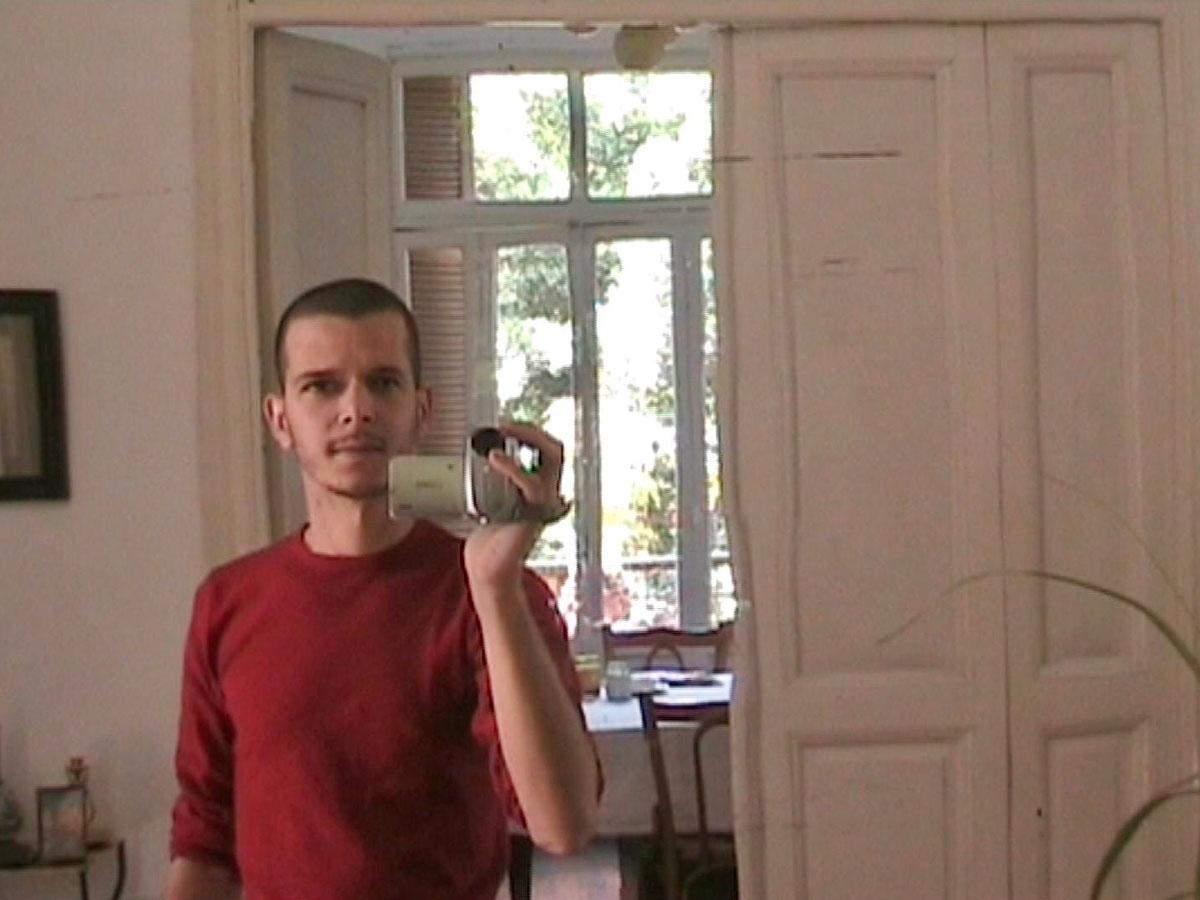
Moroccan writer and filmmaker Abdellah Taïa wanders through Cairo. His impatient handycam scans the Egyptian city. Eighteen years later, Taïa looks back on the memories he and his lost love shared there.
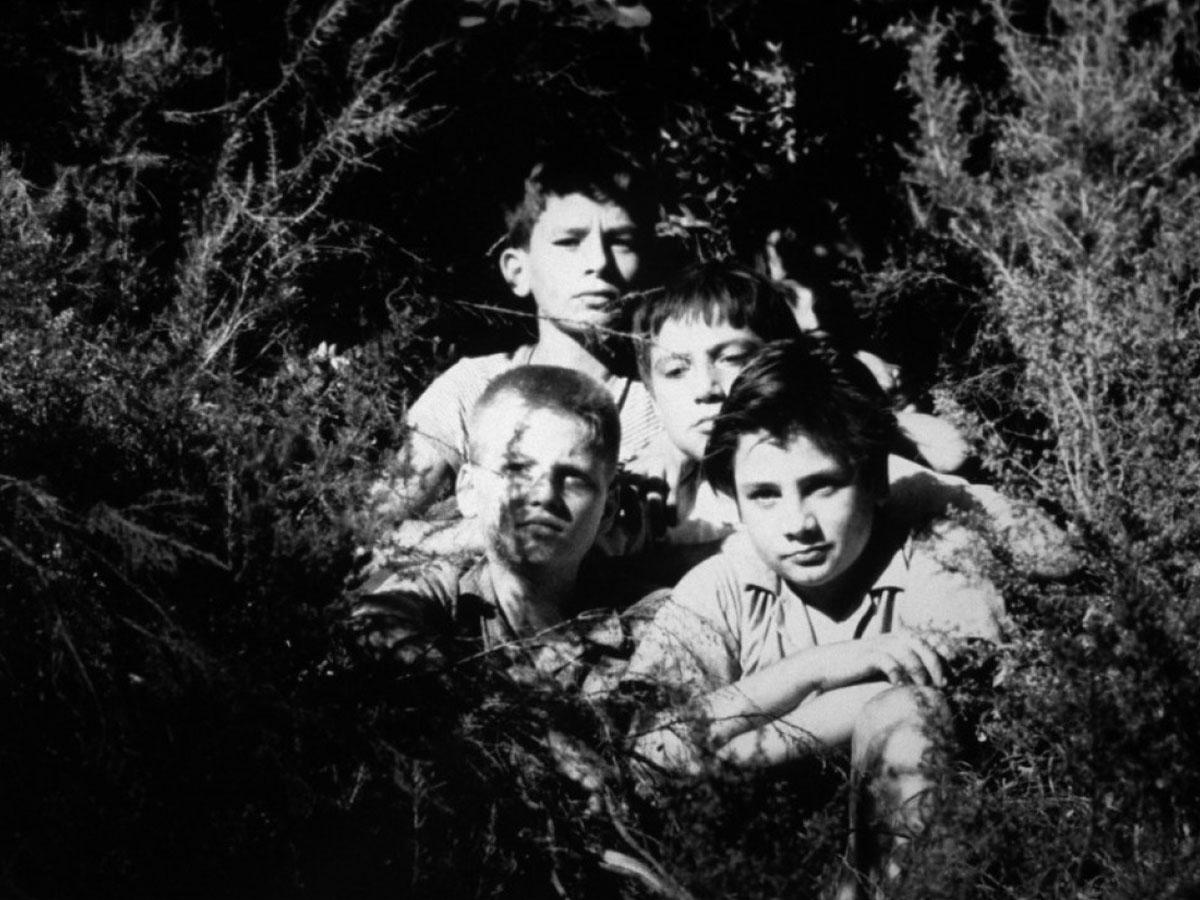
In François Truffaut’s debut film, the beautiful Bernadette cycles over the bridges and through the scrublands of Nîmes. Wherever she goes, five mistons (local slang for brats) are hot on her heels. They see her as the embodiment of their budding, prepubescent desires.
This found footage collage reveals eerie similarities that unambiguously lay bare a pattern: boundaries are being crossed in the relationship between humans and animals.
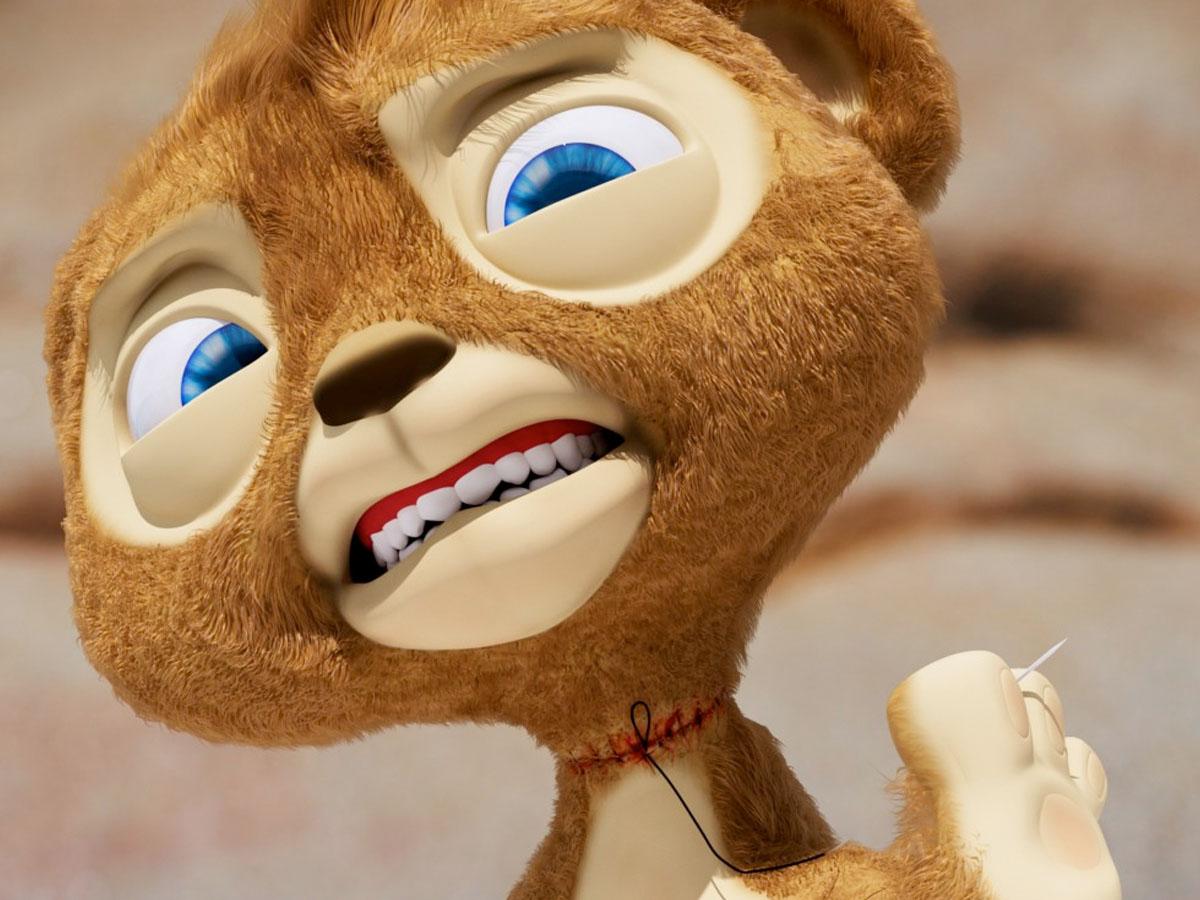
In this hybrid 3D animated film, a pseudo-intellectual menagerie reflects on the contemporary political landscape on the other side of the Corsican Sea through dry wit and Disney fonts.
Pol Gasco Robles is enchanted by the golden mountains that tech capitalists and crypto bros promise him online. Material luxury is not a by-product of success, but a goal in itself. Gala Hernández Lópezasks him critical questions.
Three years after the publication of Marguerite Duras’ children’s book Ah! Ernesto, Jean-Marie Straub and Danièle Huillet pull the titular protagonist from its pages for an unconventional retelling of the short story.
In this fictional epistolary film, writer Marguerite Duras, a member of the French Resistance during the Second World War and partner to a Holocaust survivor, uses her titular alter ego to voice a deeply personal grief.
In 1954, on a Calais beach, Agnès Varda took a photograph of a man, a boy and a dead goat. Almost thirty years later, she returns to that image, the moment she made it, the way she remembers it (sometimes incorrectly, as she finds out), and the interconnections between past, present and future.
In this Second Wave Feminist pamphlet, Agnès Varda invites women, young and old, dressed and nude, proletarian and upper-class, to answer the question: What does it mean to be a woman?
With a 16mm Bolex camera, Rose Lowder developed her own unique way of filming. Her famous “Bouquets” consist of a series of one-minute compositions whose 1440 frames are interlaced so that each bouquet of flowers also becomes a bouquet of images.
This bittersweet film from Jean Renoir, based on a story by Guy de Maupassant, is a tenderly comic idyll about a city family’s picnic in the French countryside and the romancing of the mother and grown daughter by two local men.
Made in 1993, when the Bosnian War was at its apex, this film compresses untold hours of action into two minutes. A static photograph is revisited once and again. Hail, Sarajevo is a morsel of history in and of itself.
Ousmane Sembène’s first film uses a mixture of documentary and fiction techniques to tell the story of a young cart-driver in Dakar. The Wagoner illustrates the continent’s poverty, showing that independence has not solved the problems of its people.
Mati Diop’s experimental documentary Atlantiques is a precursor but also a narrative sidestep to what would become her feature debut, Atlantics, ten years later. A group of young Senegalese men discusses a possible attempt to cross the ocean to Spain.
Marguerite Duras takes us on a nighttime car ride through an unpopulated Paris in mid-August, in a single, uninterrupted shot from inside the car. From the end of night till dawn, a depopulated Paris soothes itself with Duras’ affecting voice-over, accompanied by cello accords.
A girl from a shantytown travels to the city to become an itinerant newspaper vendor. Mambety’s richly textured view of urban life fuses fiction and documentary, displaying the rampant poverty and endemic misogyny in the modernising capital of Dakar.
In 1967, Agnès Varda was living in California when one of the Black Panthers founders, Huey P. Newton, was arrested during a traffic stop for killing a police officer—a clear case of racial injustice, according to the Panthers. The following summer, Varda took her 16mm camera to a “Free Huey” demonstration in Oakland.
A man opens the large gate of the Lumière factory in Lyon, France, in 1895. Through the gate and a smaller door next to it, workers stream out for lunch. Once all the workers have left the factory, the gatekeeper closes the gate again.
A red balloon with a mind of its own follows a little boy around the streets of Paris. This beguiling allegory of innocence and transcendence is the only short film ever to win an Oscar for best original screenplay.
The black-and-white science fiction film from 1902 has since become a canonical work. A Trip to the Moon was hugely popular upon its original release and used animation and visual effects that were very innovative at the time.
Alain Resnais combines poignant black-and-white archive footage of the Holocaust, such as mass graves and systematic destruction, with colour footage of the empty camp grounds of Auschwitz and Majdanek in 1955. Night and Fog raises critical questions about collective memory and the tendency to forget.
Germaine Dulac’s The Seashell and the Clergyman was arguably the first surrealist film ever made. The film tells the story of a clergyman who falls madly in love with a beautiful woman, but must defeat an equally eager rival.
While in San Francisco to promote her latest film, Agnès Varda gets a tip from an acquaintance. In Sausalito, a town in the San Francisco Bay Area, there lives a Greek painter named Jean Varda. Could they be related?
During her vacation in Cuba in 1963, four years after Fidel Castro came to power, Agnès Varda made a photo report about Cuban society and culture after the revolution. This delightful black-and-white composition makes the edit resemble a choreography and intermingles the photos with catchy Cuban rhythms.
A woman lies awake at night. Nearby, a set of theatre backdrops unspools itself, unveiling two alternate landscapes. Upon the woman’s blue sheet, a flicker of light reflects and illuminates her realm of insomnia.
A cat is half-sleeping, half-listening to Federico Mompou’s “Pájaro triste”. This first tape in Chris Marker’s Bestiaire trilogy, a series of short films devoted exclusively to animals, features his beloved cat, Guillaume-en-Egypte.
The work of French activist, novelist, and essayist Jean Genet was considered controversial in the forties and fifties, because of its explicit homosexuality. Genet made only one film in his entire life, but Un Chant d’amour went on to inspire both David Bowie and Rainer Werner Fassbinder.
In this saturated film, Varda captures 1950s tourism on the Côte d'Azur: clear skies, burning sun, and cheeky parasols. A touristic tour on the French Riviera’s exoticism, full of captivating imagery, bathed in an atmosphere of nostalgia.
Almost a decade after her in 2022 crowned “best film of all time”, Jeanne Dielman, 23 quai du Commerce, 1080 Bruxelles, Chantal Akerman made the twelve-minute I’m Hungry, I’m Cold. In it, two young chain-smoking Brussels girls run away from home, to Paris.
In Jacques Rozier’s second short film, Rentrée des classes, a little boy throws his school bag into the river on the first day of school, which leads to a thrilling adventure.
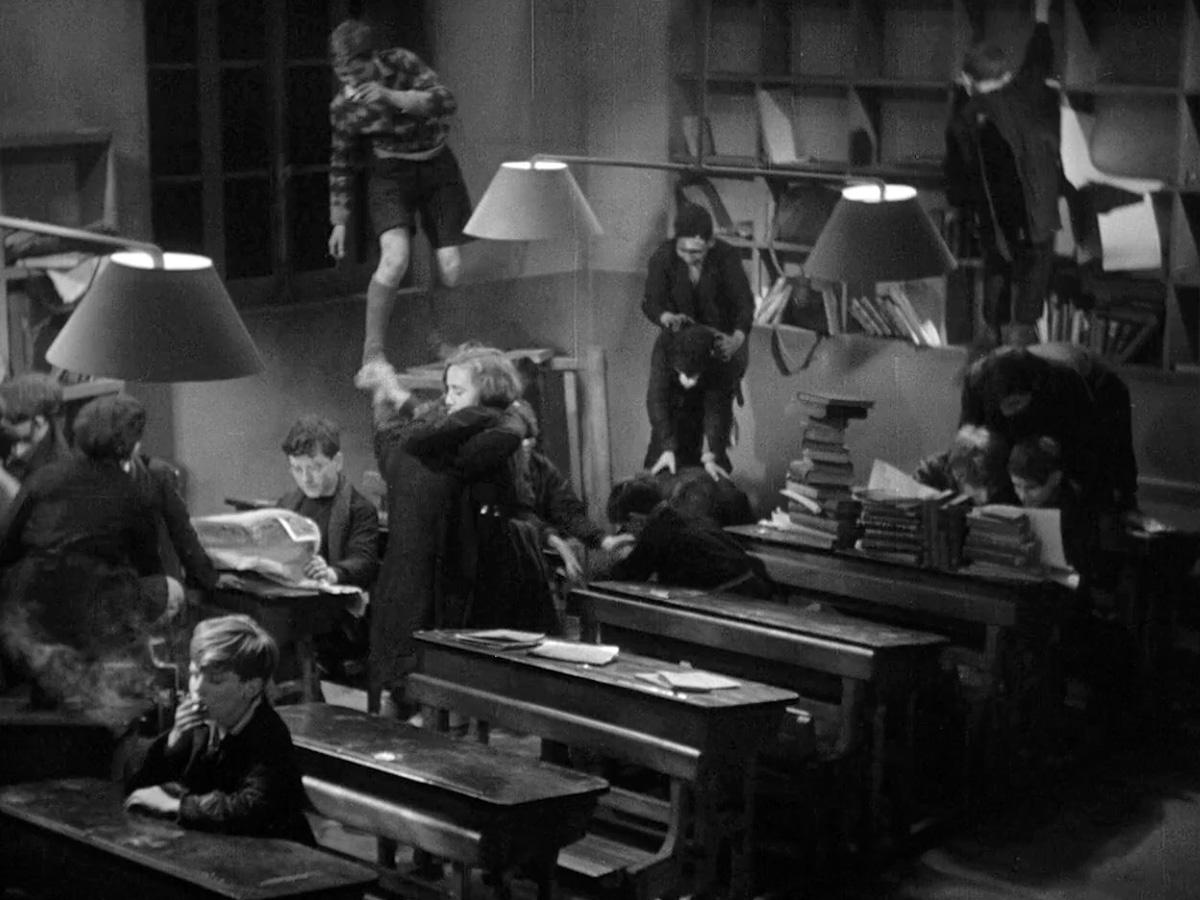
In Zero for Conduct, four rebellious pupils plan a revolt to take over the school. The film was first shown in Paris in 1933, but shocked so many viewers that it was subsequently banned from screens until the end of World War II.
In this cyberpunk animation, four creatures wobble like marionettes in a black void. An alien power tries to subdue them; police voices strike as if they were truncheons, but these vulnerable bodies start to fight back.
Spanish surrealist Luis Buñuel wrote his first feat together with Salvador Dalí, based on their dreams. Don’t get stuck on the plot. Buñuel deliberately omits chronology and opts for Freudian dream logic, in which scenes do not necessarily follow one another logically.
A portrait of contemporary suburban youth seeking to invent new contours of collective identity, against the backdrop of France in the throes of recession.
Mexico, October 2011. A mysterious dream gives birth to Cuco, a transgender latex pirate activist. This essayistic film follows their quest to create more recognition for the queer community.
Set in a post-apocalyptic near-future, La Jetée tells the story of an unnamed man whose vivid childhood recollections make him the perfect guinea pig for an experiment in time travel. After a lengthy period of conditioning, he is sent back in time, where he falls in love with a woman whom he once saw on a pier.
In a container, sitting between crates of merchandise, two men talk about their exile. Their stories about the crossing of endless borders come together in a common dream: to reach England.
A sleeping man dreams of a city at dusk. He is every angelic lover, caught off guard. The film goes in and out of his pulsating erotic dream: heated up, he dreams of landscapes, even of becoming the landscape.