Using images shared on the Internet by Israelis during the Gulf War, the First Intifada, and trance music gatherings, Shuruq Harb paints the portrait of a Palestinian teenager in the 1990s. In the midst of Israeli pop culture and the political climate of the Oslo Accords, she comes to grips with her anxiety.
Filmed in Shatila, a refugee camp built in Lebanon when thousands of Palestinians fled their country in 1948. At an undetermined moment in the future, the refugees’ dream of returning to Palestine becomes a reality.
In his contribution to the omnibus film RO.GO.PA.G (1963), Pier Paolo Pasolini depicts Orson Welles making a film about the crucifixion of Jesus, while he, the cast, and the crew behave quite unholy. La Ricotta is a short, apocalyptic tirade against the conventions of filmmaking and the unchristian coldness of contemporary Christianity.
Zinal, a small town in the Swiss Alps, looks straight up toward the melting glaciers of the Couronne Impériale. The townspeople struggle with nihilistic indifference. When the threat is so immediate, and their powerlessness so great, can their response be anything other than cynicism? Then a paraglider falls mysteriously from the sky, and Zinal starts to change.
Filmmakers Paul Shemisi and Nizar Saleh embark on a journey from the Democratic Republic of Congo to Germany to screen their latest film. However, during a layover in Angola, their trip takes a harrowing turn when airport authorities question the authenticity of their documents.
How to listen to a space considered empty? underneath it flickers suggestsdifferent perspectives on La Friche Josaphat, a verdant fallow land in Brussels threatened by real estate development.
This avant-garde work exposes how we hide behind a façade in times of crisis, as if nothing is wrong. Arthur Lipsett’s first collage film mixes dozens of black-and-white photographs with audio fragments. The film’s subtle criticism of the 1960s zeitgeist in the United States earned it an Oscar nomination.
This is a cinematic letter to the title character, who left Tunisia and now lives in Belgium. Shot in the first year after the Tunisian revolution, this is a poetic journey through a troubled landscape. Between order and chaos, the film reveals a land of disillusionment but also of humour and hope.
The dream of an Iran post-Islamic Republic is not only part of the online discourse, but also of the protests on the streets. This is precisely what Iranian visual artist Saleh Kashefi depicts in their award-winning video And How Miserable is the Home of Evil: Iran’s Supreme Leader (finally) falls.
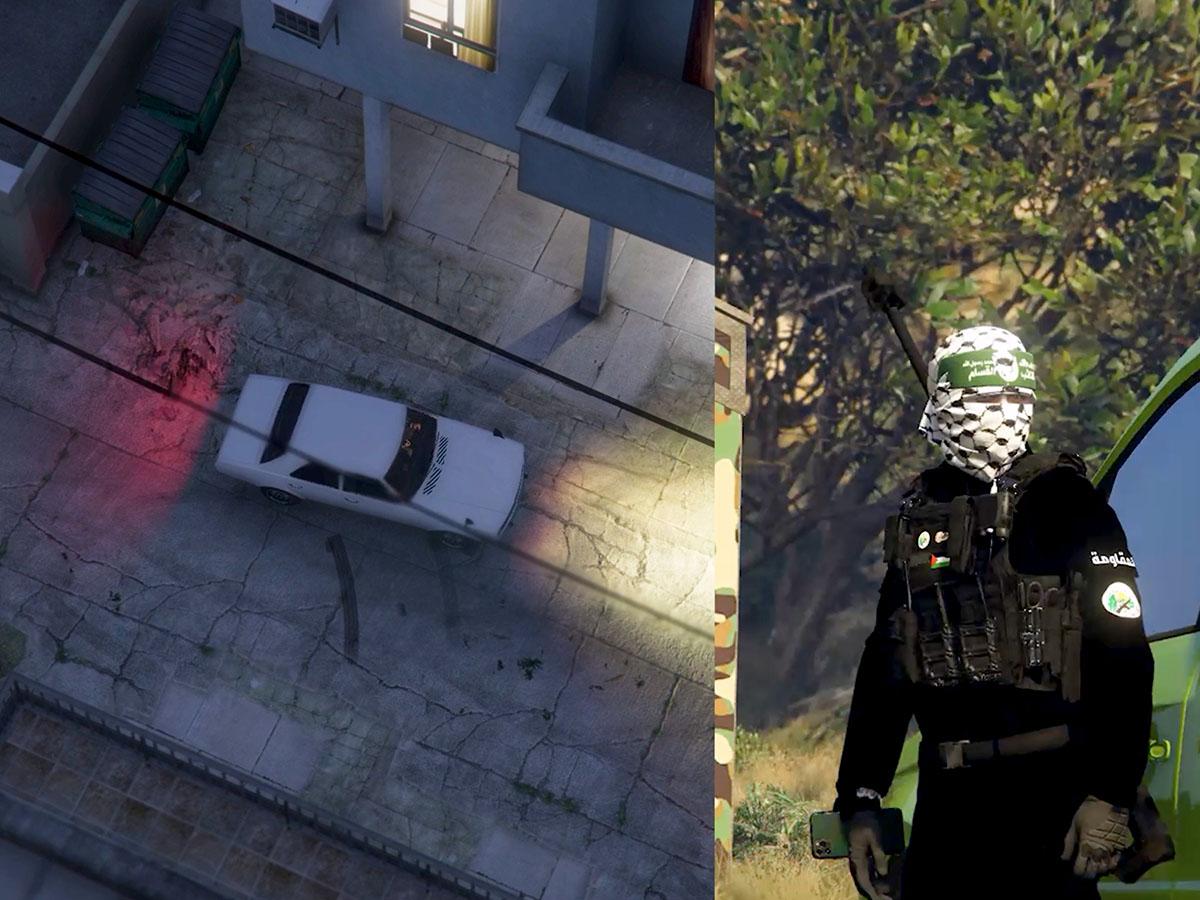
This short video essay explores how Palestinian gamers mimic life under colonial occupation in Los Santos, a fictional city in the Grand Theft Auto series, as a virtual proxy for the state of Palestine.
In 20th-century Colombia, resistance fighter Yarokamena, a member of the indigenous Uitoto tribe, called for rebellion against violent exploitation of the rubber mining industry in the Amazone and invoked the spiritual powers of war.
Eight thousand five hundred kilometres lie between the Amazon and the Ardennes. In his home country of Brazil, filmmaker Diego looks at the inaccessible forest from the outside. Its Belgian counterpiece, however, is easier to explore.
Punk author Kathy Acker’s work is the starting point for a conversation about gender identity and body transformation and is linked to the punk movement of the 1970s and 1980s.
In this cyberpunk animation, four creatures wobble like marionettes in a black void. An alien power tries to subdue them; police voices strike as if they were truncheons, but these vulnerable bodies start to fight back.
In this urgent diary film about longing for freedom and community, the filmmaker reflects on the individual yet collective experience of growing up queer in Tunisia today.
Drawing on digital memories and using online tools such as Google Maps, Aulona Fetahaj reflects on how it feels to be the child of refugees in the digital age.
The Brazilian trans woman Gisberta lived as an immigrant in Portugal. After she was brutally murdered, she became an icon for the transgender rights cause.
Pierre, 25 years old and on a scholarship for a prestigious Parisian university, is lodged by Francine, who is 75, disabled, and confined to her wheelchair. Both puzzled and disoriented, they witness the French presidential elections of 2017 play out.
Elephant is, without question, Alan Clarke’s bleakest film: a compilation of eighteen murders on the streets of Belfast, without explanatory narrative. After each killing, the camera dwells on the bodies, forcing the viewer to confront the brutality of their deaths.
In 1998, Semira Adamu, a 20-year-old Nigerian immigrant, died on Belgian soil of suffocation under a police pillow. Twenty years later, two women tell her story in a cry for justice. Through this film, they highlight the reality of detention centres: the harsh conditions of confinement, the suffering of detainees and the abuse by guards and police officers.