Overslaan en naar de inhoud gaan
yanco Home
Menu
  • Home
  • kijk
  • magazine
  • kalender
  • index
  • Abonneren
Zoeken Meld je aan
  • nl
  • en
You are here
  • Home
  • Magazine
  • Hier ben ik
© Self-Portrait (Jonas Mekas, 1980)
Self-Portrait (Jonas Mekas, 1980)

Hier ben ik

Jonas Mekas’ Self-Portrait (1980)

essay door
Gerard-Jan Claes
20.06.2025

“We’re running?” vraagt Mekas de cameraman. “We’re running!” antwoordt die. Mekas stelt de vraag nogmaals, alsof hij niet helemaal zeker is. Dan haalt hij een uurwerk tevoorschijn. “It’s a quarter to two, Saint Paul time. We should be finished by five minutes after two.” Zo begint Jonas Mekas’ Self Portrait 1980. Ondanks de titel filmt Mekas niet zelf. Hij richt zich tot een cameraman. Mekas staat in een tuin voor een huisje van vrienden in Saint Paul, Minnesota, en drinkt een blikje bier.

Een plan voor dit zelfportret lijkt te ontbreken. Net als de kijker weet Mekas enkel dat hij nu twintig minuten te vullen heeft. De camera zal onafgebroken blijven draaien tot de tijd om is. Mekas begint voorzichtig. Hij zegt zijn naam en waar hij zich precies bevindt. Dan volgen bespiegelingen over zijn werk. Zijn autobiografische cinema wordt ook wel omschreven als “film diaries”, vertelt hij. Elke dag filmt hij kleine “notities” die hij dan aaneenrijgt tot een film. Kleine stukjes fictie die weliswaar essentieel blijken voor zijn eigen leven, net omdat hij ze filmt en wil filmen.

“I’m being taped, I’m not being filmed actually,” zegt Mekas dan. In tegenstelling tot zijn eerdere werk tot dat moment, wordt dit beeld niet analoog maar digitaal op video gedraaid. Een medium dat hij niet minder waardevol acht dan film, maar beschouwt als een ander instrument met geheel eigen mogelijkheden én inhouden. “Cinema is constantly expanding, into new forms.”

Uiteindelijk maakt het minder uit wat Mekas ons vertelt. Hoewel hij in Self Portrait de camera niet zelf hanteert, laat hij ons met deze korte oefening toch iets wezenlijks zien over digitale video als kunstvorm. Onderzoekend maar standvastig plaatst hij zich voor de camera, alsof hij vooral wil begrijpen wat die nieuwe camera kan doen, wat er precies gebeurt op het moment dat ze begint op te nemen. Anders dan een filmcamera draait een digitale camera ook niet; ze is een machine die “aanstaat”. Dat verschil creëert een zekere lichtheid, een ijle textuur die ook het onderwerp lijkt te bepalen. Mekas lijkt tijd te veel te hebben, alsof hij gevangen zit in een eindeloos nu, zonder begin en einde. Hij draalt. “So here I am… and it’s but 90 degrees, and we are in Saint-Paul and I’m standing here… So where are we? It’s about three minutes after two.” Er is wel degelijk een afbakening – een tape van 20 minuten — maar die behoort tot een andere orde dan bij film waar je de meters (én het geld) hoort lopen en er een direct, fysiek contact met de tijd is.

Het is die inherente tijdelijkheid van het digitale die zich meester maakt van Mekas en ook een onmiskenbare kwetsbaarheid met zich meebrengt. In tegenstelling tot de gestage analoge cinema, lijkt tijd in het digitale domein voortdurend stil te staan of zich uit te rekken. Tijd schrijdt niet voort, maar stapelt zich diffuus en ongrijpbaar op. Juist door het ontbreken van een fysieke component moet de tijd voortdurend worden herbevestigd en herhaald.

In zijn latere werk zou Mekas de digitale cinema volmondig omarmen. “Onzichtbare technologie”, noemde hij het in 2015: het resultaat is zichtbaar, maar de machinerie zelf niet. “It’s like watching a spirit – there are results, but you don’t see how they got there.” Het is precies dat spookachtige karakter dat in Mekas’ zelfportret gestalte krijgt. Als digitale verschijning maakt hij tastbaar hoe hij telkens weer in beeld moet treden om niet te verdwijnen, om te kunnen blijven bestaan. Alsof hij zichzelf ervaart als een geest: “Hier ben ik. Hier ben ik. Hier ben ik. Hier ben ik. Hier ben ik…” Tot de tijd op is.

Lees meer

Self-Portrait

Jonas Mekas, Verenigde Staten, 1980, 20’

In wat je zijn allereerste ‘vlog’ kan noemen, reflecteert de Litouwse avant-garde filmmaker Jonas Mekas op zijn leven en op cinema en representatie.

Lees meer

    Bio Gerard-Jan Claes

    Gerard-Jan Claes (Belgium, 1987) is a filmmaker, lecturer, author, and curator. He is the co-founder and artistic director of the international film magazine Sabzian and co-founder of the independent film distributor Avila. As a filmmaker, Claes collaborates with Olivia Rochette (Belgium, 1987). Their joint filmography includes Because We Are Visual (2010), Rain (2012), Grands travaux (2016), Mitten (2019), and Kind Hearts (2022), which won the Grand Prix for Best film in the Generation competition at the Berlinale. Since 2009, the duo has provided audiovisual work for choreographer Anne Teresa De Keersmaeker and her dance company Rosas. For Sabzian, he co-edited, with Stoffel Debuysere, the publications Hong Sangsoo. Infinite Worlds Possible (2018), Wang Bing. Filming in a Land in Flux (2018), and Out of the Shadows (2021). More recently, for Leuven University Press, he co-edited with Stéphane Symons Francis Alÿs. The Nature of the Game (2023). As a curator, Claes organised a complete retrospective of Johan van der Keuken at CINEMATEK Brussels, and more recently, a series dedicated to Serge Daney at ICA London. Claes taught at P.A.R.T.S. and LUCA School of Arts in Brussels. 
     

    lees meer

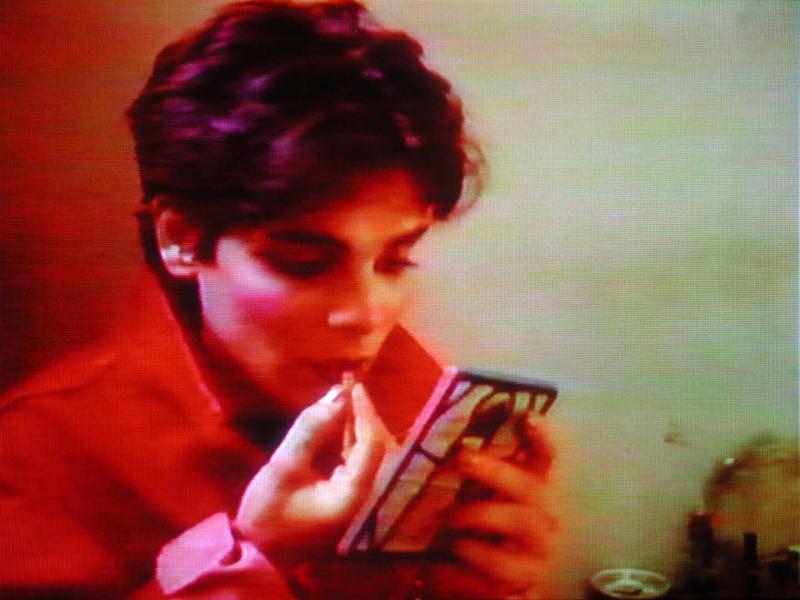
    Cinema Fouad (Mohamed Soueid, 1993)
    Cinema Fouad (Mohamed Soueid, 1993)
    interview
    Lees meer

    A Double-Portrait

    In Conversation: Manon de Boer and Mohamed Soueid

    Savina Petkova
    30.10.2026

    In a double-bill constellation curated by Matti Ullrich, two extraordinary women get to meet who otherwise would have never crossed paths: Dutch actress Sylvia Kristel, best known for portraying Emmanuelle in the erotic film series phenomenon of the 1970s, and the Syrian trans woman Khaled El Kurdi, who’s been a fighter during the 1970s-1980s Lebanese war and a cabaret dancer. They have one thing in common: authenticity. yanco invited filmmakers Manon de Boer and Mohamed Soueid to discuss each other’s films and to reflect on their own work in turn, because of their shared understanding of humans as mosaics of wonder and vulnerability.

    Lees meer
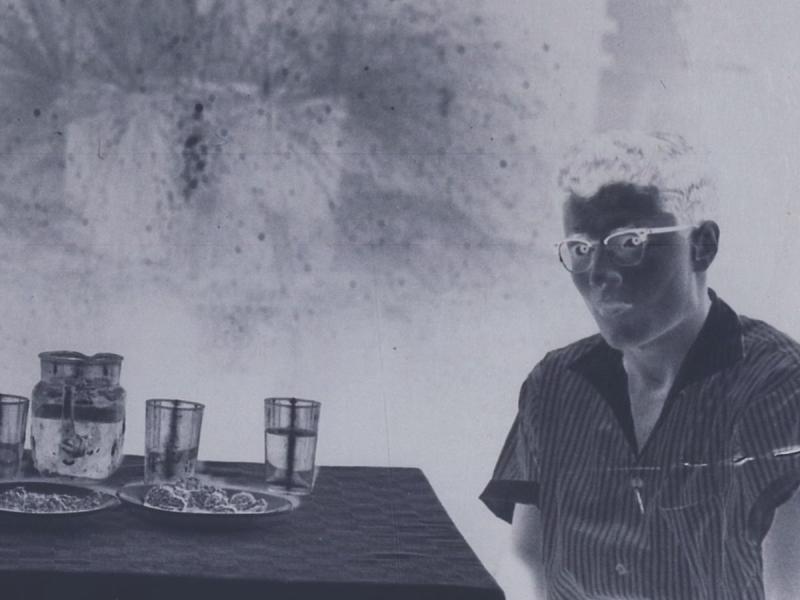
    Des cailloux derrière ton dos (Marthe Perret, 2026)
    Des cailloux derrière ton dos (Marthe Perret, 2026)
    interview
    Lees meer

    Een onmogelijke brief

    Marthe Perret over Des cailloux derrière ton dos (2026)

    Bo Alfaro Decreton
    07.10.2026

    Met haar afstudeerfilm Des cailloux derrière ton dos brengt Marthe Perret een ontroerende inkijk in zowel de geheim gehouden geschiedenis van een familie, als in het Palestijnse verzet. De Nakba dwong Perrets grootvader in 1948 zijn bakermat te verlaten. Hij kwam in Libanon terecht, waar hij zijn vrouw leerde kennen. Om te kunnen functioneren op die nieuwe plek, hulde hij zijn afkomst in een waas van geheimzinnigheid. “Integratie is zo ook een verhaal van verscheuring,” preciseert de filmmaker. In een poging om de pijn, angst en het geweld buiten te sluiten, trokken haar grootouders zich steeds meer terug in hun appartement.

    Lees meer
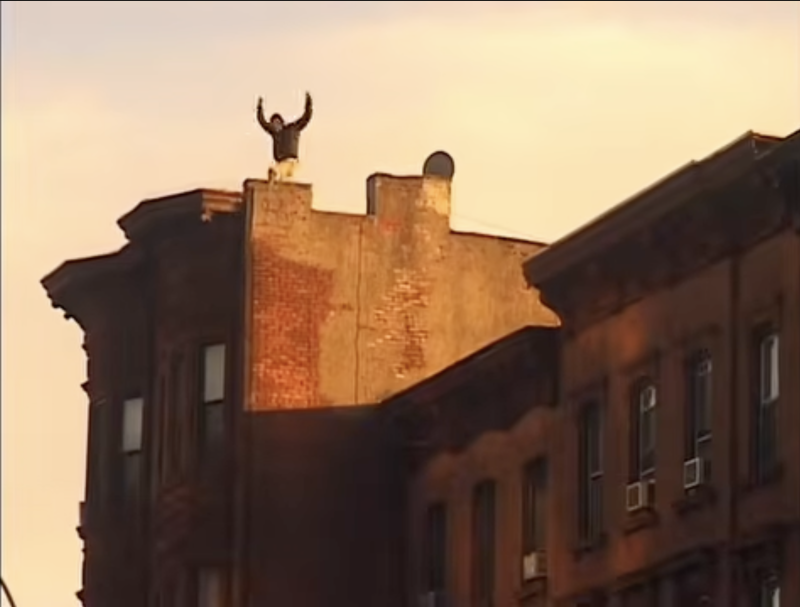
    Tengu: God of Mischief (Colin Read, 2013)
    Tengu: God of Mischief (Colin Read, 2013)
    interview
    Lees meer

    Rooftop-shredding Deities

    Interview with Colin Read

    Emma Daelman
    14.11.2026

    In his films, NYC-based filmmaker Colin Read uses skateboarding to playfully reflect on themes such as life, death, and nature. His 90s-style fisheye Sony VX1000 evokes nostalgia for the heyday of skateboarding, but his visual language expands and challenges the format, both in its content and form. The success of Read’s skate films gave him the opportunity to create music videos for Radiohead, Glass Animals and Weezer, as well as commercials for Converse, Lexus and Burberry. While skateboarding features in some of his commercials, the visual language and technical skill he built through skate videography creep into all of his work.

    Lees meer
    Derek Jarman
    artikel
    Lees meer

    Derek Jarman, meer dan ooit

    Stoffel Debuysere
    29.03.2025

    Hoe resoneert de nalatenschap van Derek Jarman? Afgaand op het groot aantal retrospectieves, publicaties en hommages die aan zijn werk en leven worden gewijd: vandaag meer dan ooit. Drie decennia nadat hij het leven liet aan AIDS-gerelateerde complicaties is Jarman alomtegenwoordig in deze tijd die aanvoelt als in voortdurende crisismodus.

    Lees meer
    © As If Mother Cried That Night (Hoda Taheri, 2023)
    As If Mother Cried That Night (Hoda Taheri, 2023)
    interview
    Lees meer

    Love Under Surveillance

    A Conversation with filmmaker Hoda Taheri

    Jori(k) A. Galama
    12.02.2025

    Over the past few years, Hoda Taheri (Tehran, 1992) has toured many a film festival with her short films Mother Prays All Day Long (2022), As If Mother Cried That Night (2023), and Mother is a Natural Sinner (2024), the first of which you can watch via yanco’s streaming library. In this “mother trilogy”, Taheri zooms in on relevant issues such as the right to abortion and the treatment of refugees in Europe. She takes on the lead role herself, cunningly and humorously dramatising her own biography.

    Lees meer
    © Memory is an Animal, It Barks with Many Mouths (Eva Giolo, 2025)
    Memory is an Animal, It Barks with Many Mouths (Eva Giolo, 2025)
    interview
    Lees meer

    The Chorus of the Land

    Whose mother tongue? A conversation with Eva Giolo on Memory is an Animal, It Barks with Many Mouths

    Cici Peng
    15.02.2025

    Eva Giolo’s films are marked by a rhythmic quality attuned to the push and pull of the monumental and the ordinary, the mythical and the everyday. In Memory Is an Animal, It Barks with Many Mouths, Giolo turns her camera to the Italian ski area Val Gardena, nestled in the valleys surrounding the Dolomites, where she evades a touristic image and instead captures isolated moments in nature with her characteristic 16mm Bolex camera.

    Lees meer
    © MISTY PICTURE (Christoph Girardet & Matthias Müller, 2021)
    Misty Picture (Christoph Girardet & Matthias Müller, 2021)
    essay
    Lees meer

    Cinematic Ghosts

    On Christoph Girardet and Matthias Müller’s Misty Picture

    Oana Ghera
    09.12.2024

    Through association, repetition, and accumulation, Christoph Girardet and Matthias Müller showcase the inventory of Hollywood formal clichés that contributed to the creation of the Twin Towers’ symbolic capital, reflecting at the same time on the power of those images to haunt our collective imagination to this day.

    Lees meer
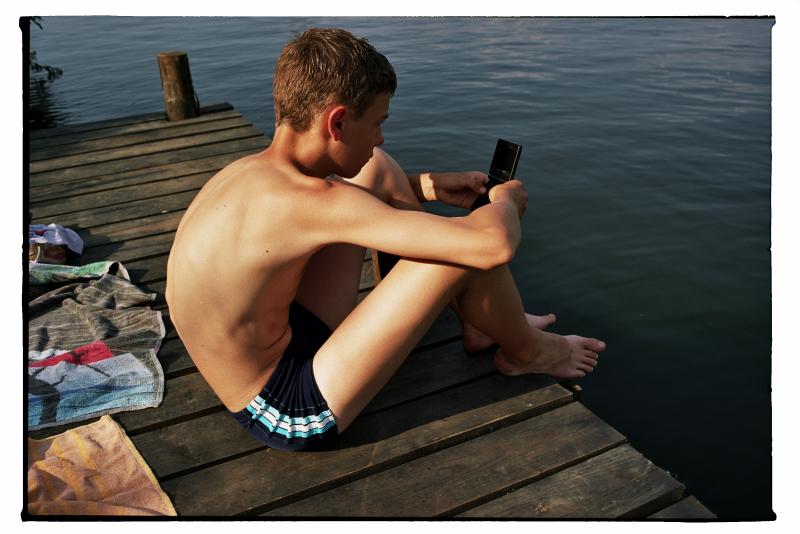
    Meander (Joke Liberge, 2005)
    Meander (Joke Liberge, 2005)
    essay
    Lees meer

    Het tussenwezen

    Joke Liberge’s Meander (2005)

    Boet Meijers
    20.07.2026

    Zoals elke geslaagde zomerdag, gebeurt er bijna niets. De jongens wedijveren om aandacht van de meisjes, die op hun beurt alleen maar kleine broertjes in hen zien. Wel wordt er stiekem naar elkaar gegluurd. Deze leegte staat in contrast met zintuiglijkheid in zomers veelvoud: welgekomen briesjes door boomtoppen, voeten op steigerhout en een zon die royaal over het alles wordt uitgegoten maken van het seizoen haast de hoofdrolspeler, zo stoffelijk wordt hij naar het doek vertaald. Maar in tegenstelling tot hoe zo een middag daadwerkelijk zou klinken, is Meander vrij van dialoog.

    Lees meer

    Schrijf je in op onze maandelijkse nieuwsbrief voor een overzicht van nieuwe releases, teksten, en evenementen!

    Inschrijven

    yanco is een magazine en streaming bibliotheek voor korte films en beeldcultuur

    kortfilm.be vzw
    Boondaalse Steenweg 249
    1050 Elsene
    BE 0478 441 315
    info@yanco.be

    met de steun van het Vlaams Audiovisueel Fonds (VAF) van de Vlaamse Overheid

    VAF
    • over
    • colofon
    • privacy
    Facebook Instagram LinkedIn YouTube Letterboxd
    design door de Ronners
    website door eps en kaas