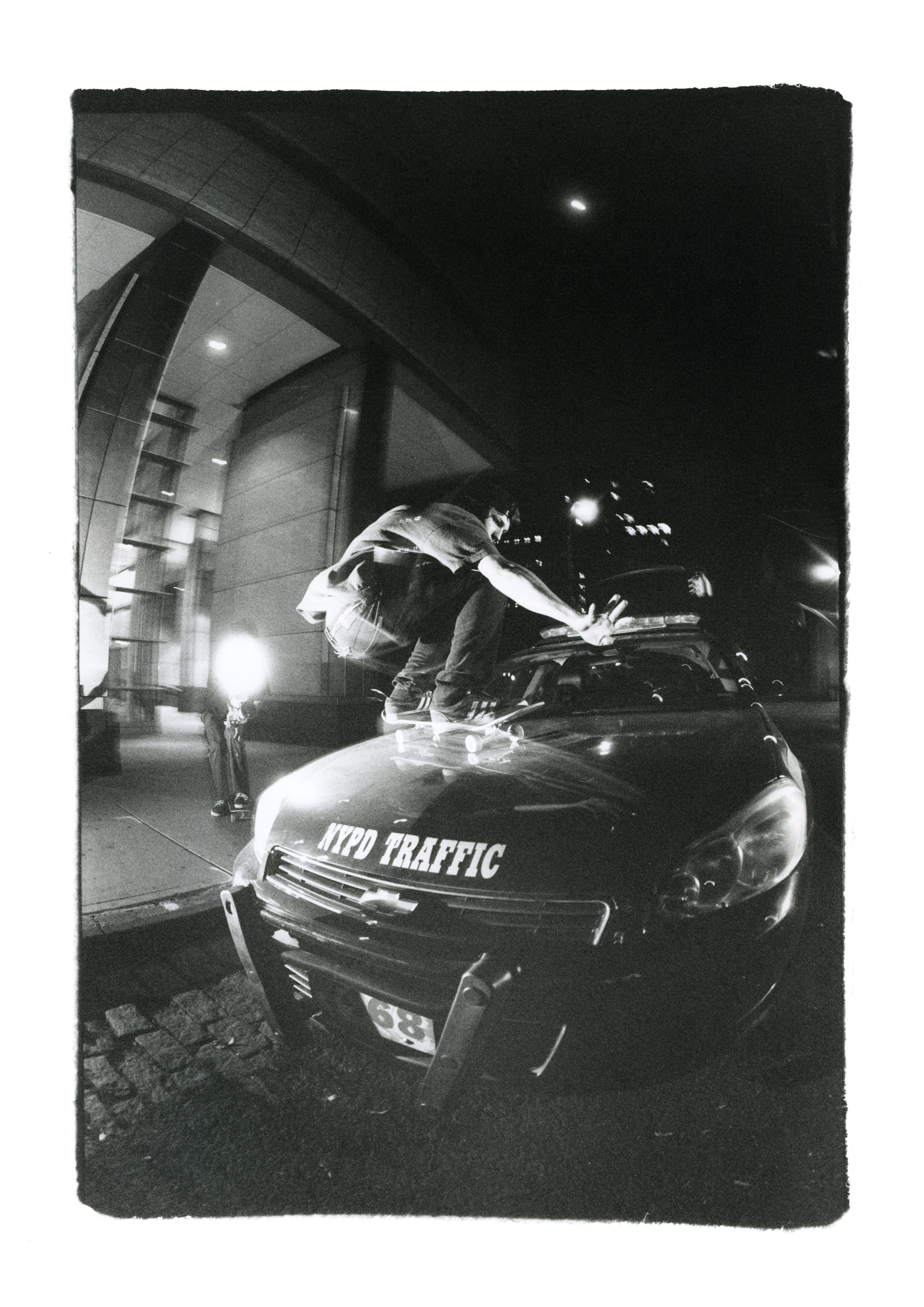
In his films, NYC-based filmmaker Colin Read uses skateboarding to playfully reflect on themes such as life, death, and nature. His 90s-style fisheye Sony VX1000 evokes nostalgia for the heyday of skateboarding, but his visual language expands and challenges the format, both in its content and form.
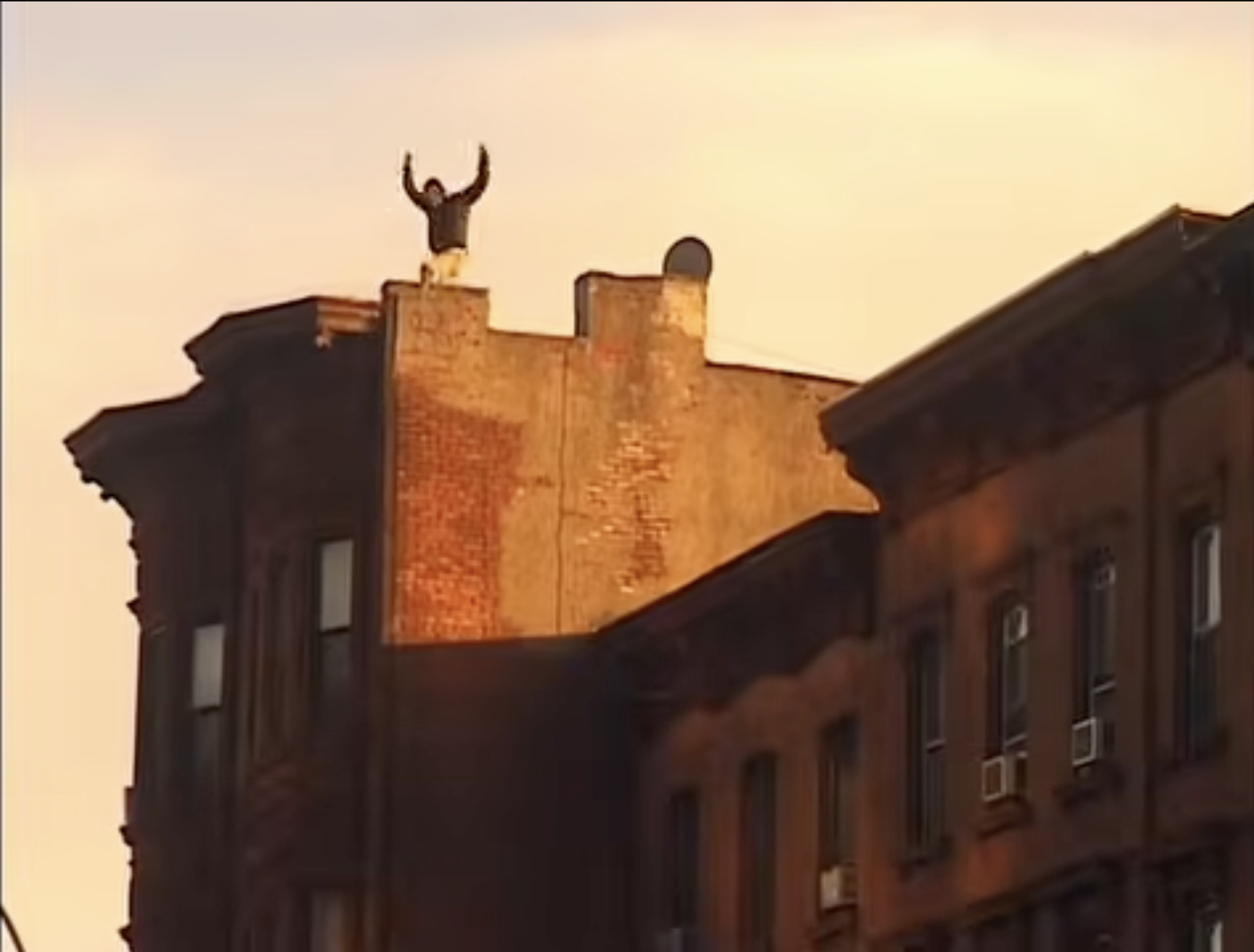
One of Read’s first skate videos, Tengu: God of Mischief (2013), appropriately references the titular half-bird, half-human creature from Shinto mythology. The film starts high atop NYC’s rooftops, with skaters flipping over building edges before diving into the city’s underground. But a scorching sun at the time of filming turned the roofing into unskatable goo: it took two years to shoot the opening scene. Incorporating the sounds of the city and the low rumble of the wheels, Tengu sounds like a contemporary city symphony. Like the mythological creatures known for their pride, sometimes regarded as the ghosts of the arrogant, the film highlights the tension between feeling invincible and the fragility of the human body, something inherent to skateboarding.
In Spirit Quest (2016), voice-over inserts and nature-documentary sequences link each skater to a specific animal: Read directs them to skate as if they were that animal, sliding like a snake or flipping like the aggressive flaps of a bat’s wings. Using practical effects and careful editing, he creates almost impossible-looking skate sequences, carefully grinding the line of believability.
The success of Read’s skate films gave him the opportunity to create music videos for Radiohead, Glass Animals and Weezer, as well as commercials for Converse, Lexus and Burberry. While skateboarding features in some of his commercials, the visual language and technical skill he built through skate videography creep into all of his work.