yanco Home
Menu
  • Home
  • watch
  • magazine
  • calendar
  • index
  • Subscribe
Search Log in
  • nl
  • en
You are here
  • Home
  • Magazine
  • A Double-Portrait
Cinema Fouad (Mohamed Soueid, 1993)

A Double-Portrait

In Conversation: Manon de Boer and Mohamed Soueid

interview by
Savina Petkova
30.10.2026

In a double-bill constellation curated by Matti Ullrich, two extraordinary women get to meet who otherwise would have never crossed paths: Dutch actress Sylvia Kristel, best known for portraying Emmanuelle in the erotic film series phenomenon of the 1970s, and the Syrian trans woman Khaled El Kurdi, who’s been a fighter during the 1970s-1980s Lebanese war and a cabaret dancer. They have one thing in common: authenticity.
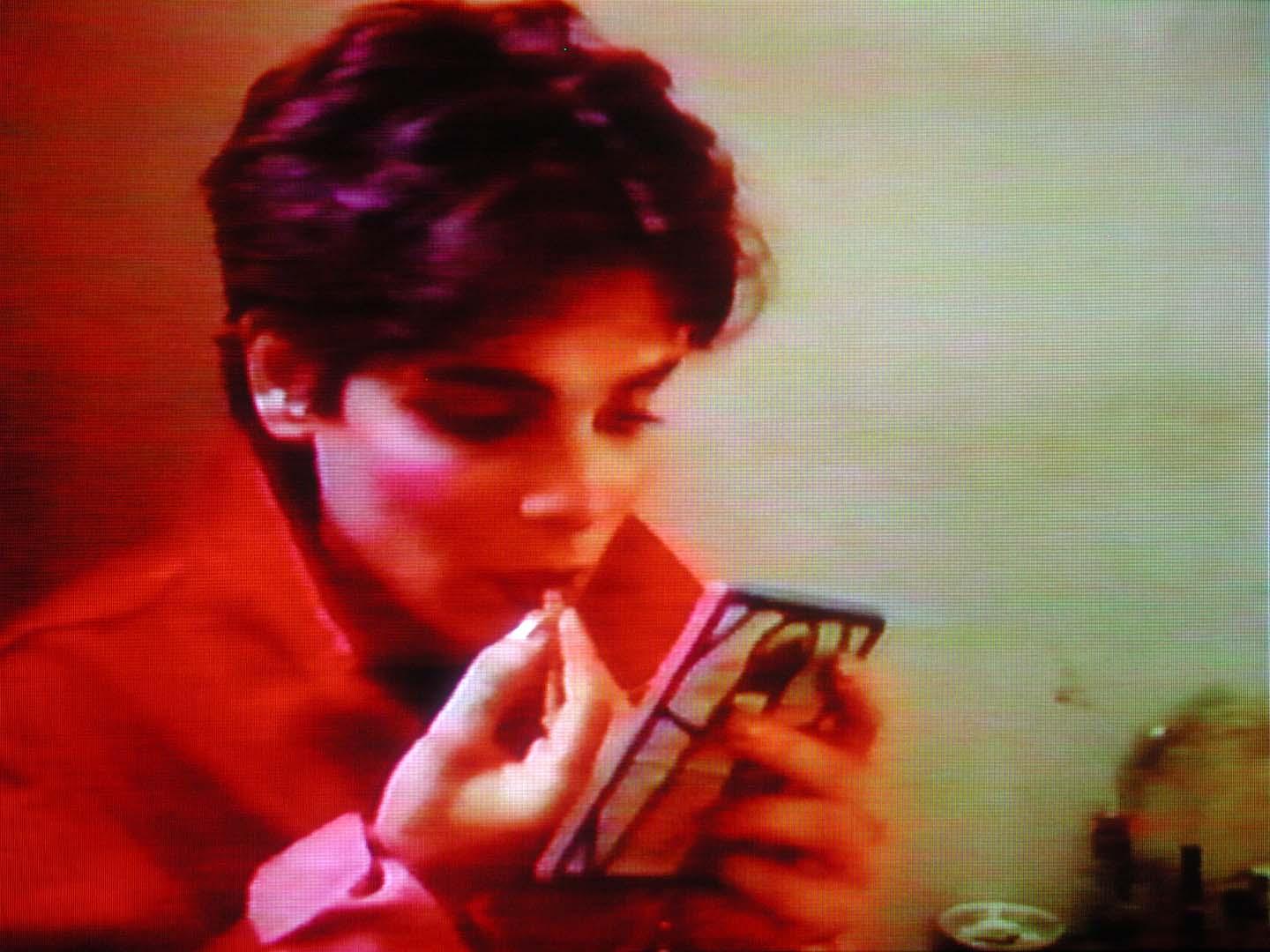
In Manon de Boer’s Sylvia Kristel - Paris (2003), the filmmaker interviews Kristel twice, a year apart, about her relationship with the French metropole and the journey that would lead her to star in over 50 films. This story is told in the audio track over images of Paris and Sylvia smoking, but never talking; halfway through the film, it is told again, but differently, even if the mismatch between images and sound remains the same. Mohamed Soueid makes sure Khaled El Kurdi is present in every scene of Cinema Fouad (1993) as she recounts her own life story: the experience of being trans and moving between the masculinity of the war frontlines and the high-femme environment of the cabaret.

Brought together in this micro programme, yanco invited both filmmakers to discuss each other’s films and to reflect on their own work in turn, because of their shared understanding of humans as mosaics of wonder and vulnerability.

Read more

Sylvia Kristel – Paris

Manon de Boer, Belgium, 2003, 39’

Sylvia Kristel – Paris is a portrait of Sylvia Kristel, best known for her role in the 1970’s erotic cult classic Emmanuelle, as well as a film about the impossibility of memory in relation to biography.

Read more

Mohamed Soueid: When yanco first got in touch, I wondered what our two films have in common. It seemed there was a clash between the public and the personal. Your work, Manon, takes an audio narrative from the first person, and adopts it as a sort of language to recount Sylvia Kirstel’s memories. You built a kind of architecture around this audio tape, making the conscious choice to only use her voice and commentary, but never show her speak. I think one of the challenges a filmmaker faces is how to treat memories on film. In its two parts, Sylvia Kristel - Paris shows us that there are always gaps in our recollections. Memory cannot be told in just one act. Without realising it, we are inclined to inflate a memory, to add facts that aren’t necessarily relevant. This is why I think your film is actually questioning memory.

Manon de Boer: What I find very beautiful in your film is how you slowly unfold so much of this woman’s complexity. From the start, it’s clearly a portrait of a person who is very conscious of her looks, of how she wants to present herself. This was also the case with Sylvia, actually. At first, when I started filming her, she would immediately pose—which is why I only have this one image of her smoking. Instead of filming her talk, it was much better to just record her stories because she was more relaxed and funnier that way.

Mohamed: Another thing our films have in common is that they’re dealing with people who can speak up for themselves without reservation. Your film is faithful to the personality of a woman who lived her life freely, from film to film, from man to man. The basis is her human experience. She says, “I lack depth in my life, and it led me to places and people that some can call mistakes,” but they are not mistakes because she’s a person who loves a lot, and love is always right.

Let me tell you a secret. When Emmanuelle became a global, scandalous sensation, I was too shy to go and watch the film in a cinema. I was 19, and they showed a censored version in Lebanon. I only found the courage to watch it in Paris, years later, at a theatre on the Champs-Élysées. But I’m happy that I got to hear the real Sylvia [in your film]. I think I wouldn’t have loved it if you had included excerpts of the films she’s been in; that would just have been the recollections of the viewer.

Manon: It would become a film about Emmanuelle and not about Sylvia Kristel! Besides, everybody saw her as Emmanuelle, even if she had other roles.

Mohamed: I think her role in Lady Chatterley’s Lover is outstanding, for example!

Manon: She also said that’s what people said in the 80s when they recognised her on the street: “There’s Emmanuelle!” She could never get rid of it—the curse of films like that. What I found beautiful in Cinema Fouad is that you see a cliché, but then it’s undone. She’s an amazing person as well, yet the film slowly builds up layers of her personality which make it impossible to pin her down. Even in the way she puts on make-up to go out: it seems a clichéd image, but then she says or does something unexpected and stunning.

Maybe I can relate that to my film and to how you can never really grasp your own memory in its entirety. You can never fully know yourself, nor the other. Instead of confirming something you already know, I wanted to introduce doubt: Do we really know Sylvia Kristel? Similarly, the way you portray Khaled is so sensitive and non-judgemental. Today, people are turning to documentaries expecting some kind of moral judgment, so the fact that you bare all that complexity is very admirable. But given the political context of your film, that of Syria and Lebanon, you would never expect someone so conscious about her femininity to be fighting for a cause in such a ‘manly’ way. Your gaze, filming her, is very loving as well.
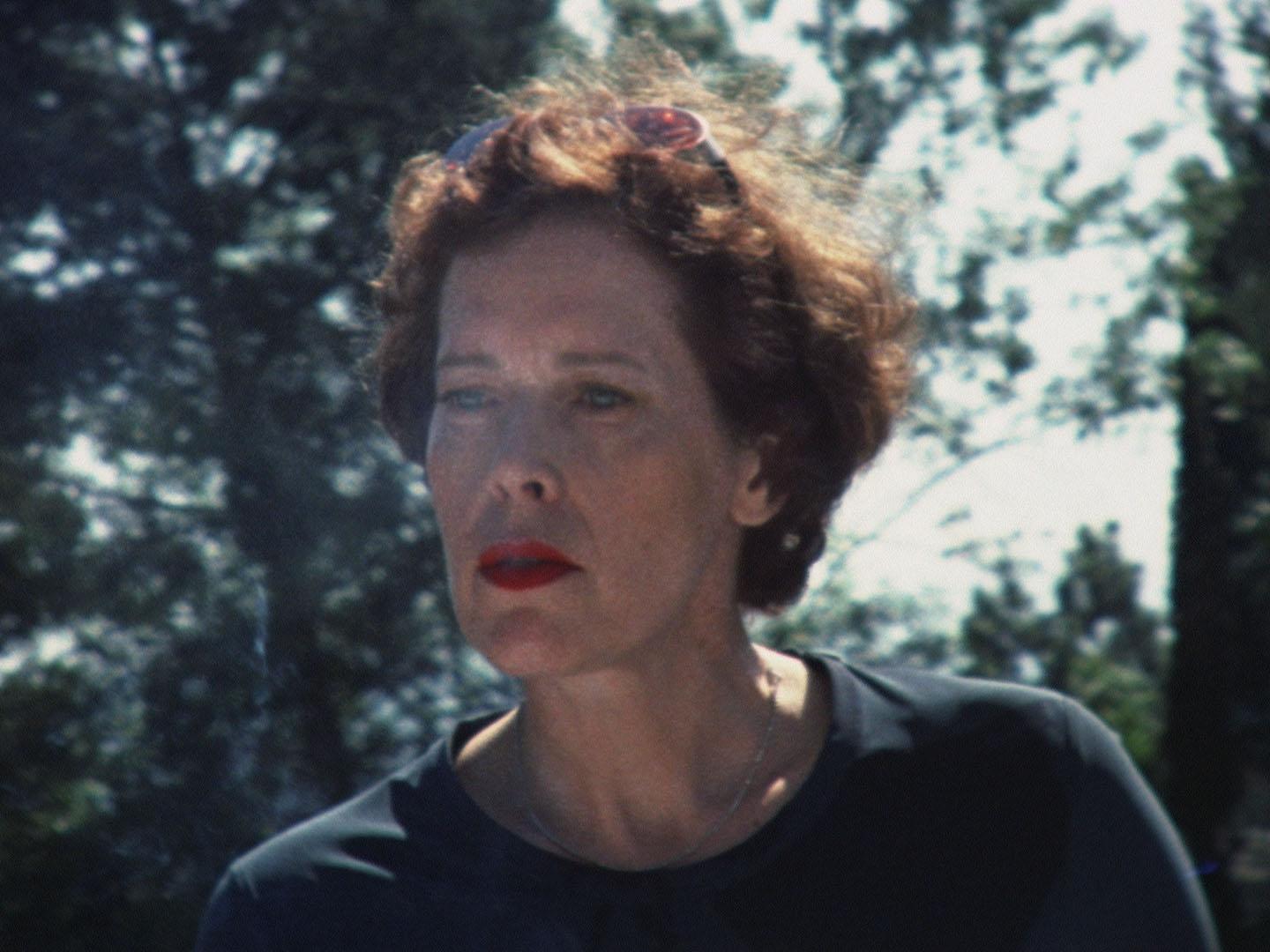
Sylvia Kristel - Paris (Manon de Boer, 2003)

Mohamed: Thank you! I met Khaled after the Civil War, at a cheap hotel in the old part of town, where she worked as a maid. The whole downtown was destroyed. So she was the last... relic of the whole scenery. Even the house we filmed in is the kind you’d remember from before the war, not how homes are built today. But back then, in the 1990s, it was a period of reconstruction, in a country that had lived through a horrible civil war. A lot of attention was paid to politics, to ideologies, but we never thought of asking how people define their identity, especially when it comes to the body—that was and still is one of the taboos in Arab societies. At the time, we didn’t have the modern notions of LGBTQ, and in making the film, gender identity became the center of it. Khaled posed an interesting question that I doubt anyone else has ever asked in that way: How should someone torn between masculinity and femininity pray to God? Do you pray as a woman, with a veil, or as a man? She put on the veil, and she followed God’s instructions.

Manon: Nowadays, of course, identity is a big subject in many films, but its definitions are often narrow: if you are homosexual, this is the identity; if you are Muslim, this is your identity. But every person has many aspects, and it’s rare to see identity depicted in such a layered way as you do in your film—from this overly female look that Khaled presents at first to her wanting to fight like a macho man at the front line. I thought that was remarkable, how the film shows that complexity without vindicating anything; it was built like a mosaic of a human being.

I met Sylvia at a friend’s birthday in Brussels. She had lost all her money; she had been paying off the debts of her second husband, but she was very modest, looking at her life with such humour. “Okay, I lost everything, but it is what it is.” So just as memory is unstable, identity is, too. You can tell your own story in one way or another. And it differs every time.

Read more about

#544 Sylvia Kristel – Paris
#545 Cinema Fouad

Mohamed: I was touched by how honest Silvia was throughout the film, even about the men she met. She didn’t insinuate anything abusive had happened, even when she went to Paris for a screen test, but ended up in the producer’s bed. No bitterness, no desire to wrap it up in words of wisdom. No regrets either.

Manon: Yes, that’s very special because she knows she was abused. It’s true that she doesn’t speak of regret. It might be a kind of naivety, but it gives her words a certain lightness, instead of frustration.

Mohamed: She sounds like someone who is proud of the life she led, and this is a strong statement, especially from an ex-star of sorts. In the second part of the film, it seems essential to return to the same location a year later to find the missing pieces, the context she didn’t give in the first iteration of her story. I believe yours is not only a portrait, but an essay film as well.

Manon: How was your film received at the time? It was banned, right?

Mohamed: Yes, even though we made it for TV, hoping somewhat naively that maybe we could collect all the money needed for Khaled’s sex-change surgery through the sale and commercials. Unfortunately, the security apparatus in Lebanon that acts as the censorship office banned the film, saying it encourages homosexuality. So the film was smuggled into festivals and found its life abroad. It only had a real premiere in Lebanon twenty years later. I struggle to believe it even today: the film is in such high demand. I thought it would be outdated by now; I made it in such poor conditions—shot on a Super VHS camera, with just myself and the cameraman—but I’m so happy it’s not! Film students also get in touch, asking to see it and to write about it.

Manon: I also would like to show your film to my students, actually! Many of them are interested in this subject matter, and it’s such a good example of a portrait documentary. I filmed on Super 8 myself because it was easier to have a small camera and record everything myself. It gave me freedom.

Mohamed: When I teach my seminars on personal documentary, I tell my students that they have to be free. Not in terms of cinema’s tools, but free to expose yourself, to see yourself and others, so the people in your film will also feel free.

Manon: This is something I noticed in Sylvia—she had a free mind. Maybe that’s partly because she had no regrets about the past. Are you still in touch with Khaled?

Mohamed: No, unfortunately not. I lost her. The hotel where she used to work was demolished, so she was out of a job then, and I left Lebanon for a couple of years, so we lost contact. I kept asking after her, but I only heard rumours: that she became a drug addict or was bipolar. Some people told me she was in prison. One thing is certain, though: she never got her surgery.

Manon: That’s really tragic, and I think the political stakes of your film are more complex than mine, but what both Sylvia and Khaled have in common is that their lives are marked by love in a significant way.

Read more

Cinema Fouad

Mohamed Soueid, Lebanon, 1993, 41’

Cinema Fouad is a portrait of Khaled El Kurdi, a young Syrian trans woman living in Beirut. The documentary follows her journey from soldier to cabaret dancer in an effort to raise funds for her gender affirming surgery.

Read more

    read more

    This Day Won’t Last (Mouaad el Salem, 2020)
    This Day Won’t Last (Mouaad el Salem, 2020)
    essay
    Read more

    “Queers Were Here”

    Mouaad el Salem’s This Day Won’t Last (2020)

    Sanne Jehoul
    22.04.2024

    This Day Won’t Last carries risk in every shot; through el Salem’s urgency to film, his constraints of what he can film, the aesthetics of lo-fi phone footage, and the images captured on cheap disposable cameras. Even if the undeveloped film can contain desires and identities without danger, even if these clips do not contain immediate reveals, the images we receive are still constrained and chased by fears and threats. However, they are also an assertion of identity and belonging.

    Read more
    +6 Gain (Jorn Plucieniczak, 2019)
    +6 Gain (Jorn Plucieniczak, 2019)
    article
    Read more

    Sound Bath

    Jorn Plucieniczak’s +6 Gain (2019)

    Ben Flanagan
    20.02.2024

    Plucieniczak is searching for the spiritual in the notion of Living For The Weekend, and as it gets closer, the colours are further enveloping, pink turning to red. Strobes flicker on Martens’ bald head. His body is out of focus, camera swerving left and right; it’s full Irréversible; the music begins to swoosh in, a trance banger waiting patiently to drop. But instead, we cut into the lounge.

    Read more
    © 0.2 MILLIGRAMS OF GOLD (DIEGO QUINDERÉ DE CARVALHO, 2021)
    0.2 Milligrams of Gold (Diego Quinderé de Carvalho, 2021)
    interview
    Read more

    From the Ardennes to the Amazon

    A Conversation About Eco-Activism in Cinema

    Jannes Callens
    13.01.2025

    Diego Quinderé de Carvalho’s 0.2 Milligrams of Gold and Andrés Jurado’s Yarokamena invite us to reconsider our relationship with nature, history, and the systems that shape our lives. In conversation, both filmmakers talk about their filmmaking process and the question of activism in art.

    Read more
    © Ethereal Rhythms, Everything Rhymes (Brecht Vanhoutte, 2025)
    interview
    Read more

    Welkom, welkom in mijn hoofd

    Brecht Vanhoutte over Ethereal Rhythms, Everything Rhymes

    Flo Vanhorebeek
    13.02.2025

    Brecht Vanhouttes masterfilm is een abstract beestje, dat de LUCA-alumnus zelf beschrijft als een koortsdroom die zijn gevoelswereld vertaalt naar het zilveren scherm. De film construeerde hij door tekst, beeld en audiofragmenten in een AI-generator te gieten en hierover met de bot in gesprek te gaan. Zijn werk bracht hem tot op het Internationaal Filmfestival van Rotterdam (IFFR).

    Read more
    Sirens (Raoul Servais, 1968)
    Sirens (Raoul Servais, 1968)
    essay
    Read more

    A Complaint

    Raoul Servais’ Sirens (1968)

    Charlotte Timmermans
    01.10.2022

    Early on in the film, Servais employs the boundless possibilities of animated film to portray a surreal scene: two cranes squabbling over a wooden container. The container drops and breaks. Its content: a pile of rocket bombs. War is the central theme in many of Servais’ films (Chromophobia, Operation X-70, Tank); here, however, it seems to only casually add to the dystopian world. The future has been devoured by war and industry. Literally devoured: a lonely fisherman catches nothing but fish bones. He looks deeply saddened.

    Read more
    The Summer Movie (Emmanuel Marre, 2017)
    The Summer Movie (Emmanuel Marre, 2017)
    article
    Read more

    Little Earthquakes

    Emmanuel Marre’s The Summer Movie

    Laurence Boyce
    01.10.2022

    In The Summer Movie, nothing much seems to happen. A man, Philippe, meets up with his friend Aurélien and Aurélien’s 9-year-old son Balthazar. They travel around and talk about random things, seemingly without much of a goal. And then they all go their separate ways. Yet despite such a disparate narrative, the film seems rich and rewarding, redolent with an examination of a life lived and the momentary feelings of freedom in lives regimented by the pressures of the modern day.

    Read more
    © LITTLE LOWER THAN THE ANGELS (NEOZOON, 2019)
    interview
    Read more

    There Must Be a Way Out of This Disaster

    A conversation with NEOZOON

    Savina Petkova
    25.07.2025

    Do you like cat videos? Try watching a thousand in a row, spread them on a timeline, and map out the similarities and differences between them. This experiment could serve as a primer for the work of two-person art collective NEOZOON, whose preoccupation is human-animal relationality. Using only found footage and social media archives, the duo aims to expose the oppressive power structures that position humans as exceptional, and non-human animals as anything but.

    Read more
    underneath it flickers (lau persijn, 2024)
    underneath it flickers (lau persijn, 2024)
    article
    Read more

    Nature’s Whispers

    lau persijn’s underneath it flickers (2024)

    Jannes Callens
    11.10.2026

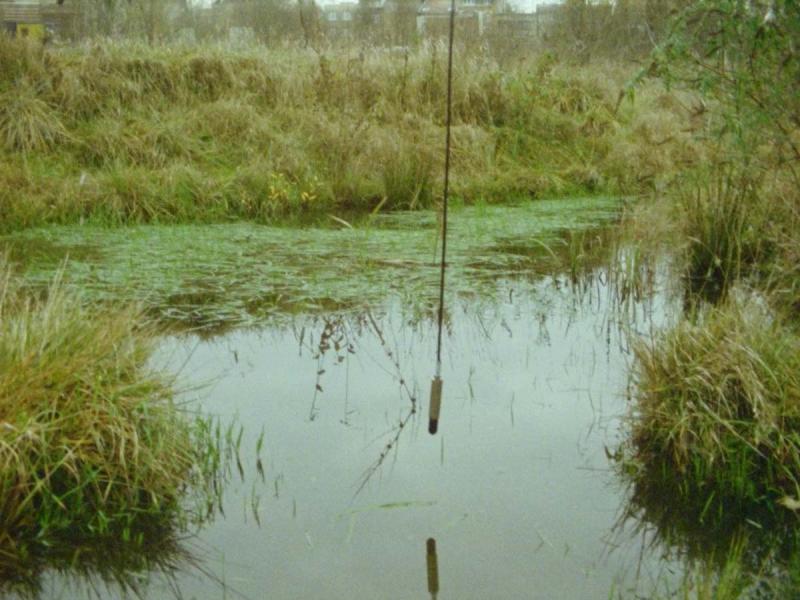
    Between Schaarbeek and Evere lies La Friche Josaphat, a unique 24-hectare green space. It was once a marshalling yard for splitting and assembling freight trains. Today, it is one of Brussels’ last refuges for biodiversity. Rare fauna and flora are constantly threatened by property developers in an increasingly urban landscape. Countless petitions and citizens’ initiatives advocate for the preservation of La Friche as Brussels’ equivalent of The Zwin Natural Park. With underneath it flickers, filmmaker lau persijn (they/them) champions the site’s appeal and ecological importance.

    Read more

    Subscribe to our monthly newsletter for updates on new releases, publications, and events!

    Subscribe

    yanco is a magazine and streaming library for short-form moving image

    kortfilm.be vzw
    Boondaalse Steenweg 249
    1050 Elsene
    BE 0478 441 315
    info@yanco.be

    with the support of the Flanders Audiovisual Fund (VAF) of the Flemish Government

    VAF
    • about
    • colophon
    • privacy policy
    Facebook Instagram LinkedIn YouTube Letterboxd
    design by de Ronners
    website by eps en kaas