yanco Home
Menu
  • Home
  • watch
  • magazine
  • calendar
  • index
  • Subscribe
Search Log in
  • nl
  • en
You are here
  • Home
  • Magazine
  • Dead, I Won’t Be Forgotten
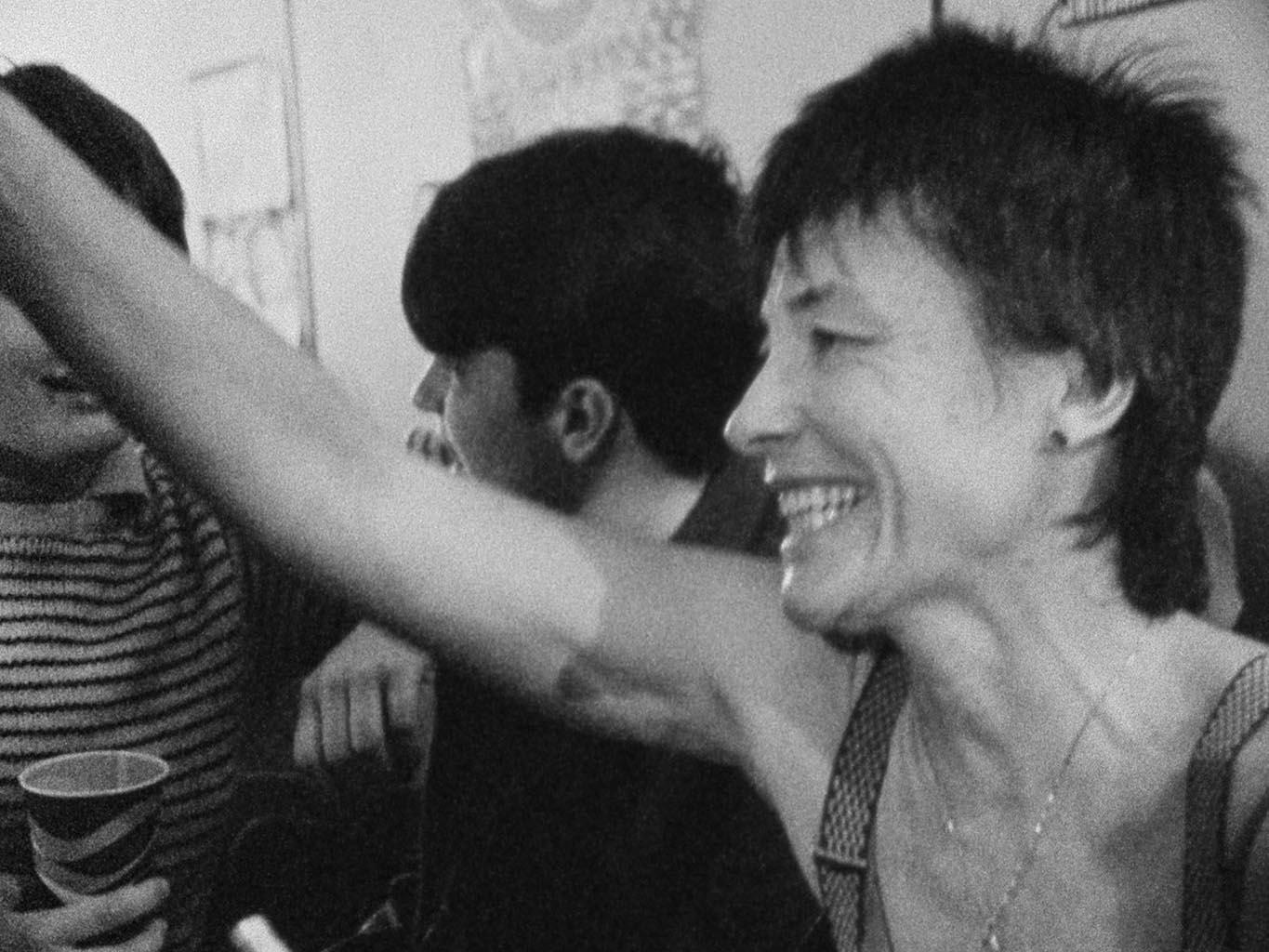
Audience (Barbara Hammer, 1982)

Dead, I Won’t Be Forgotten

Barbara Hammer’s Legacy

essay by
Carmel Curtis
05.10.2026

“I want to be famous. I want to walk into a room and be introduced as Barbara Hammer, the woman artist who has given us so much of herself; has produced, made and finished brilliant inspiring works of art with her films and her writing; a creative genius; a woman of multi-talents, a woman who made herself by seeing and allowing herself to be the person she is within.”1

Words matter.

Barbara Hammer was, as she said, a woman of many talents. For over fifty years, she worked across film, video, performance, painting, drawing, poetry, photography, collage, and essay, whatever the moment called for, and in nearly all of it, she was doing the same thing: becoming herself in public, through experimentation and openness rather than rigidity.

The five works in Film Fest Gent’s Barbara Hammer: A Short Film Retrospective, presented in collaboration with yanco and Art Cinema OFFoff, span thirty-five years and together they demonstrate a pattern in Barbara’s work: no disguise. What she felt in her own body and what she showed on screen were often the same sensation, not translated but transmitted. In that transparency, her personal vulnerability can expand outward into something universal that extends beyond the individual body and beyond the screen.

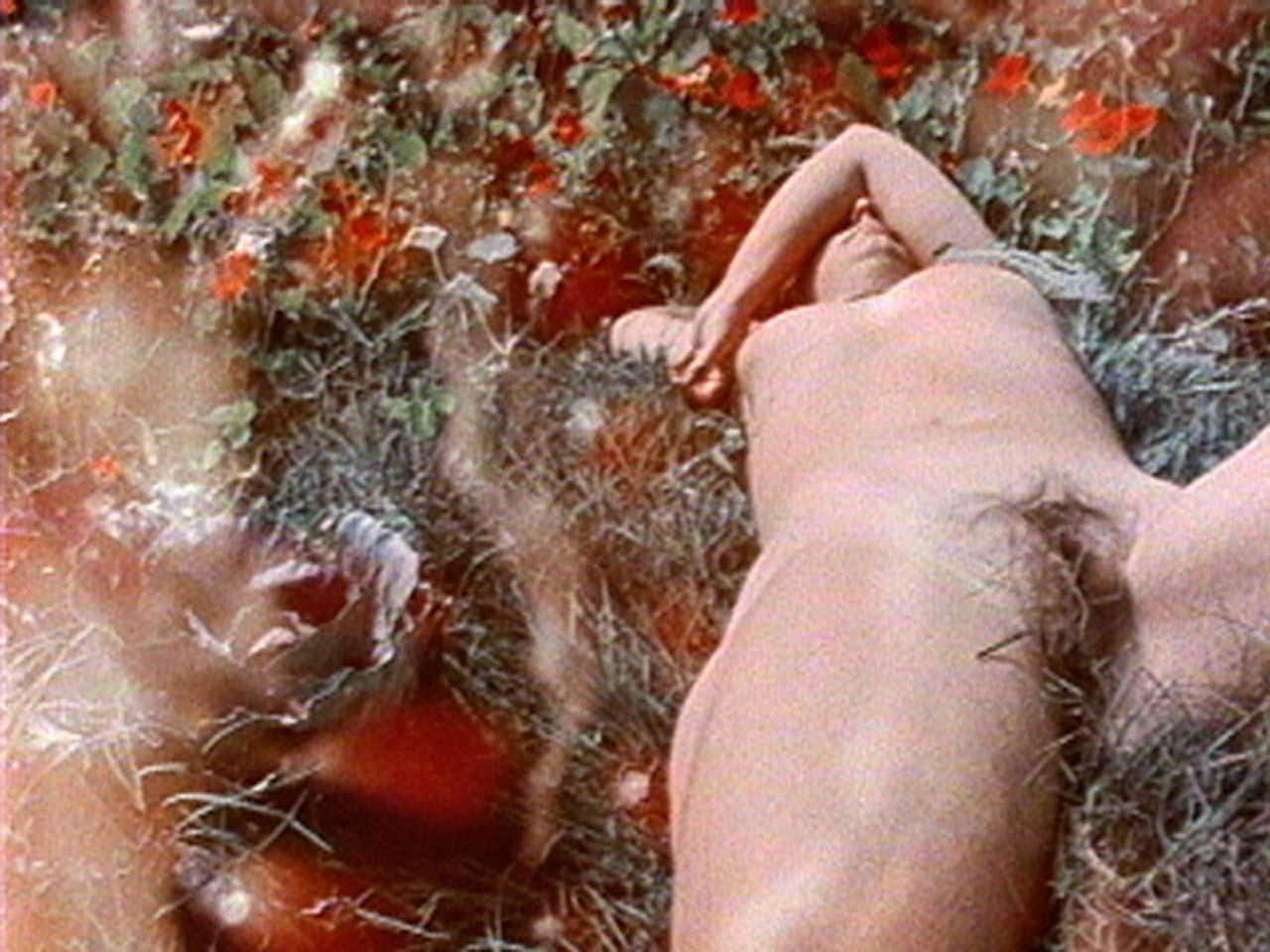
One of Barbara’s earliest 16mm works, Dyketactics (1974), was partly made from outtakes originally shot for what would become Women’s Rites (1975). The film is sexual, erotic, joyful, tender, and, in her own words, “a lesbian commercial.” Its tactile force in exploring both the physicality of bodies and the medium of film has made it foundational to her legacy, and it is credited as the first lesbian lovemaking film to be made by a lesbian. It centers on women’s bodies, touching, bathing, reading, arranging flowers, making love—a rhythm of women’s hands and skin, repeated until it becomes spellbinding. The camera doesn’t observe the bodies so much as join them, and the effect isn’t documentary but participatory, an intimacy you seem to be inside of rather than looking at.

Barbara directed her camerawoman, Christine Saxton, to shoot the new footage for Dyketactics as if “caressing us with the camera.” She would later articulate this approach as her “lesbian aesthetic”— a visceral connection between sight and touch. Filmed inside her own home, there is no inside kept private, nor an outside performed for an audience.

upcoming event

Barbara Forever (Brydie O’Connor, 2026)
Read more
short film programme

Barbara Hammer: A Short Film Retrospective

16.10.2026
KASKcinema, Gent

When she came out as a lesbian in the early 1970s, Barbara Hammer (1940–2019) reinvented herself through the Seventh Art. Hammer broke with the visual language of the seventies, placing lesbian desire and female experience at the centre. Not merely as subject matter, but as form: her films pulse, flicker and breathe, as if they were living bodies themselves. On the occasion of the documentary Barbara Forever , Film Fest Gent, in collaboration with yanco and Art Cinema OFFoff, presents a short film programme dedicated to Hammer, followed by a talk with Hammer collaborator Nicole Fernández Ferrer.

Buy tickets Read more
Dyketactics (Barbara Hammer, 1974)
Dyketactics (Barbara Hammer, 1974) © Courtesy of the Estate of Barbara Hammer, New York

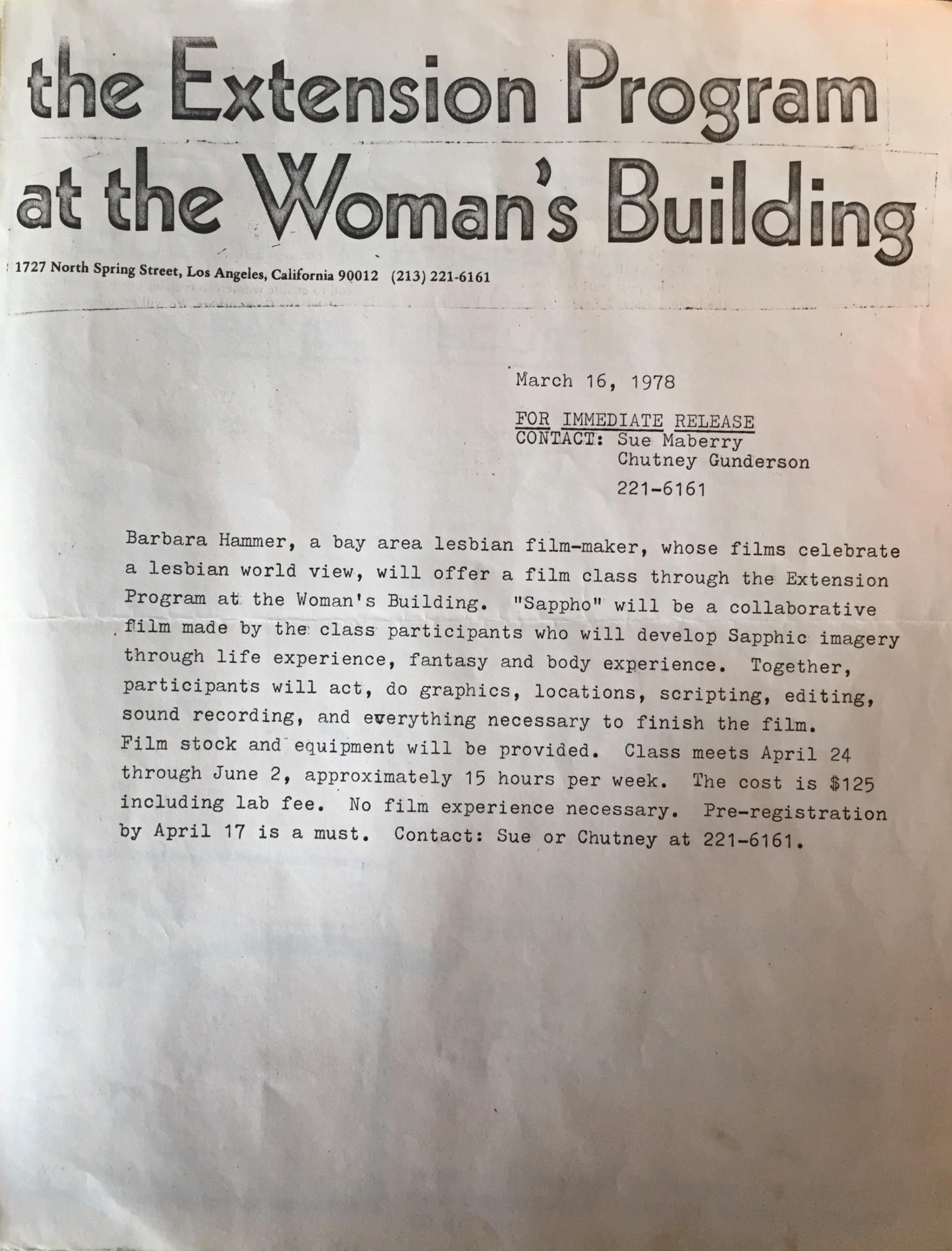
The same refusal to disguise oneself is evident in Sappho (1978), only now aimed outward: not at exposing a body but at reclaiming an ancient one. Not only its title but also its guiding spirit refer to the famous Greek poet, whose own writing survives only in fragments, misread and reframed for centuries. Onscreen, the resurrection is literal. Women’s hands slowly unwrap papyrus-thin gauze from around a hidden figure, bringing her back into a body one layer at a time. The piece was made through a filmmaking class that Barbara taught at the Woman’s Building in Los Angeles, a nonprofit arts and education center focused on feminist art. Together, the group of six women depicted the rebirth of a lesbian love goddess.

That same year, Barbara staged Homage to Sappho, a related performance outside the old Museum of Modern Art in San Francisco. A group of women dressed in white wrote out the names of lesbian artists the museum’s own walls left unlabeled, then released those names into the sky inside helium balloons. She called it, “an inner/outer event.”

For Barbara, empathy depended on self-realisation. You had to see who you actually were before you could let someone else see it too. She modeled that herself, offering her own bald head, her own fear, her own body mid-treatment, and the offer was also a request: that whoever was watching might see her that clearly too, and carry it forward.

Carmel Curtis

Sappho ends with the refrain, like an incantation, “dead, I won’t be forgotten.” By 1982, Barbara had turned that line into a method, not linear but cyclical: keeping the past alive by continuing the conversation with it. Audience (1982) documents her first internationally touring solo retrospective, and she uses this honour to dissolve the line between her films and the people watching them, recording herself asking her own audiences what they thought of her work. The space between artist and viewer becomes the material of the film itself. Like many of her other expanded-cinema performances, which projected past the edges of a traditional screen onto walls, onto bodies, onto balloons, Audience expands the screen too, not outward onto a new surface, but backward, onto the people watching it. She reverses the camera, redistributing not just attention but also authorship: to look is no longer passive; it’s participation.

What does it mean to consume media passively, and what happens when an artist refuses that passivity, for her viewers and for herself? Snow Job: The Media Hysteria of AIDS (1986) does exactly that. Derived from the grief and anger at how mainstream media covered the AIDS crisis, the video doesn’t dwell on bodies or death. Instead, it is built out of newspaper headlines critiquing coverage that deepened homophobia and stoked fear of LGBTQIA+ communities. Barbara drew directly on critic Jan Zita Grover’s essay “AIDS: Keywords”, which argued that “such a critical attention to language is essential to our understanding of and response to AIDS as the cultural construction that it is.”2 Words matter. Barbara believed language could be weaponised, but it could also be reclaimed.

For instance, she considered her endometrioid ovarian cancer a chronic illness, not a battle, nor ‘survival’. “I was thriving,” she said. In A Horse Is Not a Metaphor (2009), Barbara reclaims the language, the touch, and feel of illness. To be honest, A Horse is a film of Barbara’s that I have personally struggled with. I met her in 2015, when Staci Bu Shea and I co-curated Evidentiary Bodies, a retrospective at the Leslie-Lohman Museum of Art in New York. Not long after, she was re-diagnosed with endometrioid ovarian cancer. For years I watched this film with one eye half closed. I was already watching Barbara’s body, mind, and energy fluctuate through chemotherapy in person; I felt I didn’t need to watch it on screen too. I hardly asked her any questions about it. I wish I had. What is a horse not a metaphor for?

The same refusal to hide that runs through Dyketactics runs through this film too, only now the exposed body is ill. There is a doctor explaining where a tube will be placed in her body, and Barbara traces the path across her own torso, feeling for a pain not yet arrived. “Will it be painful?” asks her spouse, Florrie. Barbara’s fingers move through her hair, short, then long, then longer. She shows the ports under her breasts. She names what chemotherapy costs. She was adamant that none of it was a fight.

Asked once what she’d learned coming through an earlier round of chemotherapy, she didn’t point to the work, or the reviews, or the retrospectives. “Friends,” she said. “People are the most important thing...it’s really that person that would come over and sit with me for one hour.”3

This film is no longer available
Read more

Women I Love

Barbara Hammer, USA, 1976, 23’

A series of cameo portraits of Barbara Hammer’s friends and lovers intercut with a playful celebration of fruits and vegetables in nature. The culminating footage evokes a tantric painting of sustained sexuality.

Read more
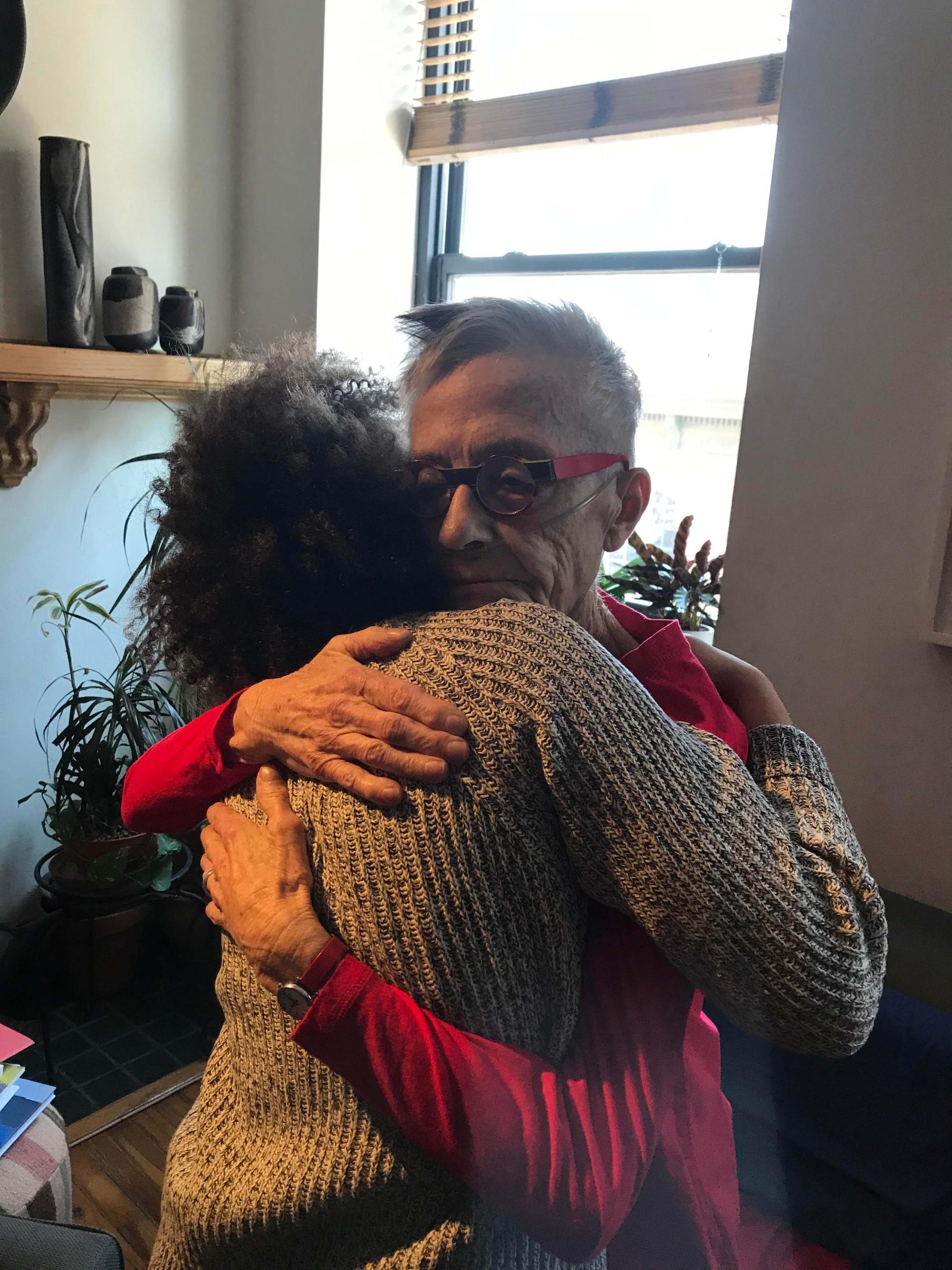
Barbara Hammer and Carmel Curtis
Barbara Hammer and Carmel Curtis, New York, March 2019 © Courtesy of Florrie Burke and the Estate of Barbara Hammer, New York
Press release for the Extension Programme class
Press release for the Extension Programme class that produced Sappho, the Woman’s Building, Los Angeles, March 16, 1978 © Courtesy of the Estate of Barbara Hammer, New York

For Barbara, empathy is depended on self-realisation. You had to see who you actually were before you could let someone else see it too. She modeled that herself, offering her own bald head, her own fear, her own body mid-treatment, and the offer was also a request: that whoever was watching might see her that clearly too, and carry it forward.

Someone did. Barbara has never had more attention than she does right now, most of it stemming from Barbara Forever, Brydie O’Connor’s 2026 feature debut. A decade of active research, built not just on Barbara’s own archive but on generations of lesbian herstory and experimental and narrative filmmaking that shaped both of them. It’s the product of careful, considerate work, done in close collaboration with Barbara’s spouse, Florrie, and tenderly edited by Matt Hixon, with support from the young production team of Elijah Stevens and Claire Edelman. Old footage made new, another mirror of her own process, turned now by someone else’s touch. Built largely from Barbara’s own archive, narrated almost entirely with audio of her own voice, it’s not a film about Barbara so much as a film made from her. This is what she asked for. “I want to be famous,” she wrote. But she envisioned more than that: a path cleared for whoever came after her, a younger wave of queer filmmakers now carrying her work forward, not because her story is finished, but because, like everything else she made, it was never linear to begin with. Her own voice, telling her own story, on her own terms.

Words matter. Dead, I won’t be forgotten. Dead, I won’t be forgotten. Dead, I won’t be forgotten.

Read more about

#476 Dyketactics
#526 Sappho
#525 Audience
#528 Snow Job: The Media Hysteria of AIDS
#524 A Horse is Not a Metaphor
#529 Women I Love
  • 1

    Barbara Hammer, Hammer! Making Movies Out of Sex and Life (New York: The Feminist Press at CUNY, 2010), 109.

  • 2

    Grover, Jan Zita. "AIDS: Keywords." October 43 (Winter 1987): 17–30,18. https://www.jstor.org/stable/3397563. 

  • 3

    Barbara Hammer, in conversation with David Napier, Tate Modern, London, February 18, 2012, as part of “Systems Breakdown: Medical Approaches,” curated by Stuart Comer.

This text was commissioned and published in the context of Barbara Hammer: A Short Film Retrospective, a collaboration between Film Fest Gent, yanco, and Art Cinema OFFoff.

Bio Carmel Curtis

Carmel Curtis is a moving image archivist and curator. She is the Director of the Indiana University Libraries Moving Image Archive (IULMIA), a collection of more than 130,000 items spanning nearly a century of educational, industrial, and amateur media production. Carmel has had the privilege of presenting Barbara Hammer’s work at venues including Anthology Film Archives, IU Cinema, Japan Society, Metrograph, New York Film Festival: Projections, and the Whitney Museum. In 2017, along with Staci Bu Shea, she co-curated Barbara Hammer: Evidentiary Bodies at the Leslie-Lohman Museum of Art, NYC.

read more

Noonlight (Kayt Schneider, 1991)
essay
Read more

Wandering through the Intimate Public

Kayt Schneider’s Noonlight (1991)

Tianyu Jiang
15.09.2025

There’s something mesmerising about a bustling open-air market in a metropolis. Its space is shaped by loudness, tangled in the flux of languages and accents. Visually, colours spill across the full spectrum, as their vibrancy fuels commerce and connection. In Noonlight (1991), Kayt Schneider turns an ordinary walk through Brussels’s Zuidmarkt into a quiet study of the subtle dynamics between people, the city, and time. The gritty 16mm imagery, layered over the market’s constant white noise, leads us into a past that feels uncannily familiar.

Read more
Lisette Ma Neza
Lisette Ma Neza
interview
Read more

Een collectief gedicht

Lisette Ma Neza over Branden

Margot De Grave Loyson
27.03.2024

Lisette Ma Neza woont al jaren in de Belgische hoofdstad en mag zich vanaf deze maand ook de eerste officiële stadsdichter van Brussel noemen. Met Branden, het sluitstuk van haar opleiding aan LUCA School of Arts, brengt Ma Neza een ode aan het eeuwige vuur van ontheemde vrouwen en een collectief gedicht over brandende moederlanden. De film sluit dit jaar Courtisane af.

Read more
How to Disappaear (Total Refusal, 2020)
essay
Read more

Unsaved Progress

“War Is Not Over”

Ren Scateni
15.12.2025

Curator Inge Coolsaet’s argos programme “War Is Not Over” surveys polymorphic responses to some of the major historical conflicts still haunting the West, hybridising once more the space between war and spectacle, reality and fiction—an opportunity for distraction, if not reflection, before we turn to the news cycle again.

Read more
© Onde o Verão Vai (episódios da juventude) (David Pinheiro Vicente, 2018)
artikel
Read more

De Portugese ‘saudade’ ontkracht?

Michiel Philippaerts
18.05.2020

Welke (kort)filmmakers treden in de voetsporen van hun landgenoten en grootmeesters Miguel Gomes & Pedro Costa? Een focus op Portugese cinema tijdens de 66e editie van Kurzfilmtage Oberhausen biedt (misschien) antwoord.

Read more
Houses With Small Windows (Bülent Öztürk, 2013)
essay
Read more

Where Silence Reigns

Bülent Öztürk’s Houses With Small Windows (2013)

Öykü Sofuoğlu
08.04.2024

In this land where the currency is family honour, life and death become transactional realities, and people mere commodities. Debts are paid by the blood of victims and the tears of torn-apart families. However, far from calculatedly leading up to a dramatic climax, Houses With Small Windows follows an ethics of representation. The violent, sensationalist aspects of honour killings are not its primary concern. With its careful respect for those women left unseen and unheard throughout their lives, the film asks: Do we have to see it happen when we understand her death is unavoidable?

Read more
© In Flanders Fields (Sachin, 2024)
In Flanders Fields (Sachin, 2024)
article
Read more

A Voice For The Ghosts

Sachin’s In Flanders Fields

Eneos Çarka
13.08.2025

In Flanders Fields is a ghost story. Directed by Rajasthan-based filmmaker Sachin, the short film is a poetic meditation on war, colonial erasure, and ancestral presence in foreign land. The director introduces us to a rarely acknowledged fact in dominant historical narratives: during the First World War, as many as 1.4 million Indians were conscripted by the British and sent to the frontlines in Flanders. This revelation sets the stage for a cinematic elegy to those forgotten men.

Read more
Idrish (ইদ্রিস) (Adam Lewis Jacob, 2021)
interview
Read more

Documents That Are Here to Stay

A Conversation with Adam Lewis Jacob on Idrish (ইদ্রিস)

Siavash Minoukadeh
14.09.2026

Adam Lewis Jacob’s Idrish (ইদ্রিস) (2021) dances between the present and the personal and political history of British-Bangladeshi community activist Muhammad Idrish. His longstanding opposition to deportation campaigns, beginning with his own, helps to understand both the anti-immigrant movement of the late 20th century and the resistance to it, at a time when echoes of these mechanisms resonate once again.

Read more
Paradise (Laura Vandewynckel, 2014)
essay
Read more

Impassable Gates

Laura Vandewynckel’s Paradise (2014)

Najrin Islam
13.06.2026

In five minutes, Paradise scans what determines movement for racially distinct peoples. Borders seek to contain, and any transgressions are preemptively curbed through restrictive legislation or bureaucratic rigmarole. As architect and researcher Shahram Khosravi and Mahmoud Keshavarz point out in their article, “The Magic of Borders”, border fortifications—materialised through visa protocols, military operations, or propaganda media—facilitate mobility for the white traveller as much as they restrict it for racialised refugees.

Read more

Subscribe to our monthly newsletter for updates on new releases, publications, and events!

Subscribe

yanco is a magazine and streaming library for short-form moving image

kortfilm.be vzw
Boondaalse Steenweg 249
1050 Elsene
BE 0478 441 315
info@yanco.be

with the support of the Flanders Audiovisual Fund (VAF) of the Flemish Government

VAF
  • about
  • colophon
  • privacy policy
Facebook Instagram LinkedIn YouTube Letterboxd
design by de Ronners
website by eps en kaas