yanco Home
Menu
  • Home
  • watch
  • magazine
  • calendar
  • index
  • Subscribe
Search Log in
  • nl
  • en
You are here
  • Home
  • Magazine
  • Where Silence Reigns
Houses With Small Windows (Bülent Öztürk, 2013)

Where Silence Reigns

Bülent Öztürk’s Houses With Small Windows (2013)

essay by
Öykü Sofuoğlu
08.04.2024

Some films deal with such devastating and grim realities that one almost feels ashamed to talk about them since no words could truly encompass the depth of trauma people have gone through. At the same time, if these victims are silenced, someone should speak up and make images on their behalf—which leads to moral questions: Who’s entitled to talk about victims? How can a cinematic representation do justice to their stories?

Bülent Öztürk’s Houses With Small Windows positions itself within this intricate web of sensitivities with a simple yet unsettling story in the Southeast region of Turkey, where the Kurdish filmmaker was born. The film’s title serves as a topographical reference point, as in this region, every woman’s life is encapsulated by two decisive actions: They either leave the house and are murdered or remain alive only to be locked inside. Öztürk approaches this either-or situation in a rather gloomy manner and presents a cyclical form through the stories of a young woman and a little girl whose fates are cruelly determined by men.

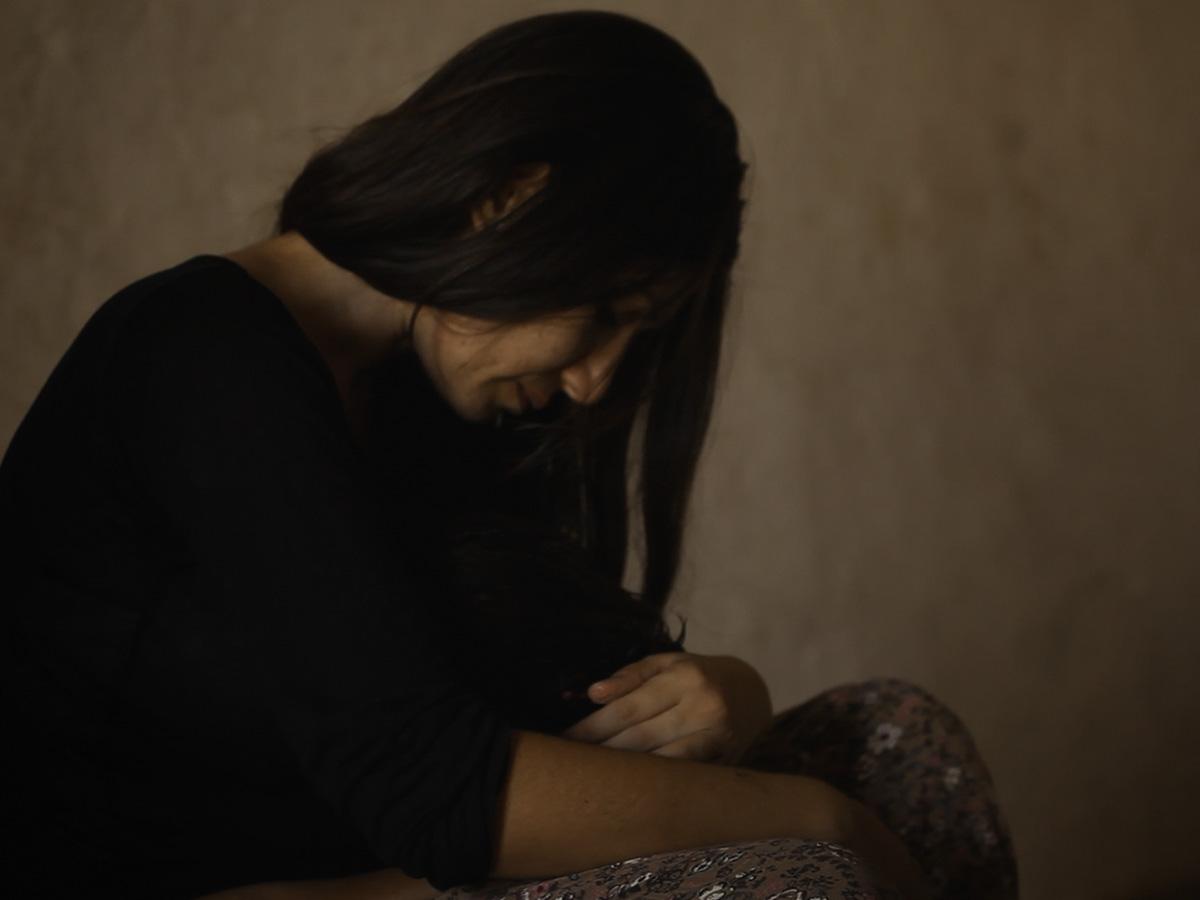
Dilan is the young woman who once decided to leave her house and taste the forbidden fruits of love and a free life by having an affair with a man from the neighbouring village. But in this place, a woman’s freedom is synonymous with shame and dishonour. She knows this. When her face appears for the first time, in a mirror, it bears the tragic traces of an unspoken, resigned acceptance of what awaits her. Her mother knows it too when she comes to comfort Dilan, saying that her brothers came to forgive her. As the brothers take her to a vast and empty land, we finally know, too, that there won’t be any forgiveness for her but a cruel and unjust death. Troubling as the reality itself is, the film takes this a step further by putting us into the position of silent witnesses, much like many people in this country, who are either unable to take action or choose not to.

In this land where the currency is family honour, life and death become transactional realities, and people mere commodities. Debts are paid by the blood of victims and the tears of torn-apart families. However, far from calculatedly leading up to a dramatic climax, Houses With Small Windows follows an ethics of representation. The violent, sensationalist aspects of honour killings are not its primary concern. With its careful respect for those women left unseen and unheard throughout their lives, the film asks: Do we have to see it happen when we understand her death is unavoidable?

Likewise, with every aspect of his camerawork—lighting, framing, angles—the filmmaker avoids falling into an inappropriate formalism that would overshadow its subjects. In a way, he deliberately tries to dissimulate his gaze as an author. Although Öztürk eschews this kind of auteurist elements in his approach—paradoxically a style in itself—he reclaims the film with the dedication “to my mother” that appears at the end. Like Emine in the film, Öztürk’s mother was given to another family when she was a little girl. In that respect, the film serves as a proxy for her and thousands of women who went through similar experiences. From this perspective, Öztürk undertakes a challenging endeavor in Houses With Small Windows by speaking on behalf of his mother and indirectly of other women through images. Because when a man tells a woman’s story, the gendered aspect of the enunciation is hard to overlook.

Öztürk’s film strives to meet this responsibility with its discreet, elliptical narration and inconspicuous imagery that often borders on the naturalistic. Whether it achieves this or not is debatable. Amidst all these modest images, one very heartbreaking one, which is also the ultimate image of the film, clearly stands out. It’s a non-image, so to speak, for it’s nothing but the engulfing darkness that accompanies little Emine’s cries for her mother after she’s been given to another family—an unsettling reminder of the cruel reality these young women face in their daily lives. Confronted with this darkness at the end of the film, one can’t help but wish there were small windows to allow some light in. Even though we know that it won’t dispel the horror completely, faint rays of light could help us catch a glimpse of a different future.

Read more

Houses With Small Windows

Bülent Öztürk, Belgium, 2013, 15’

Dilan pays with her life for her forbidden love for a young man in a neighbouring village—a powerful poetic portrait of an honour killing in the rural Kurdish southeast of Turkey.

Read more

    Bio Öykü Sofuoğlu

    Öykü Sofuoğlu is a Turkish film critic and journalist based in Paris. Her film-related writings have been published in various outlets, including International Documentary Magazine, Screen Slate, and Letterboxd Journal. She is also one of the co-editors of Outskirts Film Magazine. 

    read more

    © Bamssi (Mourad Ben Amour, 2024)
    Bamssi (Mourad Ben Amour, 2024)
    essay
    Read more

    An Outstretched Hand

    Mourad Ben Amor’s Bamssi

    Öykü Sofuoğlu
    12.05.2025

    Animals no longer live in nature; they now exist first and foremost on our screens. While each new internet-based encounter with them still feels as surprising and delightful as ever, the obsessive relationship with animal imagery often remains limited to fulfilling our emotional needs—rarely do we question the underlying motives. Mourad Ben Amor’s Bamssi (2024)—a diary film made alongside a pack of animal protagonists—hints that our fascination may sometimes be less about the animals themselves than about the spontaneity and impulsivity that emerge from their most routine gestures.

    Read more
    Katherine May Fannon (Helga Dorothea Fannon, 2025)
    Katherine May Fannon (Helga Dorothea Fannon, 2025)
    essay
    Read more

    The Amateur and the Archive

    On “Glued & Screwed #33 (Meditation)”

    Arta Barzanji
    14.09.2026

    Love and respect for an archive cannot mean approaching it so delicately that one refuses to act upon it: every selection, montage, recollection or speculation transforms what it touches. Nor does openness mean withholding commitment. It means committing strongly enough for an encounter to answer back—for an image, voice or vanished life to resist the meaning prepared for it and perhaps alter the form built around it.

    Read more
    © Wank Stallions (Alison Murray, 1993)
    Wank Stallions (Alison Murray, 1993)
    essay
    Read more

    Tales of Longing

    “solitude au masculin”

    Savina Petkova
    27.10.2025

    In “solitude au masculin”, curated by Inge Coolsaet for argos, the emotional struggles of men passed down from generation to generation are observed through the queer and feminist lenses of three films, spanning from the 90s through today. The internal battles of the characters reveal discrepancies, conflicting masculinities, and a distressing solitude. Savina Petkova unravels a tale of longing throughout the short film programme.

    Read more
    © 18 000 WORLDS (SAODAT ISMAILOVA, 2023)
    verslag
    Read more

    Achttienduizend werelden

    Saodat Ismailova’s eerste grote solotentoonstelling in het Eye

    Ils Huygens
    09.05.2023

    In het Eye Filmmuseum in Amsterdam loopt een prachtige solotentoonstelling van filmmaakster Saodat Ismailova. Haar werk beweegt zich tussen film en audiovisuele installatie.

    Read more
    © BAN♡ITS (Omar Chowdhury, 2024)
    BAN♡ITS (Omar Chowdhury, 2024)
    article
    Read more

    Why So Serious?!

    On Omar Chowdhury’s BAN♡ITS

    Ren Scateni
    12.02.2025

    “There’s a reason why everybody hates Batman in those movies,” comments one of the titular protagonists in Omar Chowdhury’s BAN♡ITS. Set in a liminal space between Bangladesh and India, the film follows a group of self-proclaimed “destitutes” who rob the rich to give to the poor and are obsessed with Heath Ledger, because “he died for his art.” Inhabiting a lawless limbo where radical credos coexist with state-sanctioned anarchic stances these outlaws are as porous and opaque as Chowdhury’s film itself.

    Read more
    À l’usage des vivants (Pauline Fonsny, 2019)
    À l’usage des vivants (Pauline Fonsny, 2019)
    essay
    Read more

    In the Margins

    Pauline Fonsny’s À l’usage des vivants

    Inge Coolsaet
    11.11.2022

    On September 22, 1998, the young Nigerian asylum seeker Semira Adamu died during a violent deportation attempt. Fleeing a forced marriage, she arrived in Belgium, where she was detained for several months. Searching for the right formal fit for the story Adamu can no longer tell herself, Pauline Fonsny meticulously strings together archival material with contributions from other artists. It can be said to a certain extent that A l’usage des vivants, by gleaning input within a small community of mourning artists and activists, is an example of collective filmmaking.

    Read more
    © Perpetual Night (Pedro Peralta, 2020)
    artikel
    Read more

    Choreografie met lens en licht

    Pedro Peralta’s Perpetual Night

    Inge Coolsaet
    04.02.2021

    De technische uitdaging die de jonge Portugese filmmaker aangaat in zijn kortfilm Perpetual Night getuigt van onverbiddelijke bekwaamheid.

    Read more
    Because We Are Visual (Olivia Rochette & Gerard-Jan Claes, 2010)
    Because We Are Visual (Olivia Rochette & Gerard-Jan Claes, 2010)
    essay
    Read more

    Together, Alone

    Olivia Rochette & Gerard-Jan Claes’s Because We Are Visual (2010)

    Dora Leu
    09.03.2025

    Inevitably, some fourteen years after its making, Olivia Rochette and Gerard-Jan Claes’ Because We Are Visual (2010) now feels like it covers a time long gone by, one when we still said video blog instead of vlog. In this collection of video diaries garnered from online public sources and then organised into chapters, Rochette and Claes provide no audio commentary on the material but make implicit remarks solely through editing.

    Read more

    Subscribe to our monthly newsletter for updates on new releases, publications, and events!

    Subscribe

    yanco is a magazine and streaming library for short-form moving image

    kortfilm.be vzw
    Boondaalse Steenweg 249
    1050 Elsene
    BE 0478 441 315
    info@yanco.be

    with the support of the Flanders Audiovisual Fund (VAF) of the Flemish Government

    VAF
    • about
    • colophon
    • privacy policy
    Facebook Instagram LinkedIn YouTube Letterboxd
    design by de Ronners
    website by eps en kaas