yanco Home
Menu
  • Home
  • watch
  • magazine
  • calendar
  • index
  • Subscribe
Search Log in
  • nl
  • en
You are here
  • Home
  • Magazine
  • There Must Be a Way Out of This Disaster
© LITTLE LOWER THAN THE ANGELS (NEOZOON, 2019)

There Must Be a Way Out of This Disaster

A conversation with NEOZOON

interview by
Savina Petkova
25.07.2025

Do you like cat videos? Try watching a thousand in a row, spread them on a timeline, and map out the similarities and differences between them. This experiment could serve as a primer for the work of two-person art collective NEOZOON, whose preoccupation is human-animal relationality. Using only found footage and social media archives, the duo aims to expose the oppressive power structures that position humans as exceptional, and non-human animals as anything but.

Collage is the preferred artistic tool and method. Ever since Fur Coat Recycling (2009-2012), where they cut pelt into animal shapes and glued it to facades in many European cities, NEOZOON’s interventionist approach aims to switch contexts. “To take something out of one context and bring it into a new one,” says Michaela, one of the two members. While their early street art used cut-out techniques to, in a way, inscribe non-human animals into the urban geography (Bah Bah Black Sheep, Le Goût des Bêtes), the prominence of social media archives in their current work speaks to a new kind of cohabitation of species. What academics term ‘human-animal geography’ relates to their spatial entanglements, but the digital geographies proposed by NEOZOON are no less illuminating. “If there is a change concerning animals in the digital age, that would be a new kind of visibility. In turn, humans have started to think about pain and patterns of power in a new way,” says Friederike.

In his essay “Why Look at Animals?”, art theorist John Berger details how, with the advent of Modernity, animals disappear from the public space. As machines take over and words like productivity or capital gain traction, animals are forcefully marginalised into the zoo. Nowadays, every screen is a portal to animals, and animal videos make up a huge chunk of our social media consumption. Can it be that the Internet is the mega-zoo of today?

According to Michaela, both the urban and digital public spaces are very restricted: “Some animals are, of course, missing from the urban space, because there is always a categorising mechanism at play: humans have to bring order and structure things.” Friederike, in turn, jumps in, “I keep thinking about how possible it is for animals to get real visibility in the digital space—I think there’s a change happening, for better or worse. It could be a positive thing, like if people think twice about what they eat, but it could also make someone buy a pet because of an online trend. In urban spaces and before YouTube, it wasn’t possible to get an impression of animals all over the world. ”

NEOZOON makes animals visible while avoiding the traps of metaphor and allegory by actively grappling with the web of entanglements between humans and animals. The collective’s name comes from the Greek term for a non-native animal species, introduced to an otherwise foreign environment through human activity. This human factor has been central to the collective’s work since its first projects in 2009, always aware of our all too anthropocentric perspectives. A perfect example here is the 2017 short Love Goes Through the Stomach, which combines ASMR, “eatcasting” and Let’s Play videos from YouTube, to lay bare many of the contradictions fuelling Western society’s nutrition habits. Humans, too, are a product of capitalism, even when they seem to worship their consumer goods (meat and dairy in their supermarket hauls) in front of the camera.

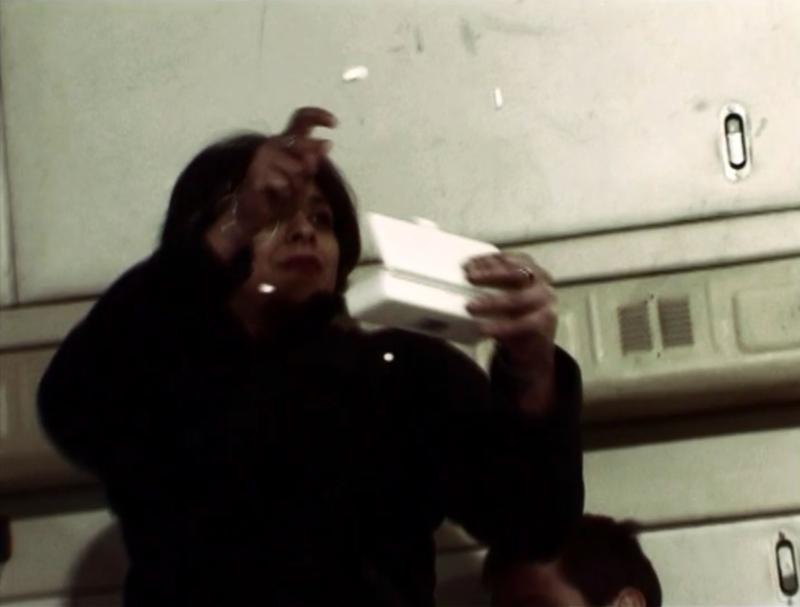
NEOZOON’s work also offers a meeting place for biopolitics and religion. Little Lower Than the Angels (2019) presents the creationist myth in Christianity (that God created humans in His image) through instances of peak dogmatism, from historical iconography to YouTube Evangelists. It is a striking compilation of clips revealing how little has changed over time when it comes to humans’ divine claim to power and superiority, and how ossified that idea is. The short’s spiritual successor, Biting the Dust (2021), exposes a certain cognitive dissonance in Christian dogma when it comes to the ‘right’ of some living beings and pets to go to heaven. 2022’s Lake of Fire relates the words of fanatic religious preachers to images of the Anthropocene, addressing the absurdity of such dogmatism in the face of an impending climate catastrophe.

Read more

Love Goes Through The Stomach

NEOZOON, Germany, 2017, 15’

Dedicated to nutrition and the human attitude towards “production animals”, this YouTube-found footage collage provides disturbing insights into the behaviour of a Western affluent society towards animal products.

Read more
MY BBY 8L3W (NEOZOON, 2014)

There’s a misconception that all activist art wags a finger at the viewer and in some way disciplines them into ‘being better’, but NEOZOON’s works absorb—or should we say, recycle—some of their source material’s entertainment value. Their found-footage videos highlight the absurdity and harm inherent in normalised overconsumption and are, according to Michaela, the collective’s “way of dealing with the strange behaviours we see in our society, to uncover something [for others] by shifting the context and pointing out what doesn’t work.” If there is a pedagogical element to their art, it is not in any way didactic. NEOZOON serves its critique with uncompromising sharpness, honesty, and humour, admitting to using humour as an invitation and “a way to open doors, instead of closing them, before people have the chance to think about what they just saw.” Testament to this is the collective’s bold use of music to match the rhythmic editing, splicing together the clips in every film. Percussions often feature in the lively, playful scores without overpowering the original audio track for maximum authenticity and minimum (but meaningful) intervention.

The duo works exclusively with found footage, an ecological decision that saves them and the planet’s resources, but gleaning material from every corner of the Internet sounds like an always incomplete mission. It’s no surprise, then, to hear Friederike admit that “it all happens in the editing,” while acknowledging that entails a lot of trial and error to find the perfect fit for each film. When asked whether a specific kind of discipline allows them to view the more disturbing images one can encounter online in a more detached manner, they both stress the importance of the process and what their films are conveying. “In my mind, I’m thinking about what I can do with this image, not how disturbing it is,” adds Friederike, “and there are things that one of us can’t watch while the other can, but if we spot animal cruelty, we flag it immediately.”

Humans are, according to NEOZOON, the most aggressive animal out there, exemplified by their cut-out public installation Big Game Hunter (2011), which taped true-to-size print-out images of hunters and their animal prey as trophies on the streets of Paris. Throughout their artistic career, the collective frames humans as an integral part of a structure of oppression: capitalism enslaves people, and people subjugate animals—as pets, meat, leather, byproducts. One solution—and one readily taken up by so-called abolitionists—would be to just erase the human perspective out of disdain for the pain humankind has already caused both animals and the planet as a whole. Yet, NEOZOON continuously chooses to interrogate that role instead of disregarding it. Is there a hint of optimism there, a hope that resonates through the critique? Perhaps.

“I don't know if we can make it, but we are trying! The stories we’ve shared for so long have been about the bad history of mankind. So there must be some way out of this disaster. Maybe.”

Read more about

#231 Love Goes Through The Stomach
#521 MY BBY 8L3W

    read more

    © BAN♡ITS (Omar Chowdhury, 2024)
    BAN♡ITS (Omar Chowdhury, 2024)
    article
    Read more

    Why So Serious?!

    On Omar Chowdhury’s BAN♡ITS

    Ren Scateni
    12.02.2025

    “There’s a reason why everybody hates Batman in those movies,” comments one of the titular protagonists in Omar Chowdhury’s BAN♡ITS. Set in a liminal space between Bangladesh and India, the film follows a group of self-proclaimed “destitutes” who rob the rich to give to the poor and are obsessed with Heath Ledger, because “he died for his art.” Inhabiting a lawless limbo where radical credos coexist with state-sanctioned anarchic stances these outlaws are as porous and opaque as Chowdhury’s film itself.

    Read more
    © 18 000 WORLDS (SAODAT ISMAILOVA, 2023)
    verslag
    Read more

    Achttienduizend werelden

    Saodat Ismailova’s eerste grote solotentoonstelling in het Eye

    Ils Huygens
    09.05.2023

    In het Eye Filmmuseum in Amsterdam loopt een prachtige solotentoonstelling van filmmaakster Saodat Ismailova. Haar werk beweegt zich tussen film en audiovisuele installatie.

    Read more
    © Self-Portrait (Jonas Mekas, 1980)
    Self-Portrait (Jonas Mekas, 1980)
    essay
    Read more

    Here I Am

    Jonas Mekas’ Self Portrait (1980)

    Gerard-Jan Claes
    20.06.2025

    “We’re running?” Mekas asks the cameraman. “We’re running!” replies the latter. Mekas repeats the question, as if he’s not quite sure. Then he pulls out a watch. “It’s a quarter to two, Saint Paul time. We should be finished by five minutes after two.” So begins Jonas Mekas’s Self Portrait from 1980. Despite the title, Mekas is not filming himself. A cameraman captures him standing in a garden in front of a friend’s cottage in Saint Paul, Minnesota, drinking a can of beer.

    Read more
    Otolith 1 (The Otolith Group, 2003)
    Otolith 1 (The Otolith Group, 2003)
    article
    Read more

    What Remains in Midair

    The Otolith Group’s Otolith I (2003)

    Arta Barzanji
    16.11.2026

    The promise, and perhaps the limitation, of London-based collective The Otolith Group’s speculative film essay Otolith I (2003) resides in images briefly developing their own relations before the voice gathers them back into its account. The film begins with a scientific report dated 2103. Sustained exposure to microgravity has transformed the human vestibular system; the resulting species can inhabit space but no longer withstand Earth’s gravity. “Earth is out of bounds for us now; it remains a planet accessible only through media.”

    Read more
    © Ramallah, Palestine, décembre 2018 (Juliette Le Monnyer, 2025)
    Ramallah, Palestine, décembre 2018 (Juliette Le Monnyer, 2025)
    article
    Read more

    Agents of Control

    Juliette Le Monnyer’s Ramallah, Palestine, décembre 2018

    Ren Scateni
    16.09.2025

    Juliette Le Monnyer’s Ramallah, Palestine, décembre 2018 (2025) wants us to bear witness. Within a tight ten-minute running time, this minimalist film unfolds as a controlled documentation of one moment of colonial violence during Israel’s occupation of Palestine—almost unremarkable in its sickening mundanity, even tame when compared to the genocidal atrocities livestreamed over the last twenty-three months.

    Read more
    Kaalkapje (Marthe Peters, 2024)
    Kaalkapje (Marthe Peters, 2024)
    artikel
    Read more

    Tedere pijn

    Marthe Peters’ Kaalkapje (2024)

    Michiel Philippaerts
    29.03.2024

    Al wat de pas afgestudeerde filmstudent Marthe Peters nodig heeft om te reflecteren op de spanningen en tegenstrijdigheden tussen het verleden en het heden, zijn verloren video-opnames uit haar jeugd. Aangevuld met nieuwe, poëtische beelden (handen die tekenen, een kat aaien, of met kaarsenvet spelen) en een doordachte voice-over, verkent Peters de littekens van een vergeten tijd uit haar leven.

    Read more
    Tengu: God of Mischief (Colin Read, 2013)
    Tengu: God of Mischief (Colin Read, 2013)
    interview
    Read more

    Rooftop-shredding Deities

    Interview with Colin Read

    Emma Daelman
    14.11.2026

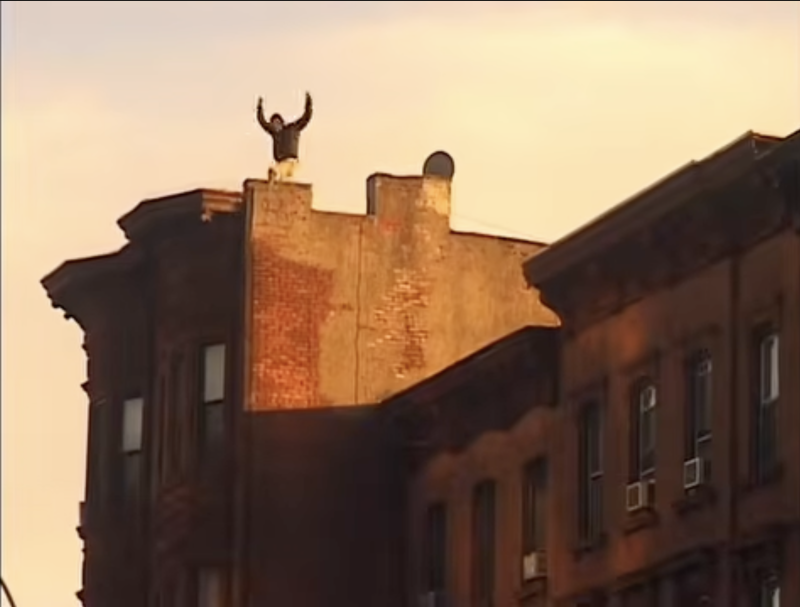
    In his films, NYC-based filmmaker Colin Read uses skateboarding to playfully reflect on themes such as life, death, and nature. His 90s-style fisheye Sony VX1000 evokes nostalgia for the heyday of skateboarding, but his visual language expands and challenges the format, both in its content and form. The success of Read’s skate films gave him the opportunity to create music videos for Radiohead, Glass Animals and Weezer, as well as commercials for Converse, Lexus and Burberry. While skateboarding features in some of his commercials, the visual language and technical skill he built through skate videography creep into all of his work.

    Read more
    what else grows on the palm of your hand? (Dhiaa Biya, 2023)
    what else grows on the palm of your hand? (Dhiaa Biya, 2023)
    essay
    Read more

    Whispering Hands

    Dhiaa Biya’s what else grows on the palm of your hand? (2023)

    Bo Alfaro Decreton
    01.05.2026

    In a series of intimate, domestic scenes that interweave the present with the past, Dhiaa Biya honours the weathered hands of a (deceased) grandmother. Through repetition of the same gestures, the hands of three generations of women merge, free from any obstacles posed by the passage of time. Is there a more beautiful part of the body than the hands to reflect on in order to rekindle the extinguished connection between head and body, a characteristic of these frenzied times?

    Read more

    Subscribe to our monthly newsletter for updates on new releases, publications, and events!

    Subscribe

    yanco is a magazine and streaming library for short-form moving image

    kortfilm.be vzw
    Boondaalse Steenweg 249
    1050 Elsene
    BE 0478 441 315
    info@yanco.be

    with the support of the Flanders Audiovisual Fund (VAF) of the Flemish Government

    VAF
    • about
    • colophon
    • privacy policy
    Facebook Instagram LinkedIn YouTube Letterboxd
    design by de Ronners
    website by eps en kaas