In a series of intimate, domestic scenes that interweave the present with the past, Biya honours the weathered hands of a (deceased) grandmother. Through repetition of the same gestures, the hands of three generations of women merge, free from any obstacles posed by the passage of time. Is there a more beautiful part of the body than the hands to reflect on in order to rekindle the extinguished connection between head and body, a characteristic of these frenzied times? Ultimately, it is with our hands that we try to make something of what has been lost and what remains. Biya raises the question of whether it is possible to be kinder to ourselves (“I wanted to do as you and care for myself”).
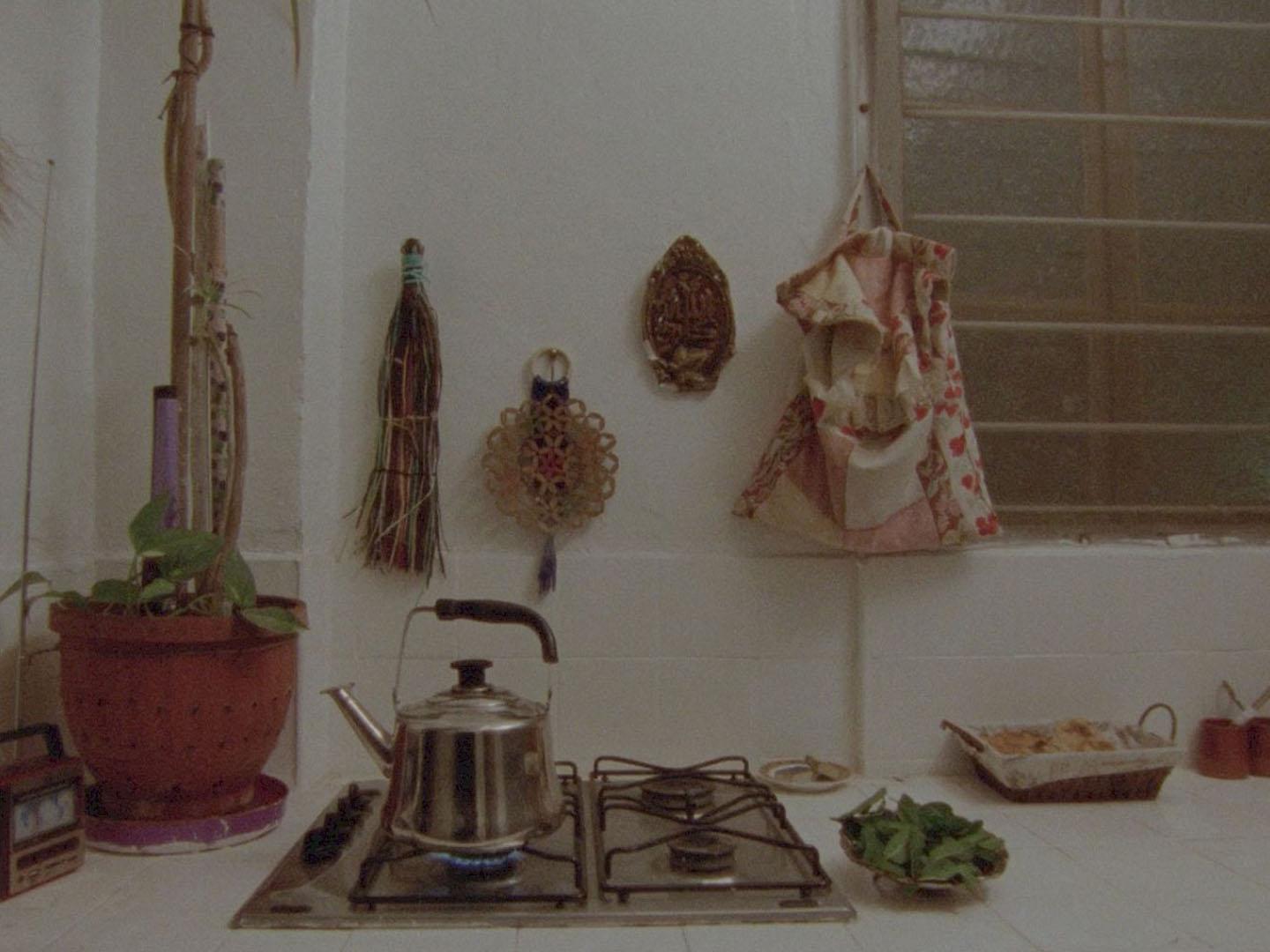
This desire for gentleness is also evident in Biya’s approach to time. The deliberately slow, static images make this even more palpable when the women are cooking, embroidering, or tending to plants. The ritualistic nature of their actions anchors the memory back in a sense of the multiplicity of time; we most commonly remember in flashes and fragments. The recurring detail shots of the teapot on the gas stove, freshly picked mint leaves in a copper bowl, and homemade bread in a woven basket are all appropriate nods to still lifes, evoking both opulence and ephemerality.
Apart from the whistling of the kettle, there is hardly anything to be heard. Even the short statements that appear on the screen are stripped of a voice-over: conceived but not spoken. They exist in limbo. Biya leaves open whether the woman at the desk actually overcomes her struggle with the blank page or whether writing is merely a matter of surrender. By putting memories on paper, we also rewrite them—writing is a two-way action. But above all else, it is silence that brings solace.
This “intermediate state” movingly reflects the beginning of a mourning process, in which one seems to fall out of time. But mourning stretches into all aspects of our lives: as a brake, but also as a form of support. what else grows on the palm of your hand? honours the tactile memory that can guide not only the head, but also the rest of the body.
“Whisper in your heart, memory in your hand, water in your palm, you know your way out.” If we rest our eyes on our palms long enough, the capricious memory will sprout (and escape) on its own. Biya skilfully responds to the question of whether and how this can ultimately be captured: in text, image, repetition, silence, or timeless promise?