yanco Home
Menu
  • Home
  • watch
  • magazine
  • calendar
  • index
  • Subscribe
Search Log in
  • nl
  • en
You are here
  • Home
  • Magazine
  • A Room of Her Own
© La Chambre (Chantal Akerman, 1972)
La Chambre (Chantal Akerman, 1972)

A Room of Her Own

Chantal Akerman’s La Chambre

article by
Öykü Sofuoğlu
17.11.2024

In the beginning is the Movement: a tranquil, balanced motion sweeping horizontally across the narrow space of a New York apartment. A kitchen, a living room, a bedroom, where each section the camera lingers on simultaneously transforms into solemn, impersonal still lifes that contain vivid, palpable, humane traces of someone inhabiting the place—a black strap bag slung over a wooden chair with red upholstery, the leftovers of an unfinished meal, and finally, the much-anticipated tenant, Akerman herself, coming into view.

Lounging on a small bed, Akerman’s posture seems casual and relaxed at first glance, but the repetitive tilts of her head—to the left and then back to center—contrasting with the smooth glide of the camera suggest otherwise. Restlessness is in the air, yet before we can discern it, the image is already on the move, retracing its steps for a second time. The chair, the kitchen table, the kettle: everything is in its place, both as alive and as dead as possible.

We are caught in this pleasant, satisfactory harmony until the figure in bed reappears, now lying under the sheets, repetitively fidgeting her body. There is no time to ask ourselves what’s going on, for she’s already out of shot. The camera moves on to the slat-back chair, the messy desk, the sink, the upholstered chair, the kitchen table, and the kettle. Everything is still in its place. Again.

But Akerman, who has straightened herself up a bit, is not. She keeps rubbing an apple in her hands. Her restlessness takes over the Movement, breaking the cycle of camera movements and syncing it to her own ruminations—physical and mental—forcing it to go back and forth. The disruption occurs during the third camera rotation, as if the very structure of the film were foretelling the turmoil that would ensue on the third day in Jeanne Dielman, made three years later.

In Akerman’s cinema, chaos has always been the real owner of the domestic space, while her characters and the director herself are mere temporary dwellers. Akerman never stopped looking for ‘a room of one’s own’—in Brussels, Paris, or New York, but also in her films, alongside other drifting, uprooted, or displaced individuals across Eastern Europe and Mexico, like the elusive travelers in D’Est, waiting stoically for the first cold and unsettling winds of post-Wall Europe to pass, or the resilient Mexican migrants in De l’autre côté, who are forced to live in a perpetual state of incarceration even when they are on the move: fellow lost souls bound to remain behind and beyond walls made of violence and cruelty, never those of a home.

La Chambre is one of the many illustrations of this pursuit, which we see with other eyes today. Many viewers have rested their gaze upon Akerman’s interiors, decorating them with their own interpretations and mental projections. We invited other guests and even went so far as to attribute them ownership—Michael Snow, for instance, who has often been credited as the main influence behind the structuralist style of the film, would be the perfect candidate.

I, too, with every new reiteration of the film, felt both more familiar and stranger to what occurs (and what doesn’t) in that cramped space. So many times, I’ve been there, venturing initially as a naive teenage film enthusiast, then pacing inside relentlessly for an undergraduate film analysis assignment, and later, on rare occasions, stumbling upon it within a short film programme. After watching La Chambre and writing and reading about it again and again, the question of who these images belong to still remains unanswered for me. Yet one thing I’m sure of is that there has always been, and will always be, enough room for all of us in Akerman’s images.

watch now

Read more

The Room

Chantal Akerman, Belgium, 1972, 11’

A panning shot in a repeating full-circle movement shows a room as a succession of still lives: a chair, some fruit on a table, a collection of solitary, waiting objects. There is the presence of a young woman: filmmaker Chantal Akerman herself, sitting on the bed eating an apple.

Read more

    Bio Öykü Sofuoğlu

    Öykü Sofuoğlu is a Turkish film critic and journalist based in Paris. Her film-related writings have been published in various outlets, including International Documentary Magazine, Screen Slate, and Letterboxd Journal. She is also one of the co-editors of Outskirts Film Magazine. 

    read more

    © Dimensions of Dialogue (Jan Švankmajer, 1983)
    artikel
    Read more

    Dialoog doorgelicht

    Jan Švankmajers Dimensions of Dialogue

    Michiel Philippaerts
    28.12.2017

    In deze kortfilmklassieker bestudeert Jan Švankmajer de verschillende aspecten van ‘dialoog’ op een ludieke en verrassend pessimistische manier.

    Read more
    © Untitled III (Sarah Pucill, 2001)
    Untitled III (Sarah Pucill, 2001)
    interview
    Read more

    Folding Time

    On Sarah Pucill’s Surrealism

    Laura Stoeckler
    23.08.2025

    Over the last thirty years, Sarah Pucill’s films have shown a sustained engagement with feminist politics, surrealist aesthetics, and the material language of cinema. Her work is connected by a visual and conceptual vocabulary that keeps evolving. Figures, motifs, and techniques reemerge—the principle of continuity is key to understanding how the artist’s work coheres, drawing strength from its self-reflection.

    Read more
    Conversation Nord-Sud : Daney/Sanbar (Simone Bitton & Catherine Poitevin, 1991)
    Conversation Nord-Sud : Daney/Sanbar (Simone Bitton & Catherine Poitevin, 1991)
    essay
    Read more

    Unbridged Distances

    “une place vide dans un paysage”

    Öykü Sofuoğlu
    19.10.2026

    Curated by Inge Coolsaet for argos, the programme “une place vide dans un paysage” presents archival imagery as a gateway between collective memory and personal experiences. In both Conversation nord-sud, Daney / Sanbar (1991) and National Liberation Football (2020), conversation acts as a mnemonic catalyst. Despite their mutual resonance, both works are laden with absences, gaps and unresolved tensions, particularly in the context of countries whose national histories are scarred by colonial oppression, forced displacement and exile.

    Read more
    La Chute (Sebastian Schaevers, 2022)
    La Chute (Sebastian Schaevers, 2022)
    article
    Read more

    When the Sky Falls

    Sebastian Schaevers’ On Its Way Down

    Jannes Callens
    10.10.2025

    Sebastian Schaevers constantly seeks visual and narrative strategies to capture a man-made problem that has become so overwhelming it exceeds human capacity to cope. We are heading for an almost sublime aesthetic experience of our own demise. On Its Way Down leaves no scene unused to launch metaphors about human attitudes toward the impending ecological disaster.

    Read more
    © MISTY PICTURE (Christoph Girardet & Matthias Müller, 2021)
    Misty Picture (Christoph Girardet & Matthias Müller, 2021)
    essay
    Read more

    Cinematic Ghosts

    On Christoph Girardet and Matthias Müller’s Misty Picture

    Oana Ghera
    09.12.2024

    Through association, repetition, and accumulation, Christoph Girardet and Matthias Müller showcase the inventory of Hollywood formal clichés that contributed to the creation of the Twin Towers’ symbolic capital, reflecting at the same time on the power of those images to haunt our collective imagination to this day.

    Read more
    what else grows on the palm of your hand? (Dhiaa Biya, 2023)
    what else grows on the palm of your hand? (Dhiaa Biya, 2023)
    essay
    Read more

    Whispering Hands

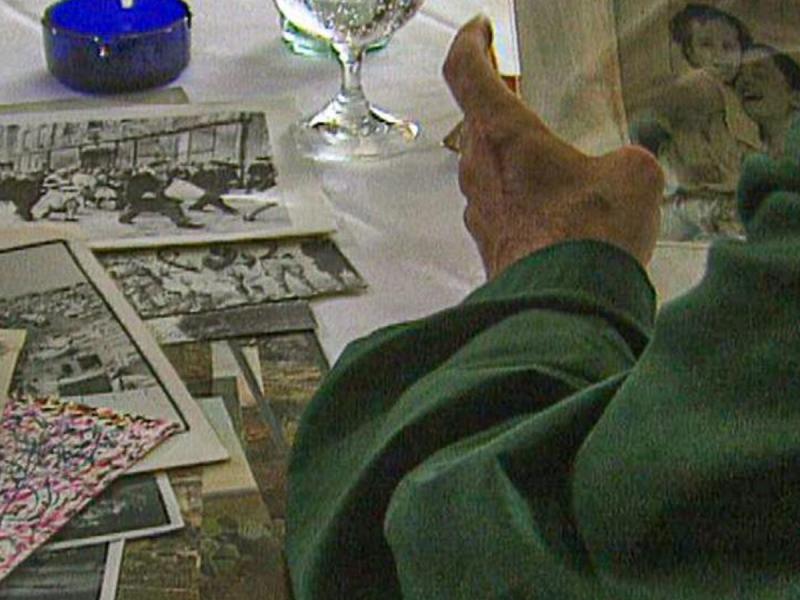
    Dhiaa Biya’s what else grows on the palm of your hand? (2023)

    Bo Alfaro Decreton
    01.05.2026

    In a series of intimate, domestic scenes that interweave the present with the past, Dhiaa Biya honours the weathered hands of a (deceased) grandmother. Through repetition of the same gestures, the hands of three generations of women merge, free from any obstacles posed by the passage of time. Is there a more beautiful part of the body than the hands to reflect on in order to rekindle the extinguished connection between head and body, a characteristic of these frenzied times?

    Read more
    Our Legacy (Caroline Poggi & Jonathan Vinel, 2016)
    Our Legacy (Caroline Poggi & Jonathan Vinel, 2016)
    interview
    Read more

    Against a Hierarchy of Images

    Interview with Caroline Poggi & Jonathan Vinel

    Maike Höhne, Flo Vanhorebeek
    11.11.2026

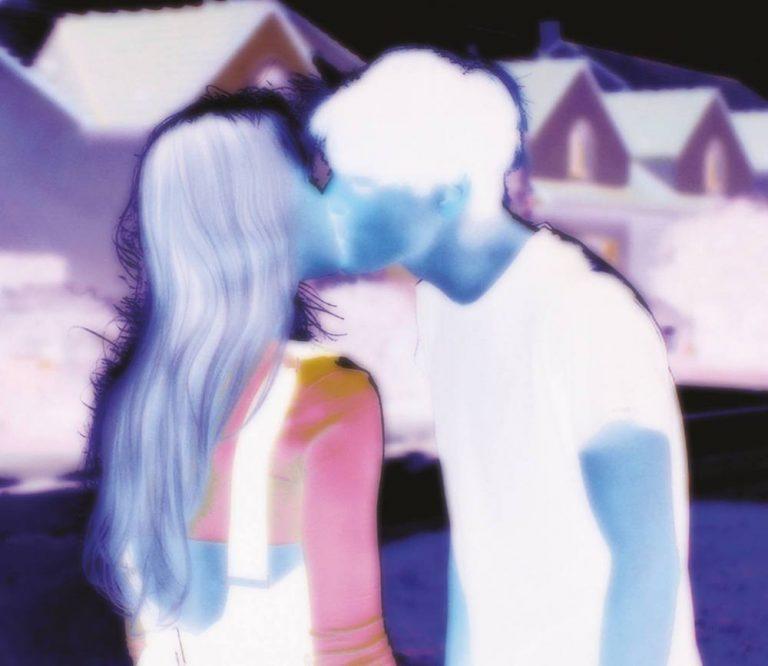
    In 2025, Kurzfilm Festival Hamburg approached acclaimed French filmmaking duo Caroline Poggi and Jonathan Vinel to visualise the festival motto “Provoke Love” as a festival trailer. With an arsenal of archival internet footage, their signature dystopian wit and a killer soundtrack, they ask a simple question: How do we find a way to be together again? Festival artistic director Maika Mia Höhne sat down with Vinel and Poggi to dissect this universal desire through the lens of their own artistic careers, exploring themes such as small-town boredom, growing up with the internet, and the terrible beauty inherent in all of this.

    Read more
    Because We Are Visual (Olivia Rochette & Gerard-Jan Claes, 2010)
    Because We Are Visual (Olivia Rochette & Gerard-Jan Claes, 2010)
    essay
    Read more

    Together, Alone

    Olivia Rochette & Gerard-Jan Claes’s Because We Are Visual (2010)

    Dora Leu
    09.03.2025

    Inevitably, some fourteen years after its making, Olivia Rochette and Gerard-Jan Claes’ Because We Are Visual (2010) now feels like it covers a time long gone by, one when we still said video blog instead of vlog. In this collection of video diaries garnered from online public sources and then organised into chapters, Rochette and Claes provide no audio commentary on the material but make implicit remarks solely through editing.

    Read more

    Subscribe to our monthly newsletter for updates on new releases, publications, and events!

    Subscribe

    yanco is a magazine and streaming library for short-form moving image

    kortfilm.be vzw
    Boondaalse Steenweg 249
    1050 Elsene
    BE 0478 441 315
    info@yanco.be

    with the support of the Flanders Audiovisual Fund (VAF) of the Flemish Government

    VAF
    • about
    • colophon
    • privacy policy
    Facebook Instagram LinkedIn YouTube Letterboxd
    design by de Ronners
    website by eps en kaas