I often find myself daydreaming about the early days of cinema—what must it have been like to witness the kinematograph or to look through the eyepiece of a peep show box? To interact with these technologies, not knowing what grand paradigmatic shifts in visual history they would come to represent? But then I realise this generation has witnessed a similar shift: the launch of the Internet in the late 2000s.

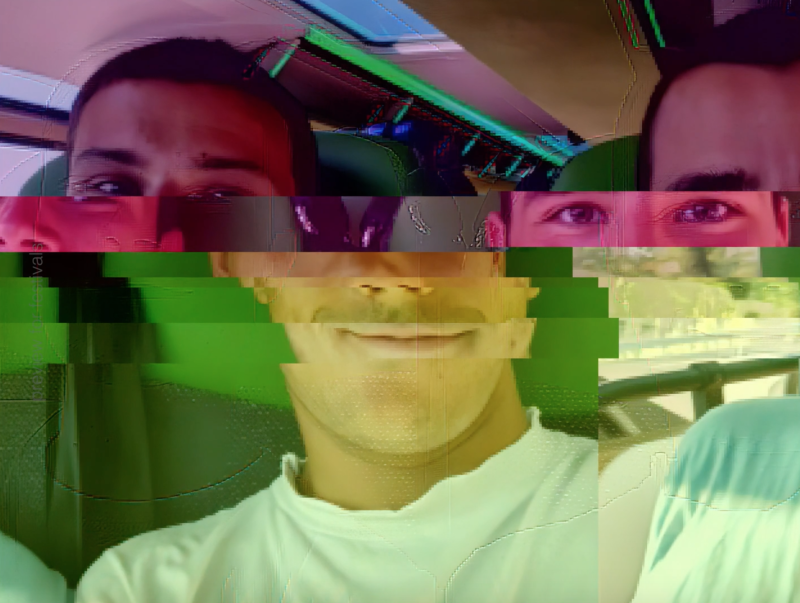
Because We Are Visual (Olivia Rochette & Gerard-Jan Claes, 2010)
Together, Alone
Olivia Rochette & Gerard-Jan Claes’s Because We Are Visual (2010)
What also transpires, though, is an immense loneliness, a cry for belonging, despite the promised connection. The paradox of the video diary is just that. You are all alone in front of the camera, hoping that on the other end someone may listen.
Dora Leu
With their compendium of Internet videos, Rochette and Claes point to the birth of a new eye, the webcam-eye or the laptop-eye, a ready tool to expose the last inch of yourself, from your soul to your body. Some of these individuals tell us about their break-ups or about their restrictive parents; others show us beautiful rainbows or skate adventures; a pregnant woman shows us her belly, another woman is totally naked in front of the camera, pleasuring herself. This era gave way to an obsession with the self, but not yet to self-obsession; the new technology led to a genuine—if sometimes careless—impulse to record yourself and your daily life, all long before the dawn of content monetisation. To put it differently, it was a time when the incentive of the vlog was not economical (as it is for YouTube, TikTok, or OnlyFans influencers today), but sentimental. No one was trying to sell you anything, rather simply to tell you how shitty their day was.
Because We Are Visual touches a nerve because it shows a longing for connection, a desire to be seen—wasn’t this the great promise of the new virtual realms: to connect us all? There are hints of this: a video montage of birds flying across different skylines may prove that we are all moved by the same things, no matter where we come from. What also transpires, though, is an immense loneliness, a cry for belonging, despite the promised connection. The paradox of the video diary is just that. You are all alone in front of the camera, hoping that on the other end someone may listen.
Rochette and Claes’ montage perhaps feels like a celebration of the various ways we liked to bare it all in front of the camera in the late 2000s—but watching it nowadays, it can’t help but provoke the mourning of the collective glee at new technology and the kind of connection it promised during those years. In a time of monetised platforms and the vlog as a career option, we might miss that awkward chuckle of the early Internet when we were also slightly embarrassed that what we really needed was somebody to watch us.