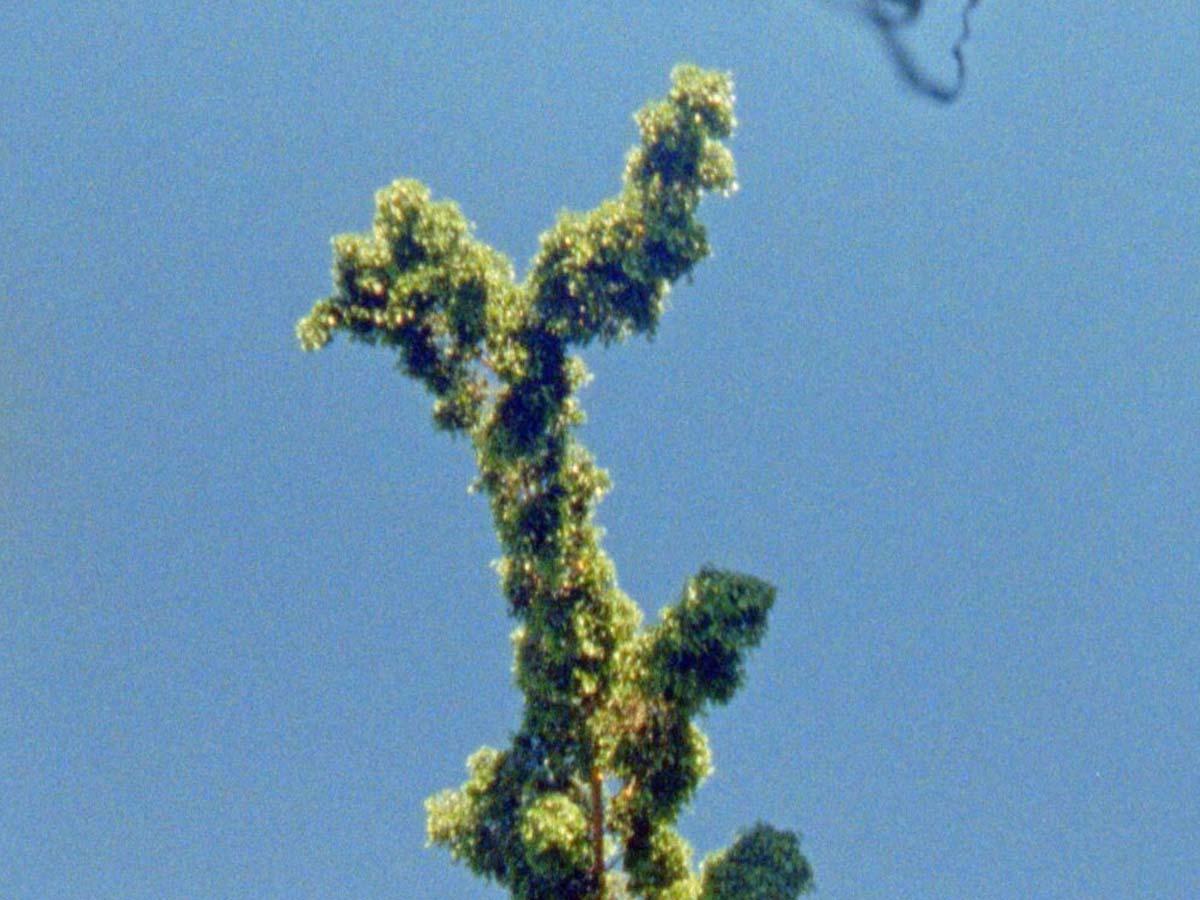
One morning, the inhabitants of a city wake to find never-before-seen trees, plants, and flowers suddenly erupting throughout the streets and squares. Strange, mysterious events begin as Camelia and Nahla investigate the origins of these new, peculiar creatures.
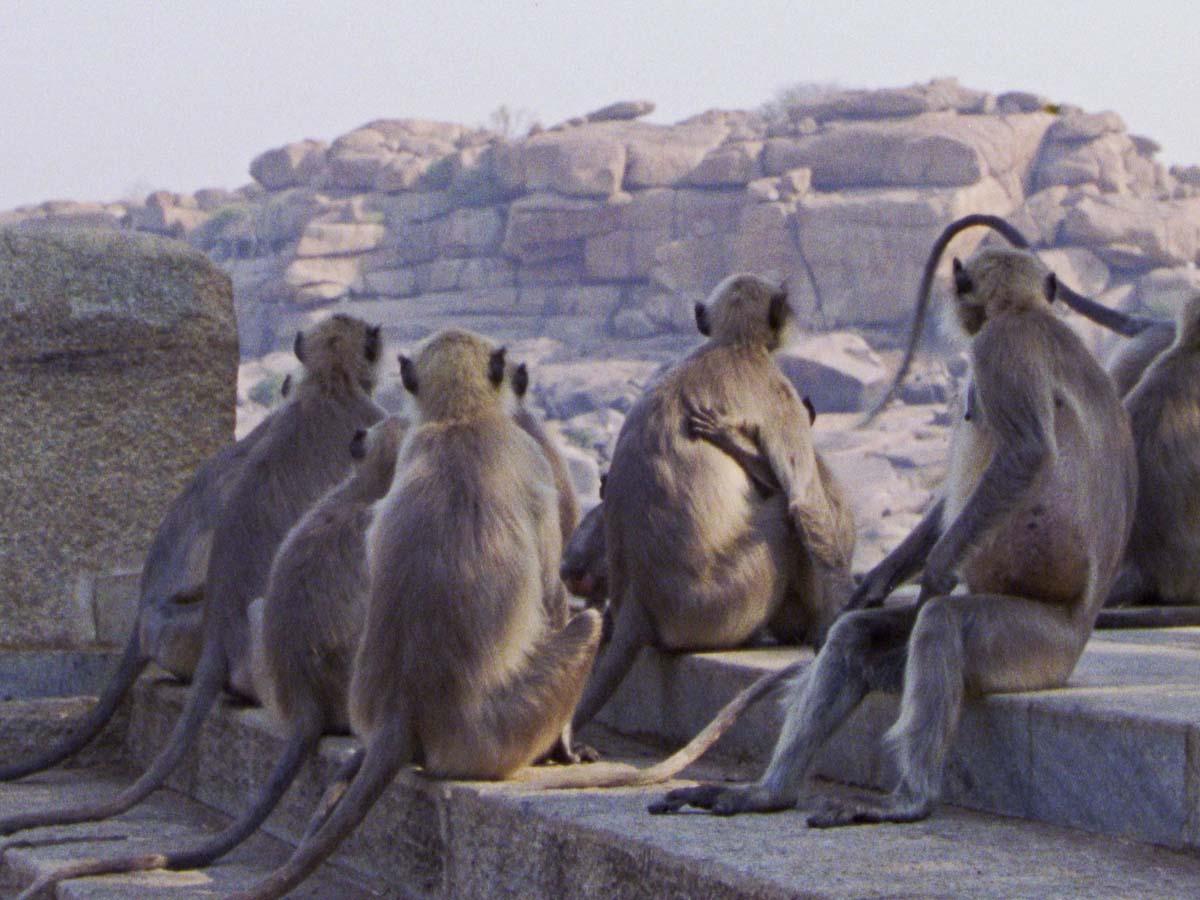
Langurs live among the archaeological site of Vijayanagara, the former capital of a grand empire. The mythical apes of the old kingdom witness and protect these unusual rock formations that humans and nature created together.
A journey to the underworld begins within our own entrails. This film explores the intimate rhythm of digestion only to next investigate the becoming of geological eras, inspired by Gamaliel Churata’s El Pez de Oro, in which he states, “we all carry the dead alive; that the dead live.”
Of the more than eighty moving-image works that Barbara Hammer created, her 1974 film Dyketactics remains her most iconic. A four-minute paean to lesbian sexuality, the film publicly announced Hammer’s blossoming sexual identity.
With a 16mm Bolex camera, Rose Lowder developed her own unique way of filming. Her famous “Bouquets” consist of a series of one-minute compositions whose 1440 frames are interlaced so that each bouquet of flowers also becomes a bouquet of images.
Mothlight was created by painstakingly collaging bits and pieces of organic matter—moth wings, most notably, as well as flowers, seeds, leaves, and blades of grass—and sandwiching them between two layers of clear 16-mm Mylar editing tape.
In 1976, the announcement of the imminent eruption of La Soufrière, Guadeloupe’s main volcano, left Basse-Terre completely depopulated. Werner Herzog travels there with his team and two cameramen as the danger reaches its peak.
Zinal, a small town in the Swiss Alps, looks straight up toward the melting glaciers of the Couronne Impériale. The townspeople struggle with nihilistic indifference. When the threat is so immediate, and their powerlessness so great, can their response be anything other than cynicism? Then a paraglider falls mysteriously from the sky, and Zinal starts to change.
How to listen to a space considered empty? underneath it flickers suggestsdifferent perspectives on La Friche Josaphat, a verdant fallow land in Brussels threatened by real estate development.
An artificial summer rules the greenhouse. Workers tend to carnations. In a multitude of splendid colours, they grow towards the sun until they’re ready to fulfill their cut-flower destiny. Carnations is an audiovisual meditation on movements within a carnation nursery close to filmmaker Martijn van de Wiele’s home.
In The Seasons, Artavazd Pelechian captures a reclusive farming community in its incessant struggle against the elements of nature. The film shows humanity trapped in a cruel but stunningly beautiful existence.
In 20th-century Colombia, resistance fighter Yarokamena, a member of the indigenous Uitoto tribe, called for rebellion against violent exploitation of the rubber mining industry in the Amazone and invoked the spiritual powers of war.
Eight thousand five hundred kilometres lie between the Amazon and the Ardennes. In his home country of Brazil, filmmaker Diego looks at the inaccessible forest from the outside. Its Belgian counterpiece, however, is easier to explore.
The thaw of the so-called eternal snow of Páramo, a neotropical alpine ecosystem in the high Andes, exposes a layer of meaning about the origins and survival of the landscape.