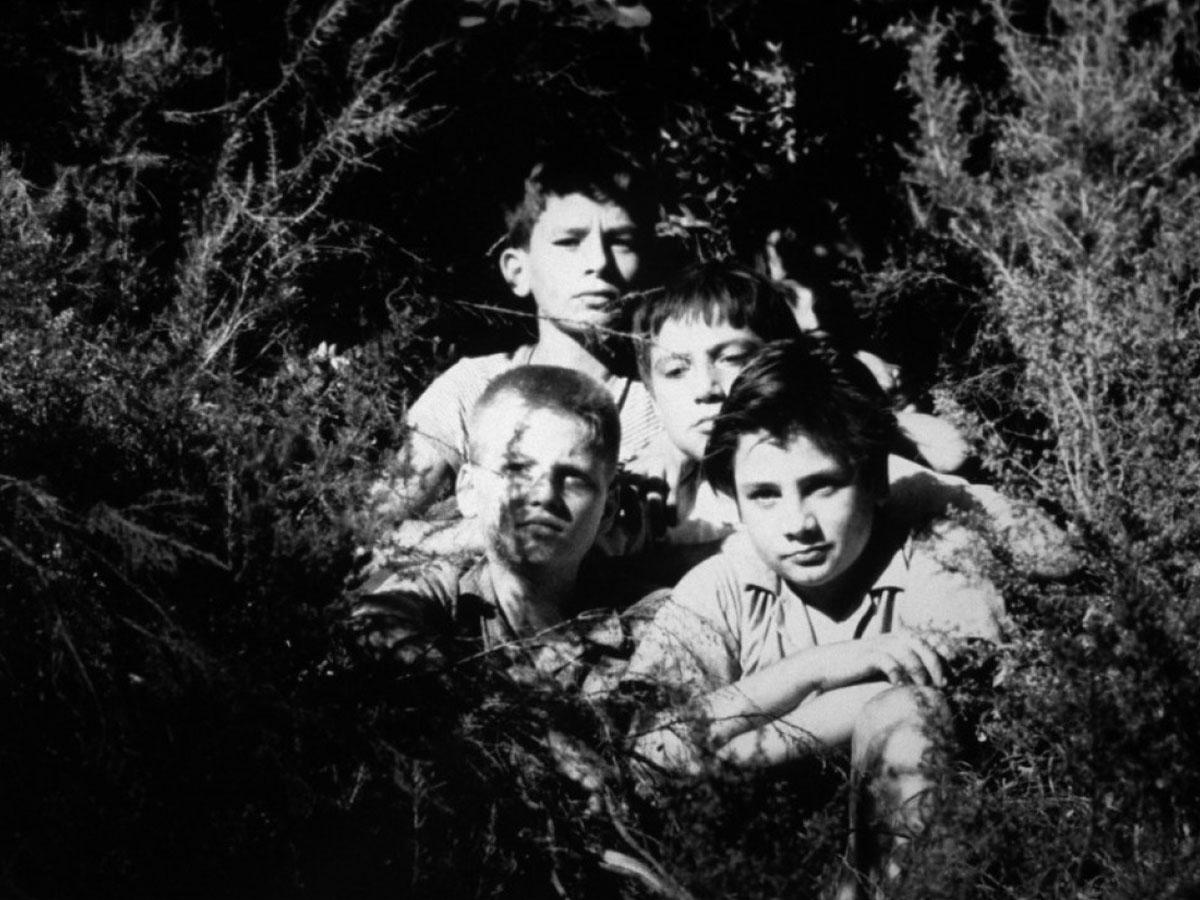
In François Truffaut’s debut film, the beautiful Bernadette cycles over the bridges and through the scrublands of Nîmes. Wherever she goes, five mistons (local slang for brats) are hot on her heels. They see her as the embodiment of their budding, prepubescent desires.
On a hot summer day, five teenagers go to a river to cool off. They swim, they sleep, they eat snacks and ice cream. As music and dialogue are missing, everyday sounds attract attention: bicycles riding on gravel, feet gliding through water, gasps and splutters.
Three years after the publication of Marguerite Duras’ children’s book Ah! Ernesto, Jean-Marie Straub and Danièle Huillet pull the titular protagonist from its pages for an unconventional retelling of the short story.
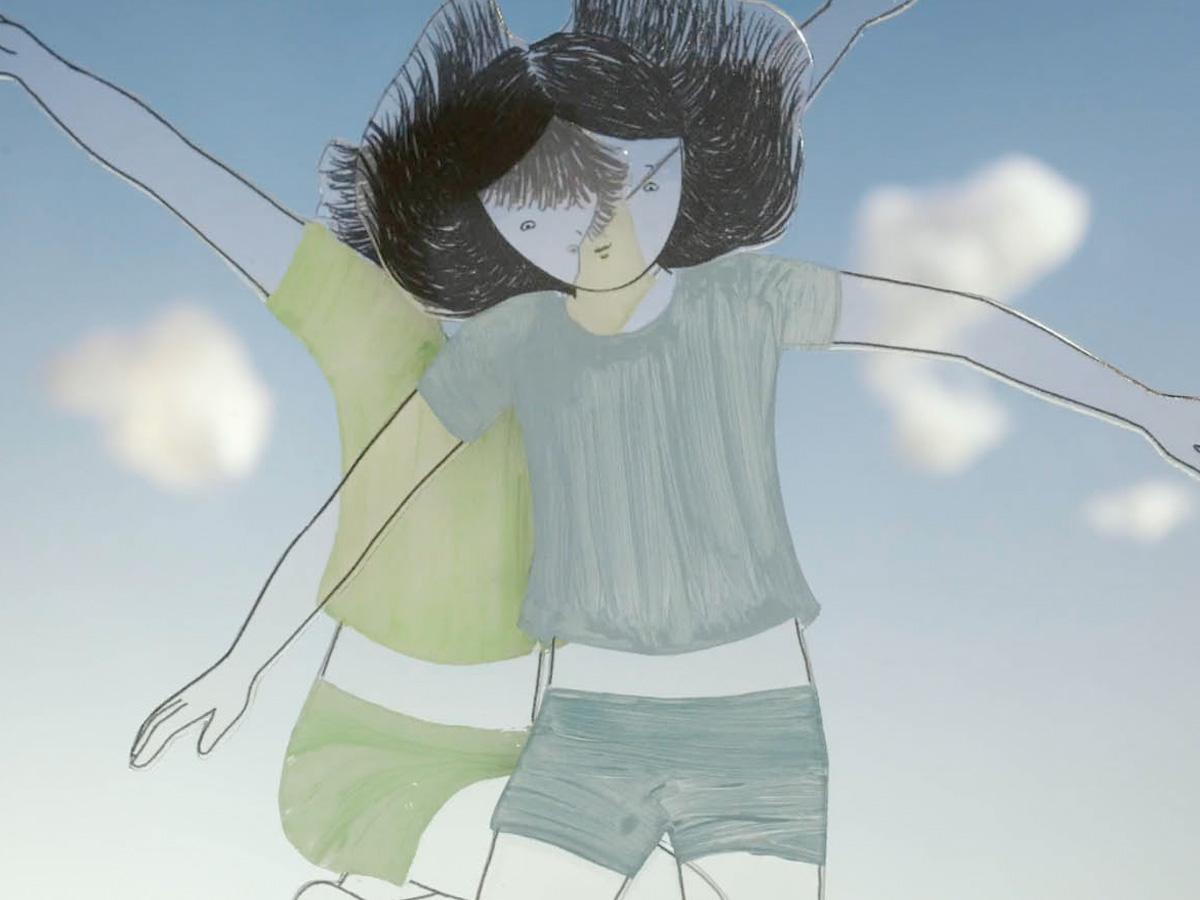
Inseparable best friends spend their last summer holiday of childhood amusing themselves around the house. As summer progresses, their bodies start to morph and shift, and an awkwardness descends on their friendship. Puberty seems determined to interrupt their bond.
Through the lens of her father’s camcorder, she looks back on a period she can no longer remember. Twenty years after surviving childhood cancer, she searches for traces of illness between scars and desires.
In Emmanuel Marre’s vérité film, not the filmmaker or his camcorder dictate the mise-en-scène, but an alternating montage of Brussels-based parents styling their children’s hair with whatever they have at hand. Their direct but intimate instructions and the bathrooms, kitchens and living rooms that function as ephemeral hair salons sculpt the decor, rhythm, and imagery.
A tale of first love. Romeo and Polly sit in separate cars outside a pub, waiting for their parents. They're bored until they notice each other—at first, they bicker and play it cool, but by the time they have to say goodbye, the sparks of first love are flickering.
A poetic amalgam of Yuri Norstein’s memories, hopes, and fears for the future. Tale of Tales depicts his post-war childhood, remnants of the personal tragedies of war, and the little wolf character in the lullaby his mother used to sing.
A girl from a shantytown travels to the city to become an itinerant newspaper vendor. Mambety’s richly textured view of urban life fuses fiction and documentary, displaying the rampant poverty and endemic misogyny in the modernising capital of Dakar.
A red balloon with a mind of its own follows a little boy around the streets of Paris. This beguiling allegory of innocence and transcendence is the only short film ever to win an Oscar for best original screenplay.
Between 2020 and 2021, the Icelandic filmmaker Hlynur Pálmason filmed his three children building a tree house in their backyard. Using a fixed frame, his lockdown project yielded a fascinating study of the seasons grounded in the leisurely rhythms of kids at play.
A rich boy is playing alone with his enormous collection of expensive toys. When he looks out the window, he sees a poor boy on the street, also playing alone. They duel, each showing off their toys in a bid to outdo the other. Satyajit Ray called Two a ‘film fable’.
Using images shared on the Internet by Israelis during the Gulf War, the First Intifada, and trance music gatherings, Shuruq Harb paints the portrait of a Palestinian teenager in the 1990s. In the midst of Israeli pop culture and the political climate of the Oslo Accords, she comes to grips with her anxiety.
By means of visual material gathered from online sources, filmmakers Olivia Rochette and Gerard-Jan Claes create a unique poetic realm in which thoughts, fears, desires, and worries are shared via webcam, and merge together.
Almost a decade after her in 2022 crowned “best film of all time”, Jeanne Dielman, 23 quai du Commerce, 1080 Bruxelles, Chantal Akerman made the twelve-minute I’m Hungry, I’m Cold. In it, two young chain-smoking Brussels girls run away from home, to Paris.
In So Can I, Iranian filmmaker Abbas Kiarostami combines live-action and animation. While two schoolboys watch animated animals (such as jumping kangaroos and swimming fish) on TV, one boy says, “I can do that too,” and then imitates the actions.
In Magic, a portrait of Joris, images sourced from different periods in time are glued together. Worn-out VHS footage filmed by the artist’s father is placed beside 8mm images she filmed herself. Both have the same subject: one boy, both a son and a brother. Connecting images of then and now, a new narrative of remembering opens up.
In Jacques Rozier’s second short film, Rentrée des classes, a little boy throws his school bag into the river on the first day of school, which leads to a thrilling adventure.
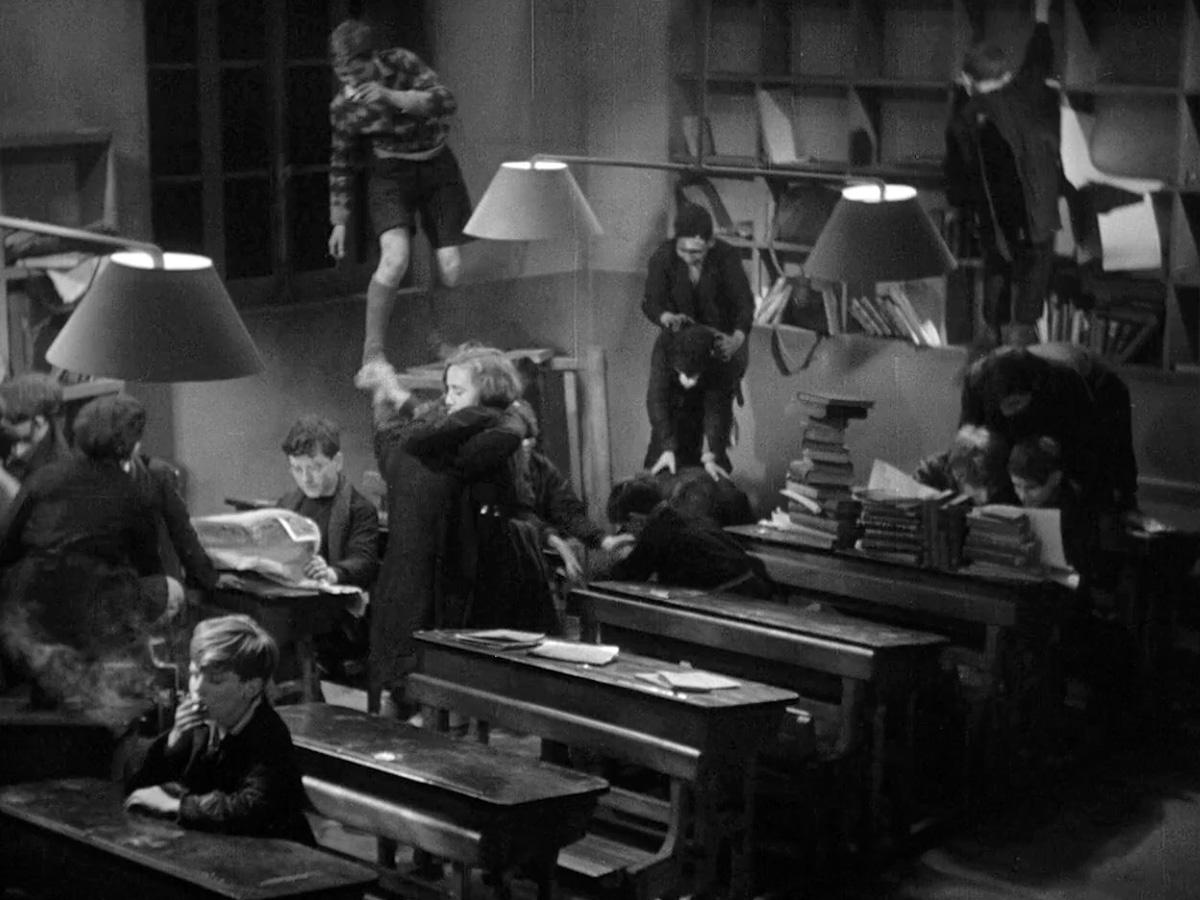
In Zero for Conduct, four rebellious pupils plan a revolt to take over the school. The film was first shown in Paris in 1933, but shocked so many viewers that it was subsequently banned from screens until the end of World War II.
A portrait of contemporary suburban youth seeking to invent new contours of collective identity, against the backdrop of France in the throes of recession.
Symen and Sam pass their time in the monotony of a post-industrial suburb. They seem to linger in a kind of perpetual twilight countered by the invisible presence of ‘hardcore’. While gaming, they end up searching for the core of their desires.
Filmmaker Nahid Rezaei returns to her all-girls high school to explore the lives of young students in Tehran. At times, the girls are very open about their hopes and dreams, sweet even, but when their future is discussed, they are occasionally sad.
Two siblings roam the mystical landscapes of Colombia, searching for their dead father's spirit. Their journey takes them from the city of Bogotá to the jungle, through realms of thought and deep into their haunted dreams.
This is the story of Copa-Loca. Paulina is the girl at the heart of this abandoned Greek summer resort. Everyone cares for her and she cares about everyone – in every possible way.
A portrait of young skateboarders growing up in a Flemish suburban town. We meet different characters going through their daily routines: riding around on their skateboards, waiting, hanging out, daydreaming...
A film about highways, tourists, concrete picnic tables, and lukewarm melons. About a man who wants to leave and a child who stops him. A summer movie.
Otto lives in a remote village, where he spends a lot of time with his best friends. But there’s someone he misses dearly. His boyfriend, who is a professional dancer, lives hundreds of miles away. Otto finds comfort in his lover’s movements and uses his own body to bridge the distance between them.