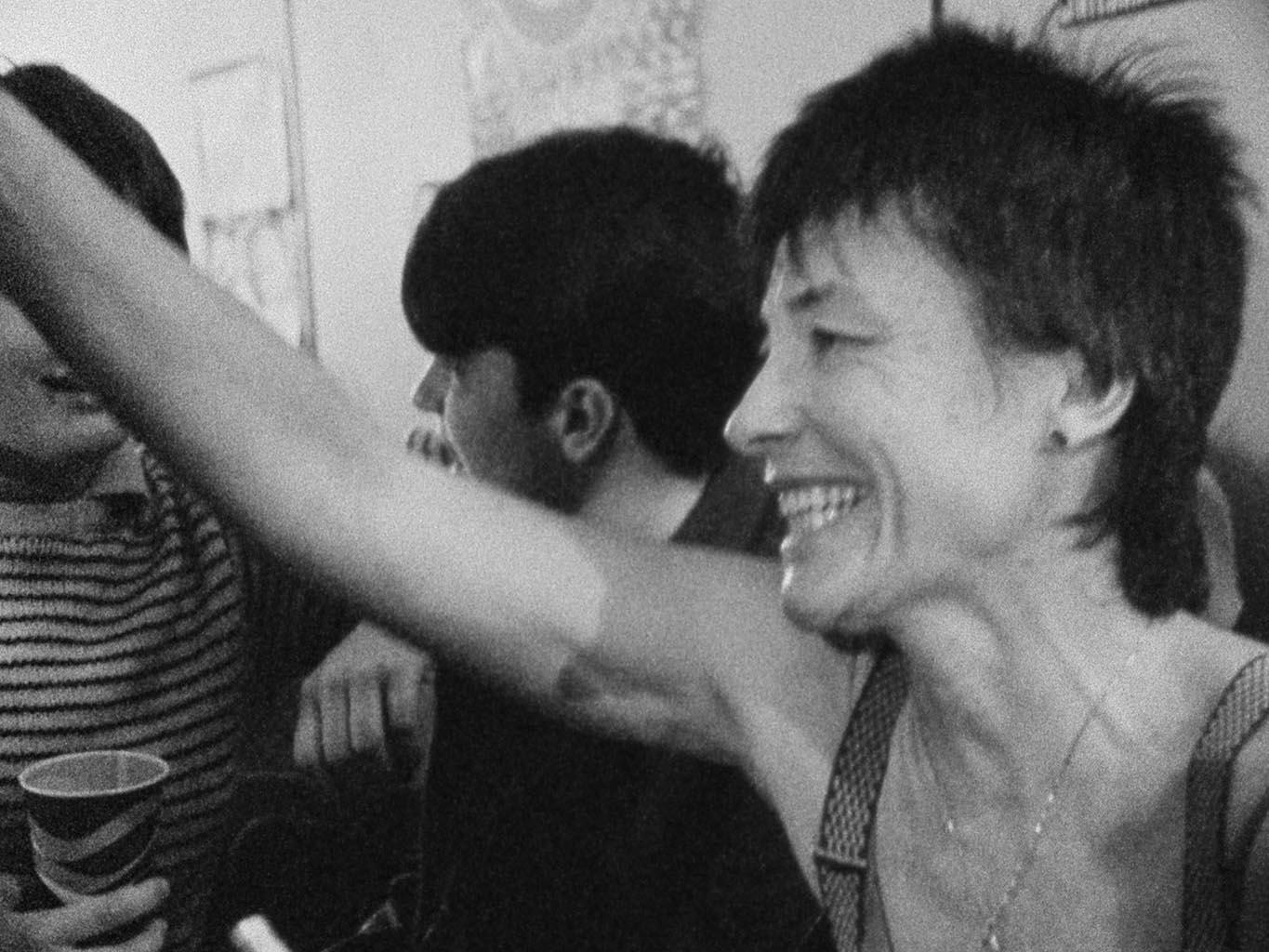
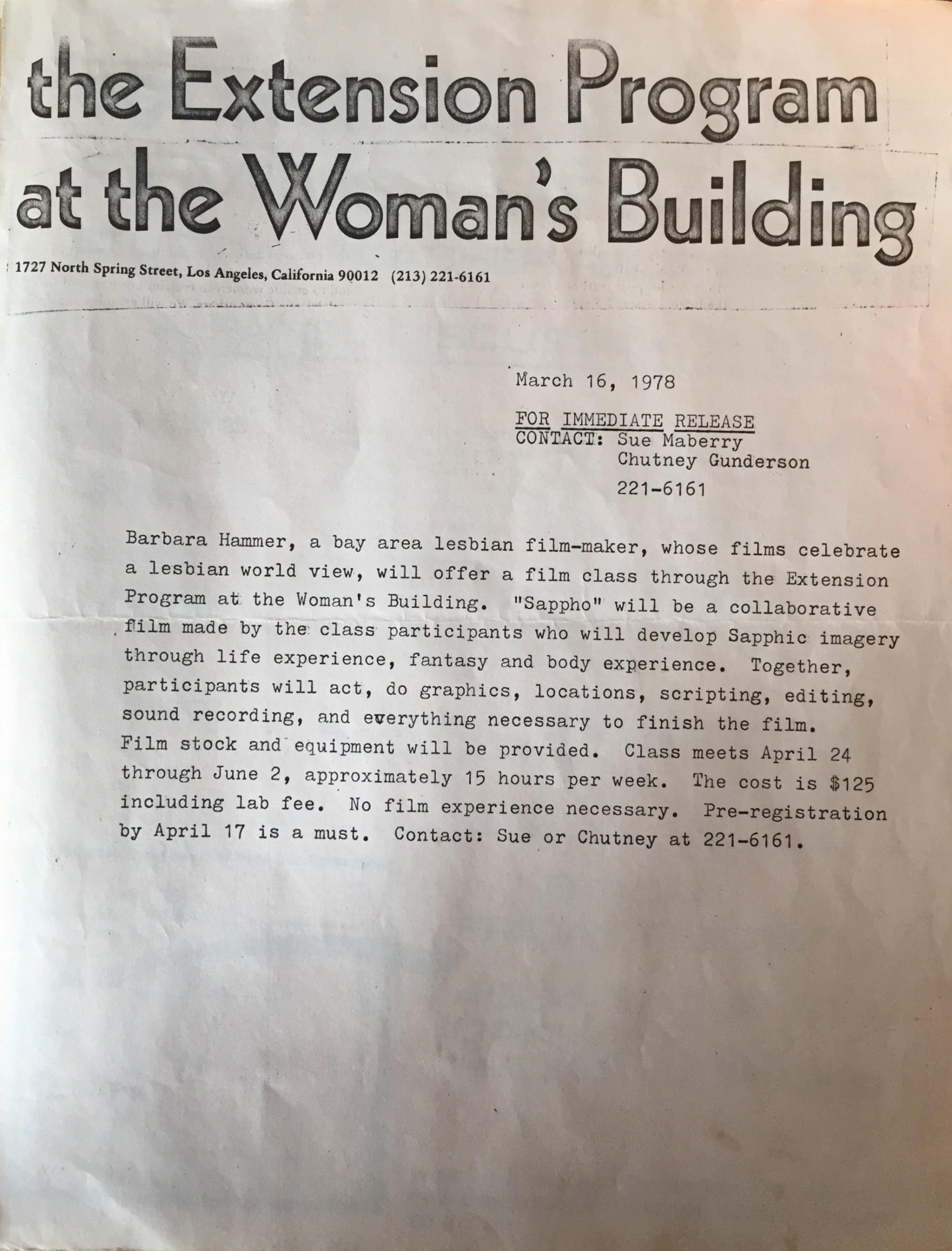
Sappho ends with the refrain, like an incantation, “dead, I won’t be forgotten.” By 1982, Barbara had turned that line into a method, not linear but cyclical: keeping the past alive by continuing the conversation with it. Audience (1982) documents her first internationally touring solo retrospective, and she uses this honour to dissolve the line between her films and the people watching them, recording herself asking her own audiences what they thought of her work. The space between artist and viewer becomes the material of the film itself. Like many of her other expanded-cinema performances, which projected past the edges of a traditional screen onto walls, onto bodies, onto balloons, Audience expands the screen too, not outward onto a new surface, but backward, onto the people watching it. She reverses the camera, redistributing not just attention but also authorship: to look is no longer passive; it’s participation.
What does it mean to consume media passively, and what happens when an artist refuses that passivity, for her viewers and for herself? Snow Job: The Media Hysteria of AIDS (1986) does exactly that. Derived from the grief and anger at how mainstream media covered the AIDS crisis, the video doesn’t dwell on bodies or death. Instead, it is built out of newspaper headlines critiquing coverage that deepened homophobia and stoked fear of LGBTQIA+ communities. Barbara drew directly on critic Jan Zita Grover’s essay “AIDS: Keywords”, which argued that “such a critical attention to language is essential to our understanding of and response to AIDS as the cultural construction that it is.” Words matter. Barbara believed language could be weaponised, but it could also be reclaimed.
For instance, she considered her endometrioid ovarian cancer a chronic illness, not a battle, nor ‘survival’. “I was thriving,” she said. In A Horse Is Not a Metaphor (2009), Barbara reclaims the language, the touch, and feel of illness. To be honest, A Horse is a film of Barbara’s that I have personally struggled with. I met her in 2015, when Staci Bu Shea and I co-curated Evidentiary Bodies, a retrospective at the Leslie-Lohman Museum of Art in New York. Not long after, she was re-diagnosed with endometrioid ovarian cancer. For years I watched this film with one eye half closed. I was already watching Barbara’s body, mind, and energy fluctuate through chemotherapy in person; I felt I didn’t need to watch it on screen too. I hardly asked her any questions about it. I wish I had. What is a horse not a metaphor for?
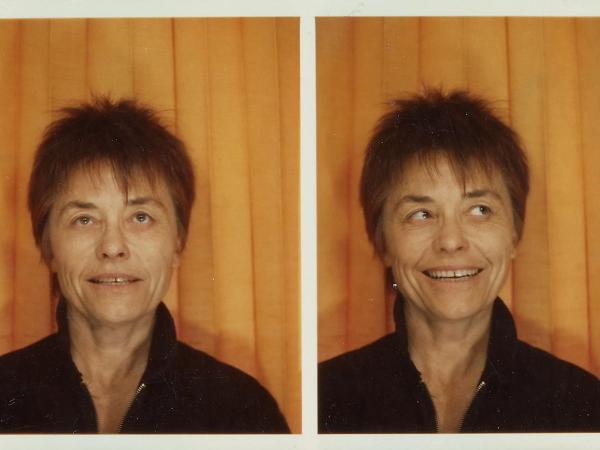
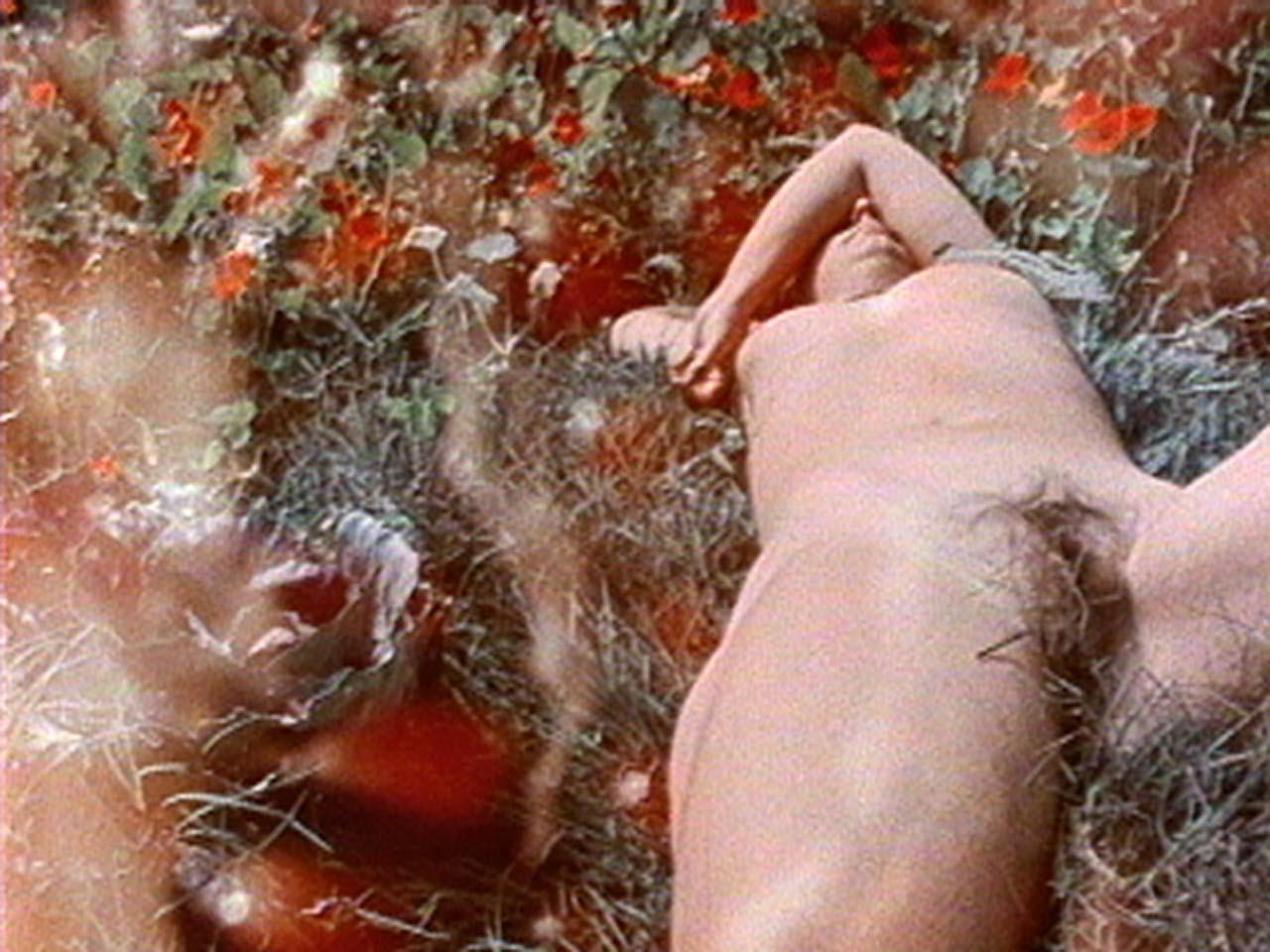
The same refusal to hide that runs through Dyketactics runs through this film too, only now the exposed body is ill. There is a doctor explaining where a tube will be placed in her body, and Barbara traces the path across her own torso, feeling for a pain not yet arrived. “Will it be painful?” asks her spouse, Florrie. Barbara’s fingers move through her hair, short, then long, then longer. She shows the ports under her breasts. She names what chemotherapy costs. She was adamant that none of it was a fight.
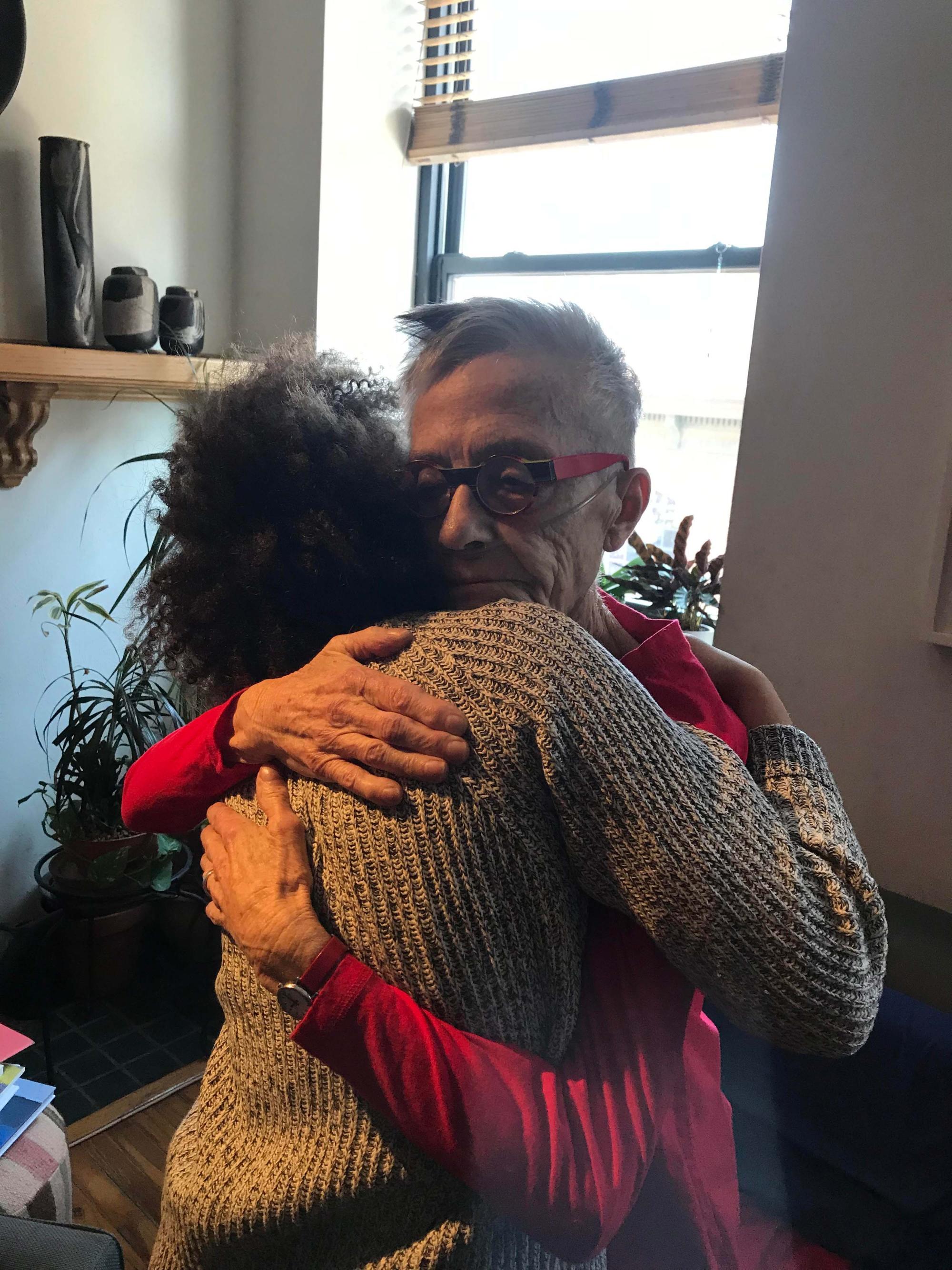
Asked once what she’d learned coming through an earlier round of chemotherapy, she didn’t point to the work, or the reviews, or the retrospectives. “Friends,” she said. “People are the most important thing...it’s really that person that would come over and sit with me for one hour.”