In a double-bill constellation curated by Matti Ullrich, two extraordinary women get to meet who otherwise would have never crossed paths: Dutch actress Sylvia Kristel, best known for portraying Emmanuelle in the erotic film series phenomenon of the 1970s, and the Syrian trans woman Khaled El Kurdi, who’s been a fighter during the 1970s-1980s Lebanese war and a cabaret dancer. They have one thing in common: authenticity.
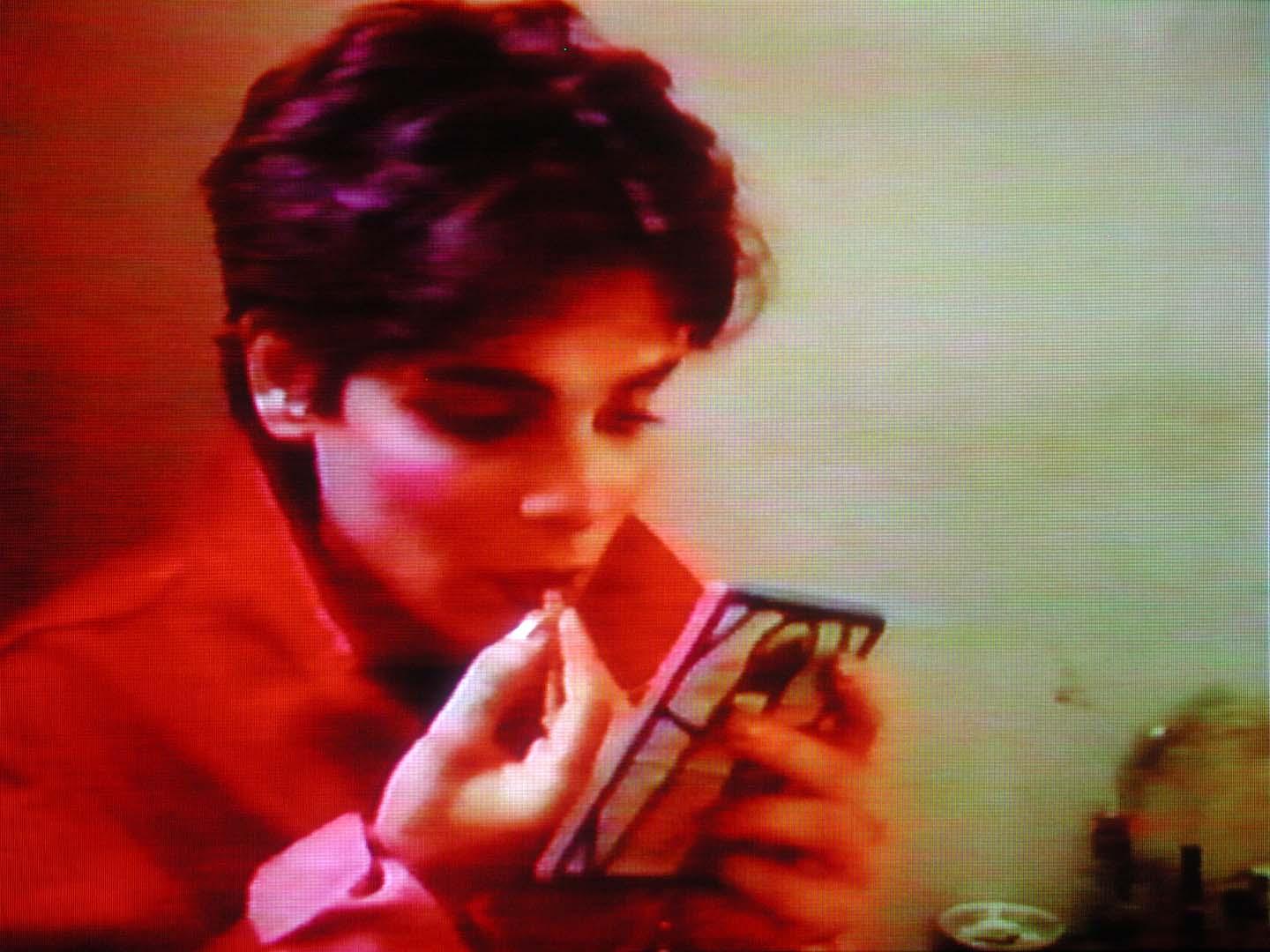
Cinema Fouad (Mohamed Soueid, 1993)
A Double-Portrait
In Conversation: Manon de Boer and Mohamed Soueid
interview by
30.10.2026
Mohamed Soueid: When yanco first got in touch, I wondered what our two films have in common. It seemed there was a clash between the public and the personal. Your work, Manon, takes an audio narrative from the first person, and adopts it as a sort of language to recount Sylvia Kirstel’s memories. You built a kind of architecture around this audio tape, making the conscious choice to only use her voice and commentary, but never show her speak. I think one of the challenges a filmmaker faces is how to treat memories on film. In its two parts, Sylvia Kristel - Paris shows us that there are always gaps in our recollections. Memory cannot be told in just one act. Without realising it, we are inclined to inflate a memory, to add facts that aren’t necessarily relevant. This is why I think your film is actually questioning memory.
Manon de Boer: What I find very beautiful in your film is how you slowly unfold so much of this woman’s complexity. From the start, it’s clearly a portrait of a person who is very conscious of her looks, of how she wants to present herself. This was also the case with Sylvia, actually. At first, when I started filming her, she would immediately pose—which is why I only have this one image of her smoking. Instead of filming her talk, it was much better to just record her stories because she was more relaxed and funnier that way.
Mohamed: Another thing our films have in common is that they’re dealing with people who can speak up for themselves without reservation. Your film is faithful to the personality of a woman who lived her life freely, from film to film, from man to man. The basis is her human experience. She says, “I lack depth in my life, and it led me to places and people that some can call mistakes,” but they are not mistakes because she’s a person who loves a lot, and love is always right.
Let me tell you a secret. When Emmanuelle became a global, scandalous sensation, I was too shy to go and watch the film in a cinema. I was 19, and they showed a censored version in Lebanon. I only found the courage to watch it in Paris, years later, at a theatre on the Champs-Élysées. But I’m happy that I got to hear the real Sylvia [in your film]. I think I wouldn’t have loved it if you had included excerpts of the films she’s been in; that would just have been the recollections of the viewer.
Manon: It would become a film about Emmanuelle and not about Sylvia Kristel! Besides, everybody saw her as Emmanuelle, even if she had other roles.
Mohamed: I think her role in Lady Chatterley’s Lover is outstanding, for example!
Manon: She also said that’s what people said in the 80s when they recognised her on the street: “There’s Emmanuelle!” She could never get rid of it—the curse of films like that. What I found beautiful in Cinema Fouad is that you see a cliché, but then it’s undone. She’s an amazing person as well, yet the film slowly builds up layers of her personality which make it impossible to pin her down. Even in the way she puts on make-up to go out: it seems a clichéd image, but then she says or does something unexpected and stunning.
Maybe I can relate that to my film and to how you can never really grasp your own memory in its entirety. You can never fully know yourself, nor the other. Instead of confirming something you already know, I wanted to introduce doubt: Do we really know Sylvia Kristel? Similarly, the way you portray Khaled is so sensitive and non-judgemental. Today, people are turning to documentaries expecting some kind of moral judgment, so the fact that you bare all that complexity is very admirable. But given the political context of your film, that of Syria and Lebanon, you would never expect someone so conscious about her femininity to be fighting for a cause in such a ‘manly’ way. Your gaze, filming her, is very loving as well.
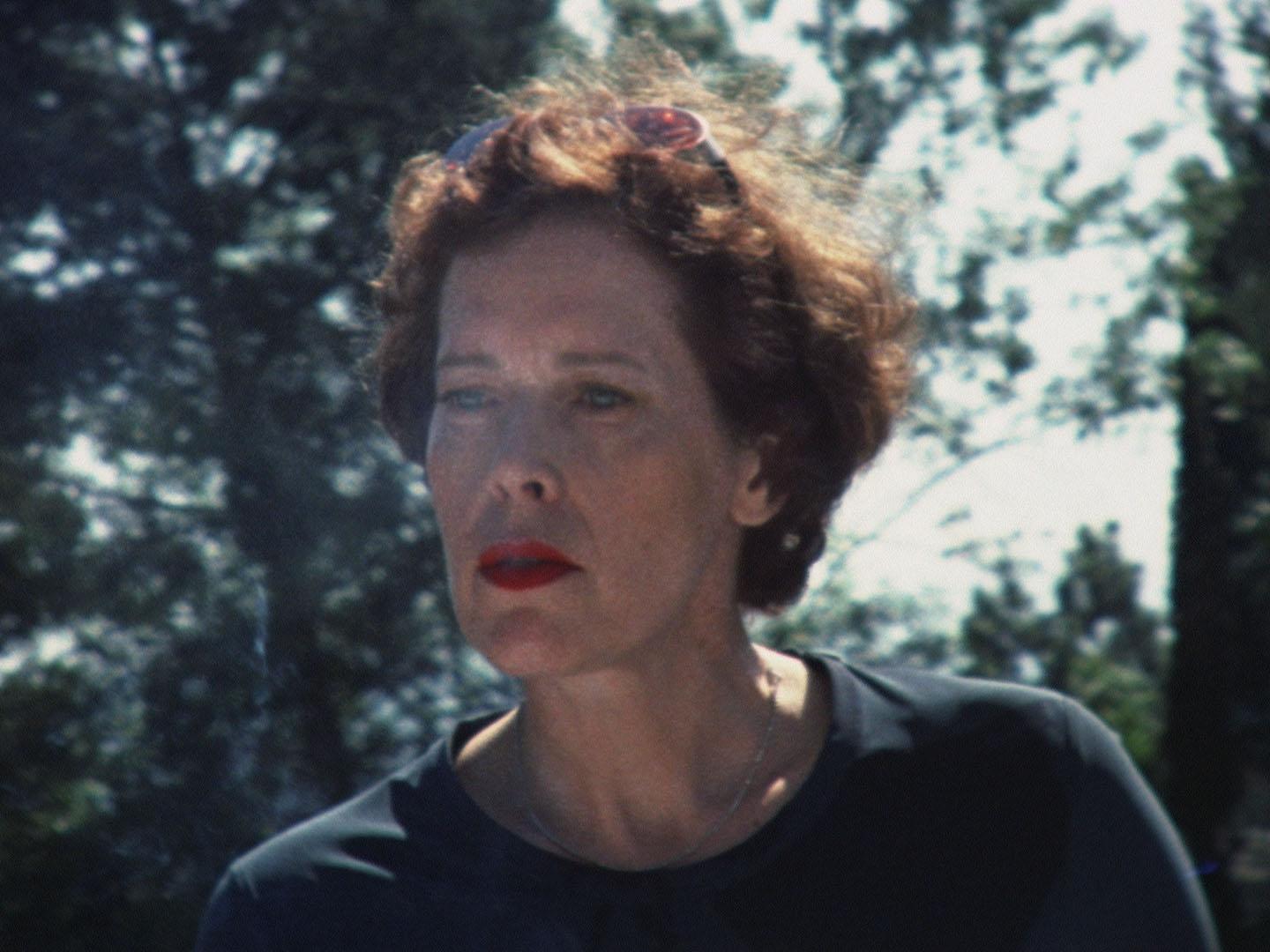
Sylvia Kristel - Paris (Manon de Boer, 2003)
Mohamed: Thank you! I met Khaled after the Civil War, at a cheap hotel in the old part of town, where she worked as a maid. The whole downtown was destroyed. So she was the last... relic of the whole scenery. Even the house we filmed in is the kind you’d remember from before the war, not how homes are built today. But back then, in the 1990s, it was a period of reconstruction, in a country that had lived through a horrible civil war. A lot of attention was paid to politics, to ideologies, but we never thought of asking how people define their identity, especially when it comes to the body—that was and still is one of the taboos in Arab societies. At the time, we didn’t have the modern notions of LGBTQ, and in making the film, gender identity became the center of it. Khaled posed an interesting question that I doubt anyone else has ever asked in that way: How should someone torn between masculinity and femininity pray to God? Do you pray as a woman, with a veil, or as a man? She put on the veil, and she followed God’s instructions.
Manon: Nowadays, of course, identity is a big subject in many films, but its definitions are often narrow: if you are homosexual, this is the identity; if you are Muslim, this is your identity. But every person has many aspects, and it’s rare to see identity depicted in such a layered way as you do in your film—from this overly female look that Khaled presents at first to her wanting to fight like a macho man at the front line. I thought that was remarkable, how the film shows that complexity without vindicating anything; it was built like a mosaic of a human being.
I met Sylvia at a friend’s birthday in Brussels. She had lost all her money; she had been paying off the debts of her second husband, but she was very modest, looking at her life with such humour. “Okay, I lost everything, but it is what it is.” So just as memory is unstable, identity is, too. You can tell your own story in one way or another. And it differs every time.