As a gamer, you can feel empowered and powerless at once. You can go anywhere on this capitalist-designed map, yet you can only see the map they draw for you, and you can get lost without it. How do you relate to this paradox?
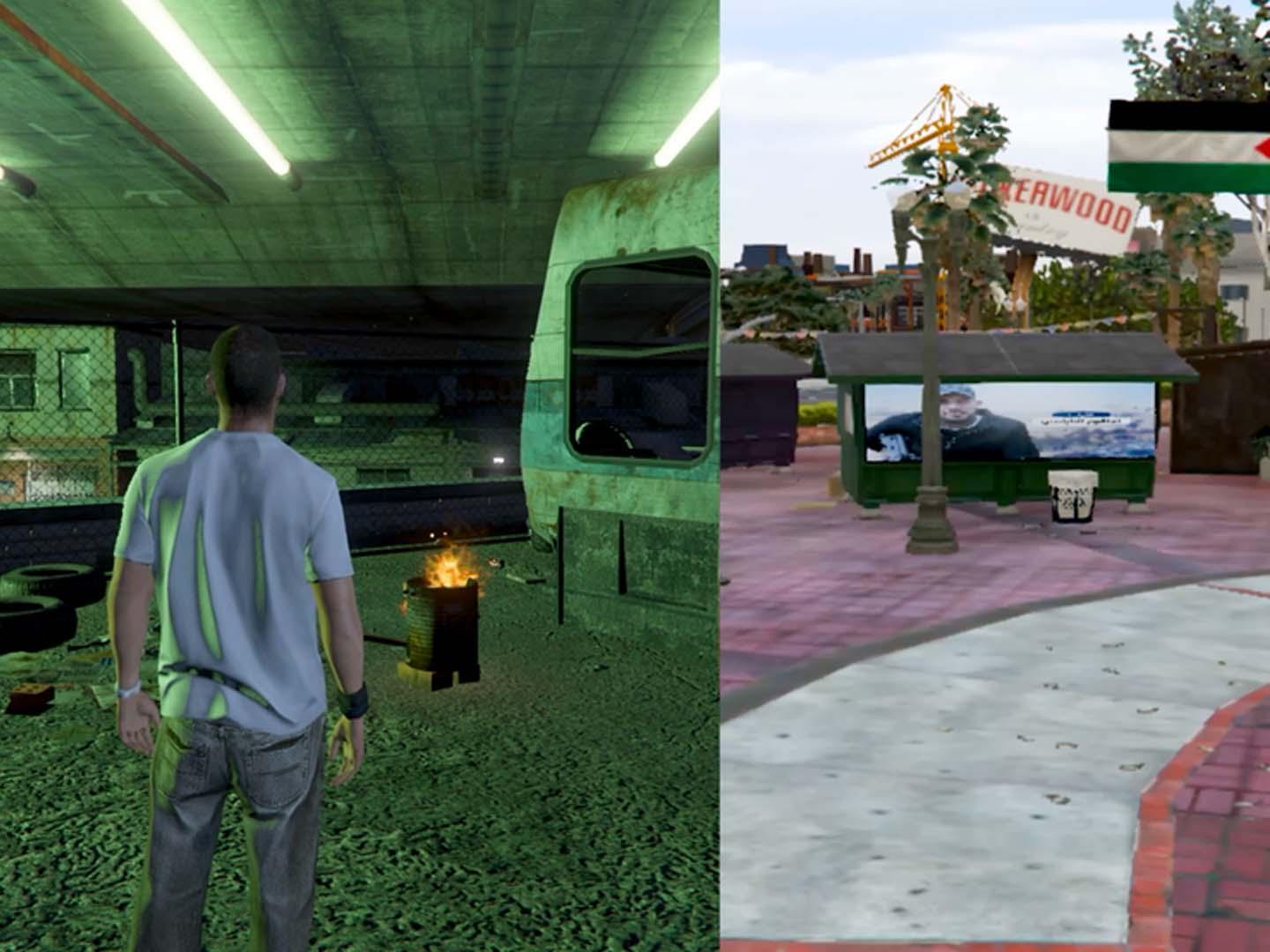
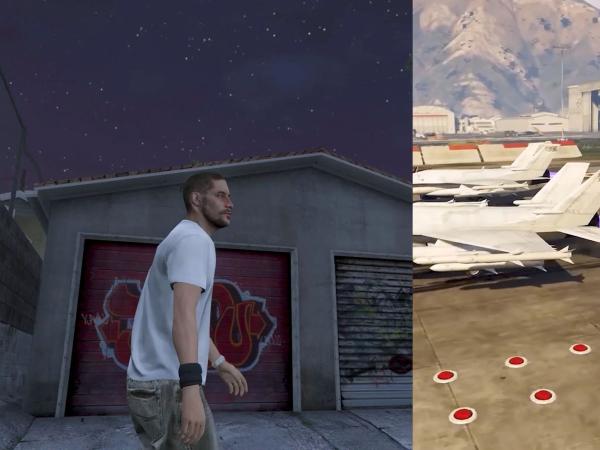
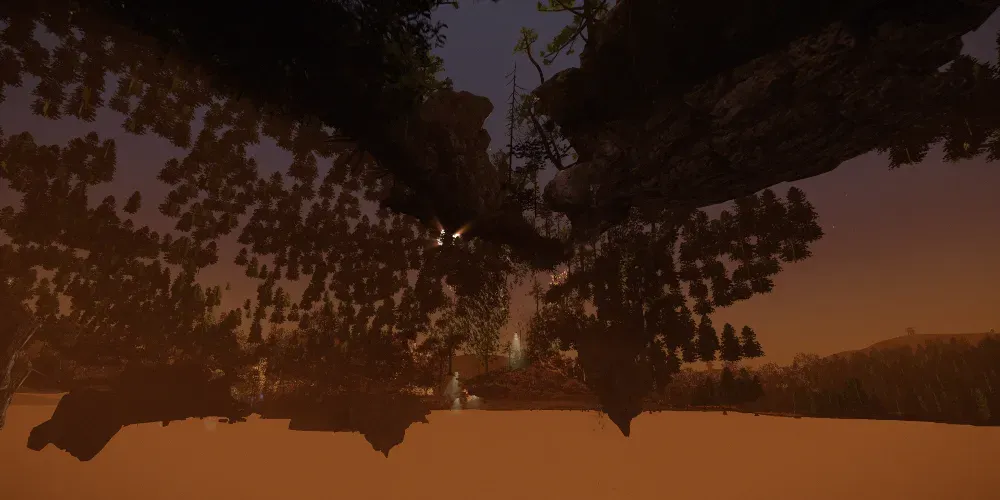
The gaming world is famous for its limitations and borders; that’s why we have beautiful phenomena such as speedrunning, when gamers try to complete a level as fast as possible. Numerous machinimas are so-called “out of bounds”: there is a thrill in breaking the border to see what is behind the mountain or beyond the polygonal ground. Examples can be found in Marie Foulston’s The Grannies (2021), one of the episodes of Harun Farocki’s Parallel (2012-2014), Natalie Maximova’s The Edge of the World (2021) and Background, Action! (2026), and Total Refusal’s Featherfall (2019).
Indeed, there is a sense of powerlessness and hopelessness, because even the most sophisticated video games don’t really provide us with a utopian vision to imagine the world beyond capitalism and all the inherent problems of today’s society. One should retain a certain portion of hope, and we think critical machinima-makers are the ones who can show the way by questioning the limitations in both the game and the real world.
GeoMarkr, which closes the programme, seems to introduce a new way of worldmaking. Could you talk about the neo-coloniality and territorial expansion rooted in the Google car’s “harrowing ubiquity”?
We experienced the same addiction to this game as the film’s narrator describes. It probably conveys as much as Google Maps imposes: a colonial expansionist effect—making players feel like “the world is your oyster” in the best sense. This game has a tendency to exceed our real world’s limitations that are shaped by geopolitics, war, oppression, migration, and so on.
Google Maps is an extraordinary technology that changes how people view the world now, but also profoundly reshapes geographic culture and education. Russian journalist Maxim Trudolyubov warns us of the moral bankruptcy of the geopolitical worldview. It looks at society from the cockpit of a bomber. The satellite view from above connects with military structures, and it has been proven how the technology is used in war conflicts.
What we personally like about GeoMarkr is the clear contrast between two ways of experiencing the world: the embodied experience Chris Marker shows in his films, physically going to places and completing the world map. In GeoMarkr, the experience changes: when we are “present,” we see the places through technology. This differs from the Situationists’ détournement, where they drift through the city without an objective or knowing where they are. Today we don’t really know our cities anymore; we constantly check our location and direction through devices, and we are bound to blue-dot avatars on a Google Map. In this sense, we are perpetually on a game map.
Films like 489 Years and Another Day of Depression in Kowloon portray a certain dream that is hard to capture in reality.
We like that you compare the two films because they both try to portray inaccessible places. Their inaccessibility varies: the DMZ is hard to set foot on, while the Kowloon Walled City of British Hong Kong no longer exists. 489 Years is not shot with an existing video game, but uses or imitates a shooter game’s design. Whereas Another Day of Depression in Kowloon is shot in a first-person shooter game, Call of Duty: Black Ops (2010), where Kowloon is a level map. Filmmaker IP Yuk-Yiu deprives the game of the guns in order to observe the landscape, which can be seen as hijacking the game from its main feature. By immersing spectators in two hard-to-reach places, these two films form an intriguing pair, showing through different strategies how media remaps, reimagines, and sometimes distorts certain places.
How do these films, and machinima in general, connect to different art forms?
In essence, machinima is an intermedial phenomenon at the intersection of film and video games, which are themselves multimedia in nature. Scholar Henry Lowood regards machinima as the digital puppet theatre of the 21st century. You use digital avatars instead of marionettes. Specifically, you can recreate space or imagine space from scratch in game engines; you can also find replicas of objects from the real world in existing video games. Then, you set them on a “stage”—your film. It speaks to a kind of desire—people construct video games that mirror physical reality, and they like to spend time in the virtual environment. Machinima documents such a desire for a second life.