yanco Home
Menu
  • Home
  • watch
  • magazine
  • calendar
  • index
  • Subscribe
Search Log in
  • nl
  • en
You are here
  • Home
  • Magazine
  • An Outstretched Hand
© Bamssi (Mourad Ben Amour, 2024)
Bamssi (Mourad Ben Amour, 2024)

An Outstretched Hand

Mourad Ben Amor’s Bamssi

essay by
Öykü Sofuoğlu
12.05.2025

Animals no longer live in nature; they now exist first and foremost on our screens. While each new internet-based encounter with them still feels as surprising and delightful as ever, the obsessive relationship with animal imagery often remains limited to fulfilling our emotional needs—rarely do we question the underlying motives. What exactly in these images never fails to feed our curiosity? What makes us continue to watch sprinting dogs and grooming cats as if we’ve never seen them before?

Mourad Ben Amor’s Bamssi (2024)—a diary film made alongside a pack of animal protagonists—hints that our fascination may sometimes be less about the animals themselves than about the spontaneity and impulsivity that emerge from their most routine gestures. It proves a dizzying audiovisual experience.

The anticipation of a breach, a clash in the state of things—even something as minimal as a dog’s wagging tail or a cat’s pinned-back ears—might be the reason we find ourselves swiping from one video to the next. Perhaps it’s also the reason Ben Amor chose to film around his home in Tunisia, where he lives with the titular canine Bamssi, joined by several cats, dogs, chickens, and sheep—named Saïda, Queen, Princess, Kenza, Wazgha, and Bianco, among others.

Characterised by the animal-like, raw, energetic quality of the digital format he uses, the everyday moments Amor captures from their shared lives give the film a sense of marvel that transcends the simplicity of its form and expression. Amor’s gaze roams around casually, yet always attuned to the movements of the animals and the nature surrounding him. The agency suggested by the verb “directing” doesn’t fully capture his approach to the images, for his camera moves as though the outside world itself is drawing it.

He’s more of an explorer, a wanderer than a director. Olive trees, the endlessly stretching sea, train whistles from the rails, or Bamssi, with his larger-than-life personality, always running a step ahead—all become magnetic forces that pull him and us as viewers along. “I continue to dream of traveling. To take a risk for a future,” we hear him say, addressing a recipient in absentia—namely, his filmmaker cousin Fairuz Ghammam, who lives in Belgium and engages in a dialogue with Mourad throughout the film.

Bamssi is infused with a constant tension between stillness and movement—one we can sense Amor himself struggles with. Like his animal companions, who exist at a perpetual threshold—always just one step away from either strayness or domestic life, moving in and out at their leisure—his vision carries both a need for belonging and a desire for freedom. While the joyful immediacy of the digital format, with all its imperfections, predominantly leans toward the latter, there are moments of stillness that interweave analogue photographs, where the images slow down, stop, and take root in time.

Yet no matter how safe or idyllic a home may seem, how could one remain indifferent to the ever-humming, ever-buzzing outside world? Because life goes on—puppies learn to walk, new kittens are born, clear skies turn jet-black with storm. As time passes, the film displays more and more restlessness, with reports of deaths, massacres, and genocide from Gaza reaching us through television reports.

Unpredictable and spontaneous like its protagonists, Bamssi’s narrative turns the film into a strange, cross-breed creature that epitomises our current audiovisual landscape. The perceptual proximity with which the film positions the ordinary and the extraordinary, or safety and danger, reflects the defining trait of how we look at and experience the world today.

It takes courage to engage with images these days, knowing that there is often just one frame or one click needed to swipe from hope to despair, life to death. But it takes even more courage to live. The poem recited by Ben Amor at the end of the film is a poignant reminder of that. Addressing the camera directly, with Bamssi by his side, this final offering is “an outstretched hand”—inviting us, no matter what, to look, to dream, and to live.

    Bammsi is part of Avila’s short film programme Fires, which includes three short films that deal with displacement and the longing for a home. The programme is presented as part of Avila, present!, in collaboration with Courtisane, yanco, and KVS.

    Bio Öykü Sofuoğlu

    Öykü Sofuoğlu is a Turkish film critic and journalist based in Paris. Her film-related writings have been published in various outlets, including International Documentary Magazine, Screen Slate, and Letterboxd Journal. She is also one of the co-editors of Outskirts Film Magazine. 

    read more

    © Onde o Verão Vai (episódios da juventude) (David Pinheiro Vicente, 2018)
    artikel
    Read more

    De Portugese ‘saudade’ ontkracht?

    Michiel Philippaerts
    18.05.2020

    Welke (kort)filmmakers treden in de voetsporen van hun landgenoten en grootmeesters Miguel Gomes & Pedro Costa? Een focus op Portugese cinema tijdens de 66e editie van Kurzfilmtage Oberhausen biedt (misschien) antwoord.

    Read more
    © BURN TO SHINE (UGO RONDINONE, 2022)
    verslag
    Read more

    Vrijen met het publiek

    Cinema als avontuur in Anouk De Clercq’s Love That Moves The Sun

    Jannes Callens
    12.06.2024

    De in Berlijn gevestigde Belgische kunstenares Anouk De Clercq wil experimentele films openstellen voor argwanende mensen. Avant-garde cinema noemt ze koppig “avontuurlijke film”. In een kortfilmprogramma voor Courtisane maakt het cerebrale plaats voor een sensuele beleving, een fundamenteel lichamelijke ervaring van cinema.

    Read more
    Because We Are Visual (Olivia Rochette & Gerard-Jan Claes, 2010)
    Because We Are Visual (Olivia Rochette & Gerard-Jan Claes, 2010)
    essay
    Read more

    Together, Alone

    Olivia Rochette & Gerard-Jan Claes’s Because We Are Visual (2010)

    Dora Leu
    09.03.2025

    Inevitably, some fourteen years after its making, Olivia Rochette and Gerard-Jan Claes’ Because We Are Visual (2010) now feels like it covers a time long gone by, one when we still said video blog instead of vlog. In this collection of video diaries garnered from online public sources and then organised into chapters, Rochette and Claes provide no audio commentary on the material but make implicit remarks solely through editing.

    Read more
    Audience (Barbara Hammer, 1982)
    Audience (Barbara Hammer, 1982)
    essay
    Read more

    Dead, I Won’t Be Forgotten

    Barbara Hammer’s Legacy

    Carmel Curtis
    05.10.2026

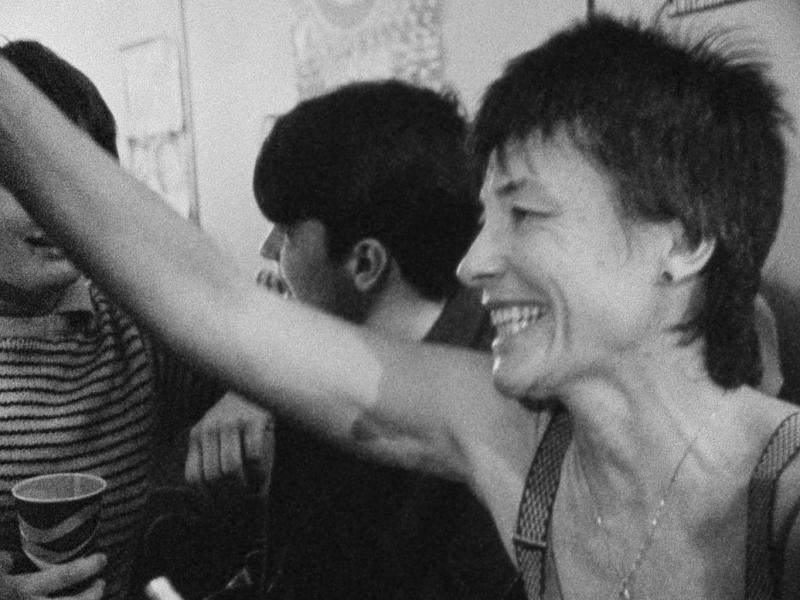
    The five works in Film Fest Gent’s Barbara Hammer: A Short Film Retrospective, presented in collaboration with yanco and Art Cinema OFFoff, span thirty-five years and together they demonstrate a pattern in Barbara’s work: no disguise. What she felt in her own body and what she showed on screen were often the same sensation, not translated but transmitted. In that transparency, her personal vulnerability can expand outward into something universal that extends beyond the individual body and beyond the screen.

    Read more
    Da-dzma (Jaro Minne, 2019)
    Da-dzma (Jaro Minne, 2019)
    essay
    Read more

    The Last Winter

    Jaro Minne’s Da-dzma

    Savina Petkova
    30.05.2025

    In his work, Belgian director Jaro Minne frequently explores the crossovers between East and West. He spent time in Georgia, resulting in the photography series “Passenger”, interested in the human face and the human scale of things in an overwhelming world. Rather painterly aesthetics are used to subtly convey a socio-political point. In Da-Dzma, Minne does something similar: through sparse compositions, little dialogue, and minimal sound design, the short lets us peek into a world of feelings one frame at a time.

    Read more
    © Lights (Marie Menken, 1966)
    verslag
    Read more

    Cinema-explosies op witte muren

    Filmkunst barst uit zijn voegen bij Eye tentoonstelling Underground American Avant-Garde Film in the 1960s

    Hugo Emmerzael
    09.12.2024

    In een groots opgezette tentoonstelling brengt het Amsterdamse filminstituut Eye de iconen van de Amerikaanse undergroundfilm uit de jaren zestig onder één dak samen. De avant-gardistische vormexperimenten van pioniers als Jonas Mekas, Maya Deren en Stan Brakhage staan er naast werk van bijvoorbeeld Bruce Conner, Yayoi Kusama, Yoko Ono en Andy Warhol. Blijft die vooruitstrevende filmkunst van die tijd nu nog overeind bij een overzichtstentoonstelling?

    Read more
    I Don’t Feel at Home Anywhere Anymore (Viv Li, 2020)
    I Don’t Feel at Home Anywhere Anymore (Viv Li, 2020)
    essay
    Read more

    No Place Like Home

    Viv Li’s I Don’t Feel at Home Anywhere Anymore

    Bo Alfaro Decreton
    22.02.2025

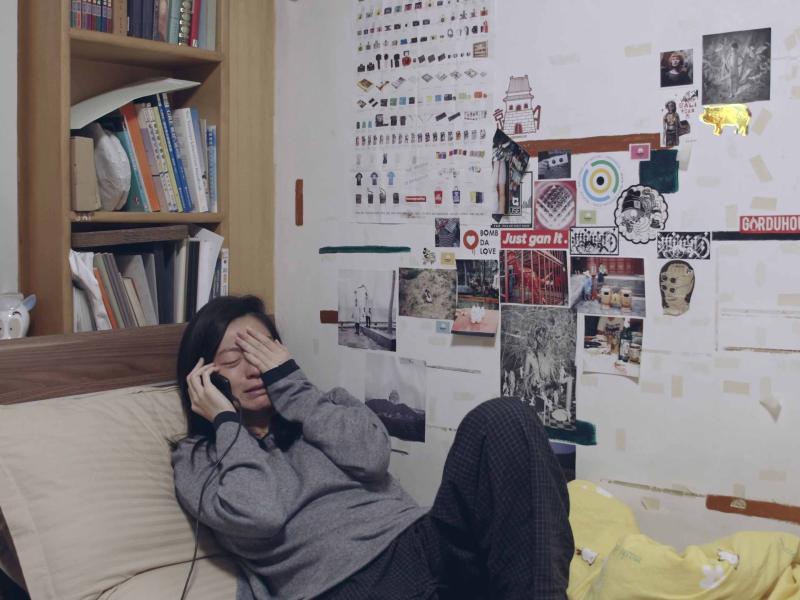
    Li’s I Don’t Feel at Home Anywhere Anymore begins at the Beijing airport and ends in a grey Brussels shopping street where the word ‘home’ is ostentatiously and tackily displayed on a large shop window. She frames her return with the cold presence of non-lieux: places that, according to French anthropologist Marc Augé, have no history or identity and do not encourage interaction. Here, everyone remains anonymous. Li places these non-lieux in stark contrast to the home. A home that is not merely synonymous with the parental home or the city where she grew up, but also arises from friendships, memories, and familiar sights and views.

    Read more
    Oh Willy... (Emma De Swaef & Marc James Roels, 2011)
    Oh Willy... (Emma De Swaef & Marc James Roels, 2011)
    article
    Read more

    Woolen Horizons

    Emma De Swaef & Marc James Roels’ Oh Willy... (2001)

    Sven Hollebeke
    03.12.2023

    Willy’s roots can also be found in the main character of De Swaef’s graduating film Soft Plants (2008). The short documentary follows an old and lonely officer who finds refuge in his thoughts and fantasies of a dark and magical forest. This longing for safety, a stubborn passivity, or even feigned innocence is woven into the duo’s oeuvre.

    Read more

    Subscribe to our monthly newsletter for updates on new releases, publications, and events!

    Subscribe

    yanco is a magazine and streaming library for short-form moving image

    kortfilm.be vzw
    Boondaalse Steenweg 249
    1050 Elsene
    BE 0478 441 315
    info@yanco.be

    with the support of the Flanders Audiovisual Fund (VAF) of the Flemish Government

    VAF
    • about
    • colophon
    • privacy policy
    Facebook Instagram LinkedIn YouTube Letterboxd
    design by de Ronners
    website by eps en kaas