yanco Home
Menu
  • Home
  • watch
  • magazine
  • calendar
  • index
  • Subscribe
Search Log in
  • nl
  • en
You are here
  • Home
  • Magazine
  • The Filmmaker Is Present
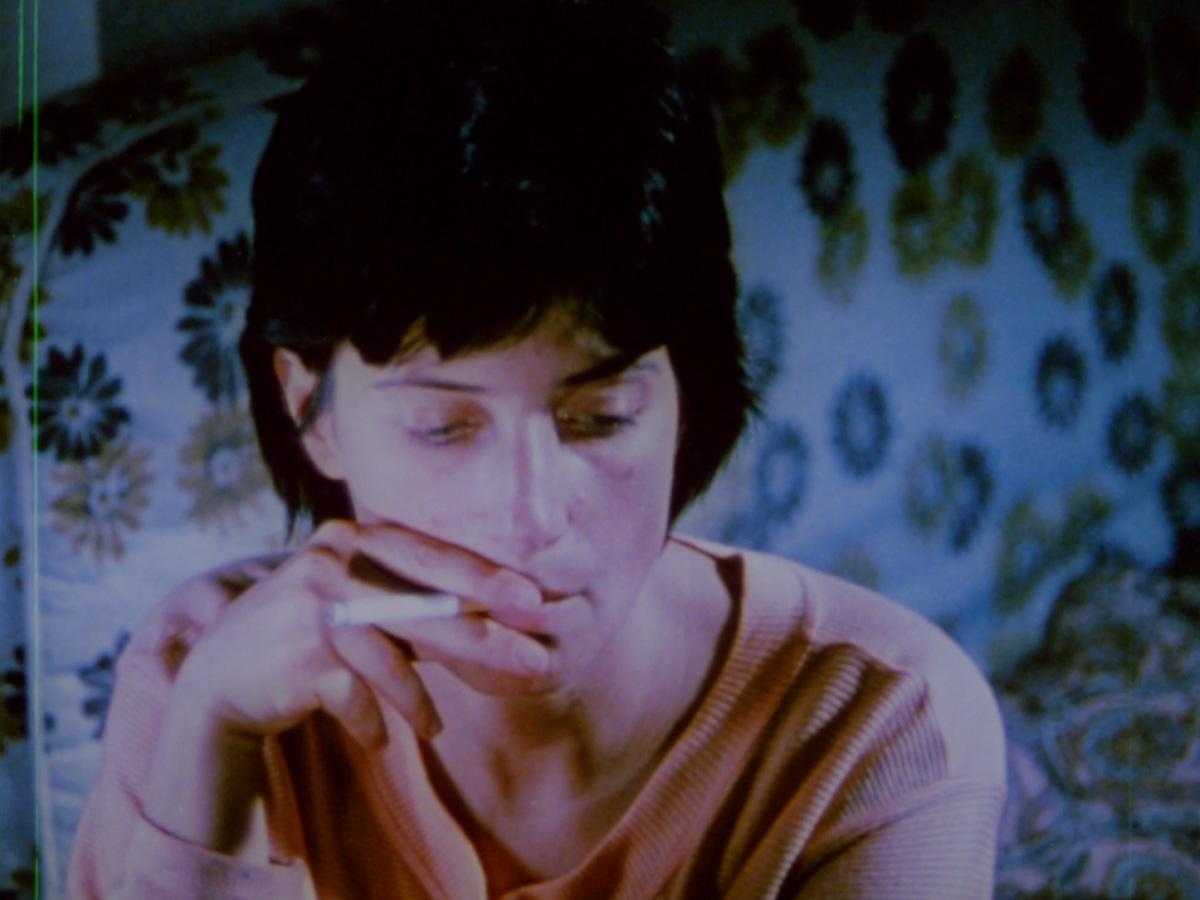
© Portrait d’une paresseuse (Chantal Akerman, 1986)
Portrait d’une paresseuse (Chantal Akerman, 1986)

The Filmmaker Is Present

Chantal Akerman’s Portrait d’une paresseuse

article by
Öykü Sofuoğlu
17.11.2024

“Today is Saturday, and I’m going to write a text on a film about laziness!” I’ve stopped counting how many Saturdays have passed while I was staring at a blank page since I first uttered this phrase. Portrait d’une paresseuse seems one of Chantal Akerman’s more playful and lighter works—a skit in which she acts out a filmmaker’s creative process of attempting (and failing) to make a film about being lazy.

Self-reflexivity and humorous distance toward the subject matter are, of course, the driving forces of the entire bit. To what extent Akerman’s struggle against inaction is staged or merely an act, remains unclear. The constant blurring between the fictive and the authentic makes the film as relevant today as ever—even inspiring this film critic to mimic the very same thing in her own writing, as a way of hiding her irresponsibility behind a stylistic device. (Or does it really?)

From the moment she wakes up to her alarm clock and throughout the entire film, the filmmaker looks and talks directly to the camera, announcing her imminent actions, some of which she never carries out. With a witty yet discreet smile in her eyes, Akerman indulges in delusive self-reassurance and procrastination. “I'll take some vitamins, then I’ll clear the table,” or, “I'll have a cigarette, then I’ll make the bed,” she says, fully aware that she won’t. Her gaze invites the audience to join her playful deviations, while the static long takes stretch time on and on.

A feeling of uneasiness begins to arise—not only because her inaction feels disturbingly familiar but also because another person is present: the verbally silent yet physically and musically loud Sonia Wieder-Atherton—Akerman’s real-life partner with whom she lives and whose evocative scores would become the distinctive voice of her cinema. The entire being of this roommate contrasts sharply with the prevailing inertia. Performing the self is one thing; doing so in the company of another person, especially someone with whom you share a domestic space, is quite another. This is why the film’s theatrics go beyond unilateral, self-absorbed, isolated expressivity, considering the boundaries and pressures that come with an interpersonal spatial setting.

Given the filmmaker’s predisposition to repetition and rumination, it’s no surprise that Portrait d’une paresseuse recycles some themes and concepts from Lettre d’une cinéaste: Chantal Akerman (1984). Both films contribute to the self-proclaimed larger tapestry of “same old Chantal, same old ideas.” It’s curious how contemporary, diverse audiences perceive Akerman’s self-image. Today, performativity and self-awareness are staples of both the art world and social media. Creating art while venting one’s difficulties in doing so seems like a banal and, indeed, lazy practice.

With Akerman’s cinema increasingly discovered by younger, often queer and/or female viewers, a posthumous reinterpretation of her work seems inevitable. Although the ultimate impact of mainstream culture reappropriating Akerman’s more austere and unfathomable films is yet to be measured, a collateral (and beneficial) outcome already emerging is that films like Portrait d’une paresseuse, once deemed minor, sloppy, or unserious, are now put under the spotlight and become as one says nowadays, so damn relatable.

    Bio Öykü Sofuoğlu

    Öykü Sofuoğlu is a Turkish film critic and journalist based in Paris. Her film-related writings have been published in various outlets, including International Documentary Magazine, Screen Slate, and Letterboxd Journal. She is also one of the co-editors of Outskirts Film Magazine. 

    read more

    © Atopia (Olivier De Vos, 2021)
    interview
    Read more

    Queerness is geen status-quo

    Olivier De Vos en Pol Merchan over queer cinema

    Laïka Planchenault
    15.05.2024

    Met de essayistische kortfilms Atopia en Pirate Boys werpen Olivier De Vos en Pol Merchan een licht op queer thema’s. Hoe belangrijk is die representatie? De filmmakers delen hun bedenkingen over de verhouding tussen het medium film en de industrie daarrond.

    Read more
    La Chute (Sebastian Schaevers, 2022)
    La Chute (Sebastian Schaevers, 2022)
    article
    Read more

    When the Sky Falls

    Sebastian Schaevers’ On Its Way Down

    Jannes Callens
    10.10.2025

    Sebastian Schaevers constantly seeks visual and narrative strategies to capture a man-made problem that has become so overwhelming it exceeds human capacity to cope. We are heading for an almost sublime aesthetic experience of our own demise. On Its Way Down leaves no scene unused to launch metaphors about human attitudes toward the impending ecological disaster.

    Read more
    © Untitled III (Sarah Pucill, 2001)
    Untitled III (Sarah Pucill, 2001)
    interview
    Read more

    Folding Time

    On Sarah Pucill’s Surrealism

    Laura Stoeckler
    23.08.2025

    Over the last thirty years, Sarah Pucill’s films have shown a sustained engagement with feminist politics, surrealist aesthetics, and the material language of cinema. Her work is connected by a visual and conceptual vocabulary that keeps evolving. Figures, motifs, and techniques reemerge—the principle of continuity is key to understanding how the artist’s work coheres, drawing strength from its self-reflection.

    Read more
    © In Flanders Fields (Sachin, 2024)
    In Flanders Fields (Sachin, 2024)
    article
    Read more

    A Voice For The Ghosts

    Sachin’s In Flanders Fields

    Eneos Çarka
    13.08.2025

    In Flanders Fields is a ghost story. Directed by Rajasthan-based filmmaker Sachin, the short film is a poetic meditation on war, colonial erasure, and ancestral presence in foreign land. The director introduces us to a rarely acknowledged fact in dominant historical narratives: during the First World War, as many as 1.4 million Indians were conscripted by the British and sent to the frontlines in Flanders. This revelation sets the stage for a cinematic elegy to those forgotten men.

    Read more
    © Past Perfect (Jorge Jácome, 2019)
    artikel
    Read more

    Lijden in verleden tijd

    Jorge Jácome’s Past Perfect

    Bo Alfaro Decreton
    22.01.2020

    Leed neemt verschillende vormen aan. Het filmisch essay Past Perfect duwt ons, vanuit een ontreddering, kopje onder het verleden in.

    Read more
    © Ramallah, Palestine, décembre 2018 (Juliette Le Monnyer, 2025)
    Ramallah, Palestine, décembre 2018 (Juliette Le Monnyer, 2025)
    article
    Read more

    Agents of Control

    Juliette Le Monnyer’s Ramallah, Palestine, décembre 2018

    Ren Scateni
    16.09.2025

    Juliette Le Monnyer’s Ramallah, Palestine, décembre 2018 (2025) wants us to bear witness. Within a tight ten-minute running time, this minimalist film unfolds as a controlled documentation of one moment of colonial violence during Israel’s occupation of Palestine—almost unremarkable in its sickening mundanity, even tame when compared to the genocidal atrocities livestreamed over the last twenty-three months.

    Read more
    Et leurs lettres (Elie Maissin, Mieriën Coppens, 2023)
    Et leurs lettres (Elie Maissin, Mieriën Coppens, 2023)
    artikel
    Read more

    Brieven zonder papieren

    “Malgré tout” van Mieriën Coppens et Elie Maissin

    Bjorn Gabriels
    12.10.2023

    Het werk van Mieriën Coppens en Elie Maissin is naar eigen zeggen nooit afgerond, altijd open. Evengoed biedt hun kortfilmprogramma ‘Malgré tout’ op de biënnale Con10ur een overzicht van de films die ze de afgelopen jaren maakten als medeplichtige archivarissen van het collectief La Voix Des Sans Papiers.

    Read more
    © Meshes of the Afternoon (Maya Deren & Alexander Hammid, 1946)
    artikel
    Read more

    Door de mazen van het net

    Maya Deren en Alexander Hammids Meshes of the Afternoon

    Michiel Philippaerts
    04.12.2023

    Meshes of the Afternoon werd tachtig jaar geleden opgenomen, maar de geesten die destijds deze cirkelvormige filmdroom teisterden zijn noch verouderd, noch verjaard. Maya Deren speelt slim met ontdubbeling, een vage droom-in-droom structuur en bizarre inserts van dagdagelijkse objecten.

    Read more

    Subscribe to our monthly newsletter for updates on new releases, publications, and events!

    Subscribe

    yanco is a magazine and streaming library for short-form moving image

    kortfilm.be vzw
    Boondaalse Steenweg 249
    1050 Elsene
    BE 0478 441 315
    info@yanco.be

    with the support of the Flanders Audiovisual Fund (VAF) of the Flemish Government

    VAF
    • about
    • colophon
    • privacy policy
    Facebook Instagram LinkedIn YouTube Letterboxd
    design by de Ronners
    website by eps en kaas