yanco Home
Menu
  • Home
  • watch
  • magazine
  • calendar
  • index
  • Subscribe
Search Log in
  • nl
  • en
You are here
  • Home
  • Magazine
  • Machinima: the Metamorphosis of Mapping
Like An Event In A Dream Dreamt By Another - Rehearsal (Firas Shehade, 2023)

Machinima: the Metamorphosis of Mapping

A Conversation with Dmitry Frolov and Vladimir Nadein

interview by
Xinyi Wang
31.10.2026

Born on the threshold between game and cinema, “machinima”—films made within the world of video games—is a rapidly expanding genre. As Henry Lowood and Michael Nitsche described it, “Machinima is less an enigma than a moving target. It is continuously evolving and morphing—changing shape, makers, markets, and technology.”

Dmitry Frolov and Vladimir Nadein have been co-curating machinima for over four years. At the 69th Internationale Kurzfilmtage Oberhausen in 2023, they presented “Against Gravity. The Art of Machinima”, the first extensive retrospective on the genre with over 40 films. Smaller iterations of that presentation, such as double-bill features, have since then been presented across the globe.

This time invited by yanco, Frolov and Nadein bring a new selection of machinima to Antwerp, as part of the Breedbeeld Kortfilmfestival. “Ludic Cartographies” is a beautiful example of machinima’s aesthetic methods and political potential. Spanning essay film, artist moving image, and research videos, it has a formal fluidity and inherently carries a “documentary quality that gazes at the past”.1

Building on this temporal dimension, “Ludic Cartographies” also takes a spatial turn, probing machinima’s distinctive geographical attributes. As an essential part of the gaming world, a ‘map’ usually relates to players’ location and destination, but also to their identity, agency, and worldview. The selected films, in the curators’ words, hijack a game by modifying it from within, composing a series of counternarratives to the gaming sector. “Ludic Cartographies” offers a political prism through which the audience can see the shadows of our current society.

“Cartography” appears in the title of your newest machinima programme. A staple in the game world, but how does it relate to cinema?

We were invited to make a politically focused machinima programme. That is why we chose “cartography” as our central focus. Maps are essential to video games, whether in shooters, RPGs, strategy games, or simulations. For players, maps can be seen as a game’s special properties and parameters rooted in their everyday gaming experience. Even in chess or ancient board games, you cannot imagine a game without territories or borders.

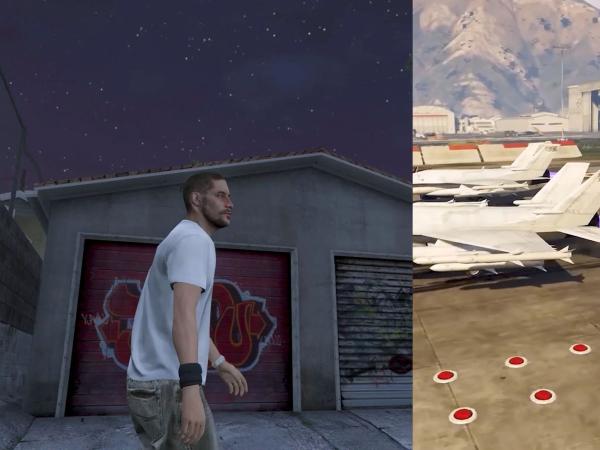
Returning to the programme’s title: these filmic spaces are ludic, but also provocative. We treat these virtual spaces as realities. As in Firas Shehade’s Like An Event In A Dream Dreamt By Another - Rehearsal, we explore how new territories are created and desired by the players.

upcoming event

Like An Event In A Dream Dreamt By Another - Rehearsal (Firas Shehade, 2023)
Read more
short film programme

Ludic Cartographies

07.11.2026
De Cinema, Antwerpen

As the video game industry grows and the number of players increases, people spend an ever greater share of their time in virtual worlds. These spaces have borders and laws of their own. An interesting aspect of gaming in order to make artistic and historical sense of these territories is machinima (“machine” and “cinema”): films shot inside video games or created with game engines. The programme “Ludic Cartographies” guides us through the politics and poetics of such spaces. The films touch upon different issues of alternative history and media archaeology, or military conflicts and territorial disputes, but all of them are united by the particular tension between a lived experience of the world and the way it appears to us in video games.

Buy tickets Read more

Even the most sophisticated video games don’t really provide us with a utopian vision to imagine the world beyond capitalism and all the inherent problems of today’s society. One should retain a certain portion of hope, and we think critical machinima-makers are the ones who can show the way by questioning the limitations in both the game and the real world.

Dmitry Frolov & Vladimir Nadein

Machinima often holds subversive political power. Your programme in particular talks about the aftermath of colonisation, capitalism, and wars such as the Korean War and the Cold War. How does geopolitics show up in the gaming world?

Geopolitics is certainly one of the common threads running through the selected films. In this programme, we wanted to build a political framework that challenges Western white supremacy. Reflecting on our earlier programmes and in discussion with machinima filmmakers, we realised that machinima is still very Western and white male-dominated. Videogames, especially the big-budget ones, are mainly made in the USA, Western Europe, and Japan—the latter of which can also be considered a developed capitalist country with an imperialist past. Games made in these places export certain pictures of the world—but from what point of view? It’s important to step outside that loop and seek out diverse machinima to look for new perspectives.

Many filmmakers try to tackle geopolitical power structures. Machinima offers a great opportunity to create counternarratives using the game itself. Hijacking a game and producing a film within the game engine is much cheaper than making a live-action film with a real camera and cast. You can criticise the game from within, but also address other issues, such as oppression in the real world, through the virtual, cheaper and accessible means of art production.

I really like the idea of “hijacking a game”. In Like An Event In A Dream Dreamt By Another – Rehearsal, filmmaker Firas Shehade responds to the idea of “metafiction”, a fiction about fiction. How, in your opinion, is “metafiction” composed here in relation to the reality of Palestine?

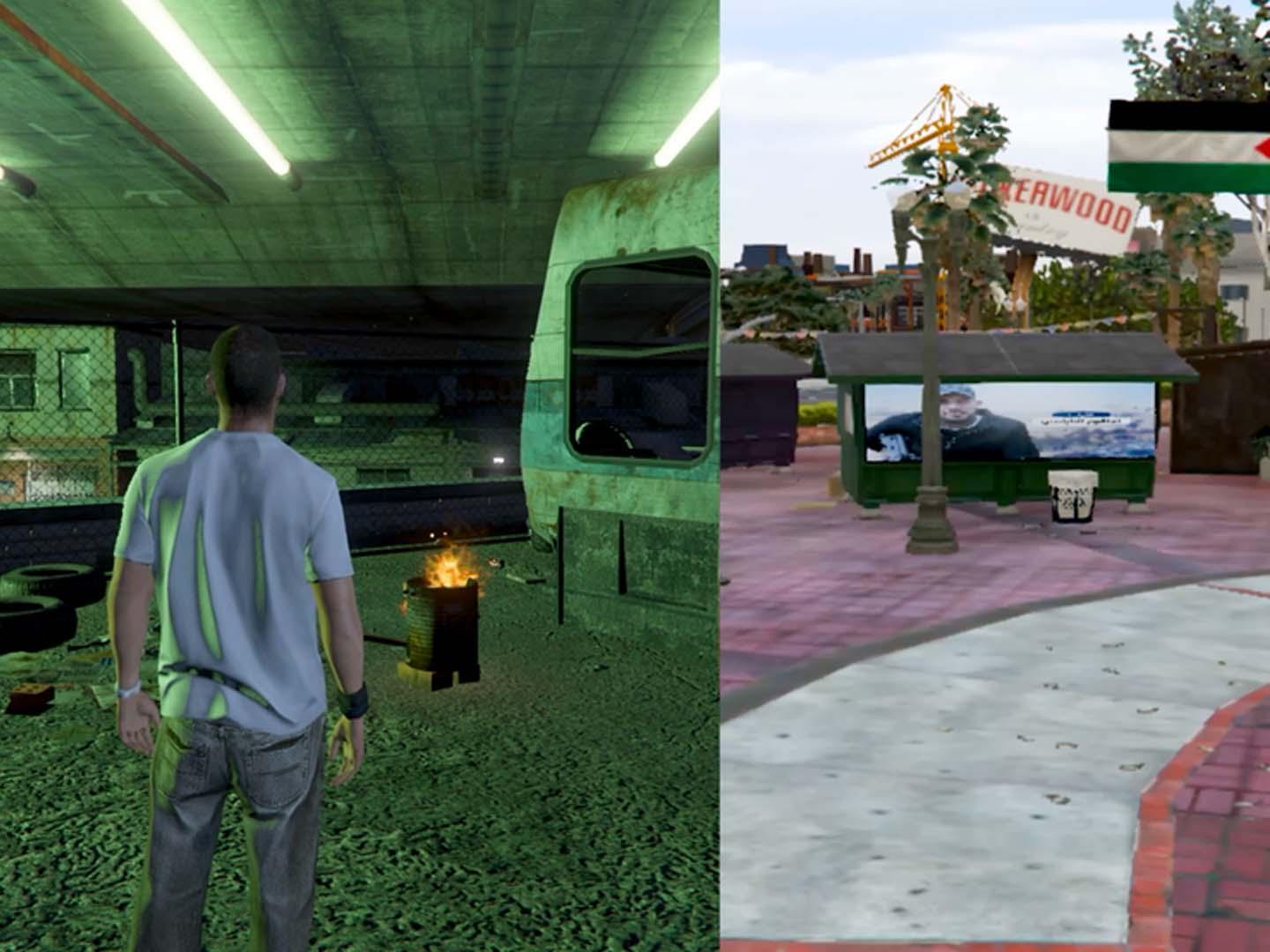
We can’t speak for the filmmakers’ artistic choices; we can only respond with what we value about them. In a sense, any machinima film is a misuse of a video game: you don’t follow the rules of the game but use it for the sake of something else. Role-play is an important feature through which these gamers reimagine their reality. In this film, the Palestinian and Arab players reconstruct the gaming space by building Mosques, while re-enacting real-life events, such as the Israeli invasion of the Jenin refugee camp. Their modification of Grand Theft Auto offers a certain response to the digital natives’ real living circumstances and creates a community for Palestinians under occupation.

The film is even more layered in its audiovisual presentation. The game’s sound overlaps with the narrator’s voiceover, which introduces a series of theoretical references such as Guy Debord’s The Society of the Spectacle, Clint Hocking’s “ludonarrative dissonance”, and Augusto Boal’s “theatre of the oppressed”. Visually, the film, as a split-screen video, displays both the fictionalised reality of GTA V and the alterations introduced by the modders. The two images comment on each other. What fascinates us is the unequal proportion of the two screens, presenting us only a small glimpse into this role-played world. In our opinion, the filmmaker refuses to transform the modified (gaming) reality into a spectacle, allowing this multilayered work to interrogate what we can see and what is not shown to us.

How, then, does a gamer engage with this reveal of “truth” and critique of the real world?

Taking Firas’s film as an example, its powerful impact stems from two major elements. The first is the documentary element, which has been an essential quality since the emergence of machinima. Henry Lowood argues that future historians of virtual worlds will want to understand what people—players, residents, users—actually did in early virtual worlds.2 By reconstructing a virtual world that mirrors Palestinian reality, the film becomes an archive.

Activism is the second crucial factor in Firas’s work. Games like Grand Theft Auto replicate the real world, transferring social problems and issues into the virtual environment and inviting critical scrutiny. It renders machinima timely and necessary and even gives voices to the oppressed.

489 Years (Hayoun Kwon, 2015)

As a gamer, you can feel empowered and powerless at once. You can go anywhere on this capitalist-designed map, yet you can only see the map they draw for you, and you can get lost without it. How do you relate to this paradox?

The gaming world is famous for its limitations and borders; that’s why we have beautiful phenomena such as speedrunning, when gamers try to complete a level as fast as possible. Numerous machinimas are so-called “out of bounds”: there is a thrill in breaking the border to see what is behind the mountain or beyond the polygonal ground. Examples can be found in Marie Foulston’s The Grannies (2021), one of the episodes of Harun Farocki’s Parallel (2012-2014), Natalie Maximova’s The Edge of the World (2021) and Background, Action! (2026), and Total Refusal’s Featherfall (2019).

Indeed, there is a sense of powerlessness and hopelessness, because even the most sophisticated video games don’t really provide us with a utopian vision to imagine the world beyond capitalism and all the inherent problems of today’s society. One should retain a certain portion of hope, and we think critical machinima-makers are the ones who can show the way by questioning the limitations in both the game and the real world.

GeoMarkr, which closes the programme, seems to introduce a new way of worldmaking. Could you talk about the neo-coloniality and territorial expansion rooted in the Google car’s “harrowing ubiquity”?

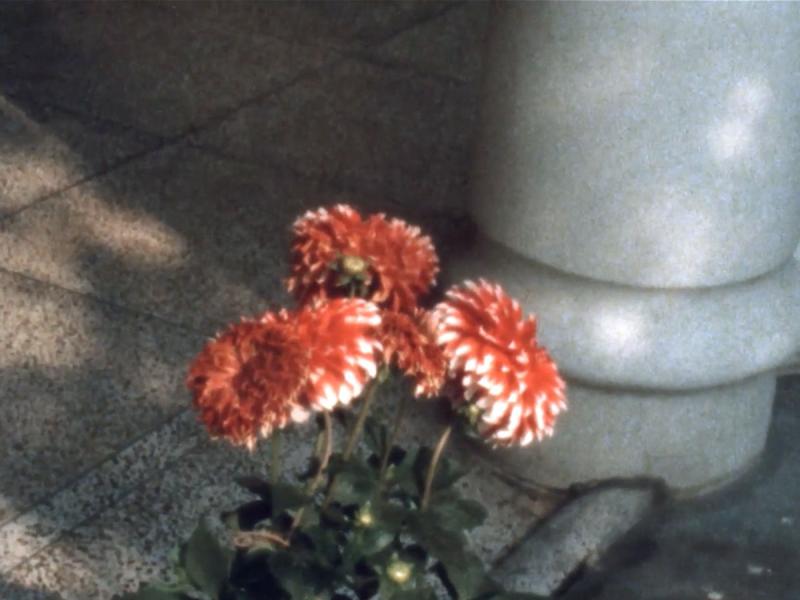
We experienced the same addiction to this game as the film’s narrator describes. It probably conveys as much as Google Maps imposes: a colonial expansionist effect—making players feel like “the world is your oyster” in the best sense. This game has a tendency to exceed our real world’s limitations that are shaped by geopolitics, war, oppression, migration, and so on.

Google Maps is an extraordinary technology that changes how people view the world now, but also profoundly reshapes geographic culture and education. Russian journalist Maxim Trudolyubov warns us of the moral bankruptcy of the geopolitical worldview. It looks at society from the cockpit of a bomber. The satellite view from above connects with military structures, and it has been proven how the technology is used in war conflicts.

What we personally like about GeoMarkr is the clear contrast between two ways of experiencing the world: the embodied experience Chris Marker shows in his films, physically going to places and completing the world map. In GeoMarkr, the experience changes: when we are “present,” we see the places through technology. This differs from the Situationists’ détournement, where they drift through the city without an objective or knowing where they are. Today we don’t really know our cities anymore; we constantly check our location and direction through devices, and we are bound to blue-dot avatars on a Google Map. In this sense, we are perpetually on a game map.

Films like 489 Years and Another Day of Depression in Kowloon portray a certain dream that is hard to capture in reality.

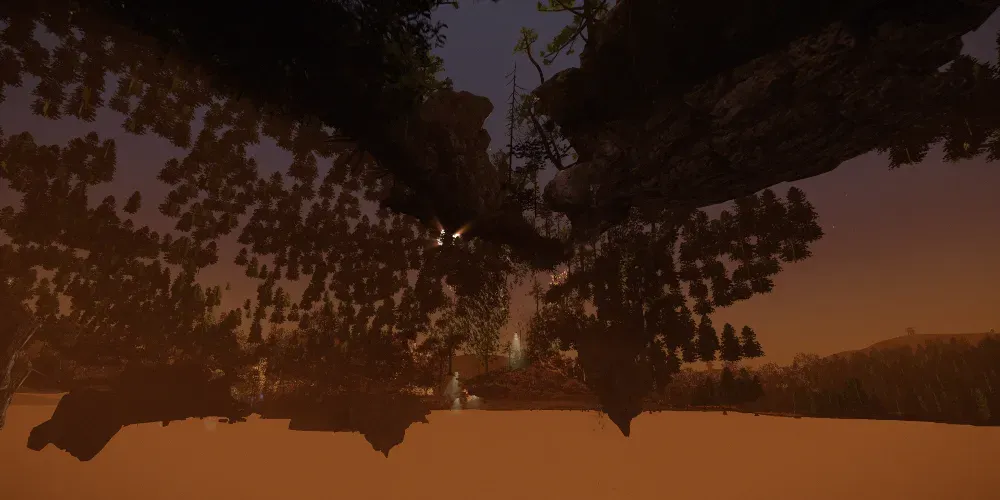
We like that you compare the two films because they both try to portray inaccessible places. Their inaccessibility varies: the DMZ is hard to set foot on, while the Kowloon Walled City of British Hong Kong no longer exists. 489 Years is not shot with an existing video game, but uses or imitates a shooter game’s design. Whereas Another Day of Depression in Kowloon is shot in a first-person shooter game, Call of Duty: Black Ops (2010), where Kowloon is a level map. Filmmaker IP Yuk-Yiu deprives the game of the guns in order to observe the landscape, which can be seen as hijacking the game from its main feature. By immersing spectators in two hard-to-reach places, these two films form an intriguing pair, showing through different strategies how media remaps, reimagines, and sometimes distorts certain places.

How do these films, and machinima in general, connect to different art forms?

In essence, machinima is an intermedial phenomenon at the intersection of film and video games, which are themselves multimedia in nature. Scholar Henry Lowood regards machinima as the digital puppet theatre of the 21st century. You use digital avatars instead of marionettes. Specifically, you can recreate space or imagine space from scratch in game engines; you can also find replicas of objects from the real world in existing video games. Then, you set them on a “stage”—your film. It speaks to a kind of desire—people construct video games that mirror physical reality, and they like to spend time in the virtual environment. Machinima documents such a desire for a second life.

Read more about

#537 489 Years
#538 Workprint: De Facto Vela Incident
#265 Like An Event In A Dream Dreamt By Another - Rehearsal
#539 Another Day of Depression in Kowloon
#540 GeoMarkr
  • 1

    The Machinima Reader, ed. by Henry Lowood and Michael Nitsche (Cambridge, London: The MIT Press, 2011), vii.

  • 2

    The Machinima Reader, ed. by Henry Lowood and Michael Nitsche (Cambridge, London: The MIT Press, 2011), 5.

read more

Idrish (ইদ্রিস) (Adam Lewis Jacob, 2021)
interview
Read more

Documents That Are Here to Stay

A Conversation with Adam Lewis Jacob on Idrish (ইদ্রিস)

Siavash Minoukadeh
14.09.2026

Adam Lewis Jacob’s Idrish (ইদ্রিস) (2021) dances between the present and the personal and political history of British-Bangladeshi community activist Muhammad Idrish. His longstanding opposition to deportation campaigns, beginning with his own, helps to understand both the anti-immigrant movement of the late 20th century and the resistance to it, at a time when echoes of these mechanisms resonate once again.

Read more
© J’ai faim, j’ai froid (Chantal Akerman, 1980)
artikel
Read more

Het leven start hier en nu

Chantal Akermans J’ai faim, j’ai froid (1984)

Michaël Van Remoortere
17.03.2025

Henri Bergson geloofde dat het fenomeen genaamd humor ontstond wanneer de materiële wereld tekortdeed aan onze spirituele aspiraties. Had hij lang genoeg geleefd om het werk van Chantal Akerman te zien, dan kon hij in haar films een bewijs van zijn stelling vinden. Niet alleen was Akerman een begenadigd metteuse en scène van Chaplineske slapstick-taferelen, ook hoe zij de romantische liefde toont is, door de kloof tussen wensdroom en al te menselijke realiteit, vaak een bron van onbedaarlijk gniffelen.

Read more
Derek Jarman
artikel
Read more

Derek Jarman, meer dan ooit

Stoffel Debuysere
29.03.2025

Hoe resoneert de nalatenschap van Derek Jarman? Afgaand op het groot aantal retrospectieves, publicaties en hommages die aan zijn werk en leven worden gewijd: vandaag meer dan ooit. Drie decennia nadat hij het leven liet aan AIDS-gerelateerde complicaties is Jarman alomtegenwoordig in deze tijd die aanvoelt als in voortdurende crisismodus.

Read more
Old Child (Elettra Bisogno & Hazem Alqaddi, 2019)
essay
Read more

Flickering Memories

Elettra Bisogno & Hazem Alqaddi’s Old Child

Savina Petkova
10.05.2025

For a refugee or an immigrant, memories of a prior life are not simply broken; they are snapped in two, three, four, or more pieces and doomed to exist separately. These split memories can emit a particular shine, as attested by Elettra Bisogno and Hazem Alqaddi’s short Old Child. The film dwells in the paradox of its title, where old age and childhood are readily coupled, as if there were no time or space in between these two ends of a human life spectrum. Of course, the title also holds melancholy, which is only one feeling in the vast emotional landscape of Old Child.

Read more
© BURN TO SHINE (UGO RONDINONE, 2022)
verslag
Read more

Vrijen met het publiek

Cinema als avontuur in Anouk De Clercq’s Love That Moves The Sun

Jannes Callens
12.06.2024

De in Berlijn gevestigde Belgische kunstenares Anouk De Clercq wil experimentele films openstellen voor argwanende mensen. Avant-garde cinema noemt ze koppig “avontuurlijke film”. In een kortfilmprogramma voor Courtisane maakt het cerebrale plaats voor een sensuele beleving, een fundamenteel lichamelijke ervaring van cinema.

Read more
© LITTLE LOWER THAN THE ANGELS (NEOZOON, 2019)
interview
Read more

There Must Be a Way Out of This Disaster

A conversation with NEOZOON

Savina Petkova
25.07.2025

Do you like cat videos? Try watching a thousand in a row, spread them on a timeline, and map out the similarities and differences between them. This experiment could serve as a primer for the work of two-person art collective NEOZOON, whose preoccupation is human-animal relationality. Using only found footage and social media archives, the duo aims to expose the oppressive power structures that position humans as exceptional, and non-human animals as anything but.

Read more
© Lights (Marie Menken, 1966)
verslag
Read more

Cinema-explosies op witte muren

Filmkunst barst uit zijn voegen bij Eye tentoonstelling Underground American Avant-Garde Film in the 1960s

Hugo Emmerzael
09.12.2024

In een groots opgezette tentoonstelling brengt het Amsterdamse filminstituut Eye de iconen van de Amerikaanse undergroundfilm uit de jaren zestig onder één dak samen. De avant-gardistische vormexperimenten van pioniers als Jonas Mekas, Maya Deren en Stan Brakhage staan er naast werk van bijvoorbeeld Bruce Conner, Yayoi Kusama, Yoko Ono en Andy Warhol. Blijft die vooruitstrevende filmkunst van die tijd nu nog overeind bij een overzichtstentoonstelling?

Read more
+6 Gain (Jorn Plucieniczak, 2019)
article
Read more

Sound Bath

Jorn Plucieniczak’s +6 Gain (2019)

Ben Flanagan
20.02.2024

Plucieniczak is searching for the spiritual in the notion of Living For The Weekend, and as it gets closer, the colours are further enveloping, pink turning to red. Strobes flicker on Martens’ bald head. His body is out of focus, camera swerving left and right; it’s full Irréversible; the music begins to swoosh in, a trance banger waiting patiently to drop. But instead, we cut into the lounge.

Read more

Subscribe to our monthly newsletter for updates on new releases, publications, and events!

Subscribe

yanco is a magazine and streaming library for short-form moving image

kortfilm.be vzw
Boondaalse Steenweg 249
1050 Elsene
BE 0478 441 315
info@yanco.be

with the support of the Flanders Audiovisual Fund (VAF) of the Flemish Government

VAF
  • about
  • colophon
  • privacy policy
Facebook Instagram LinkedIn YouTube Letterboxd
design by de Ronners
website by eps en kaas