
Seven customers enjoy their lunch in a Brussels restaurant in the late 1950s. Following the footsteps of a waiter who brings them a steak with fries and a filtered coffee, they are introduced to us one by one. The waiter walks from the kitchen into the dining room, from ‘behind the scenes’ onto the public stage. Gestes du repas is a black-and-white film, but we can easily imagine the red-and-white colour of the checkered tablecloths. While those now evoke bygone folklore, the guest taking a deep drag of his cigarette amidst a full dining room is totally outdated nowadays, even unimaginable. With the passage of time, habits are toned down, and even deep-rooted ones may grind to a halt.
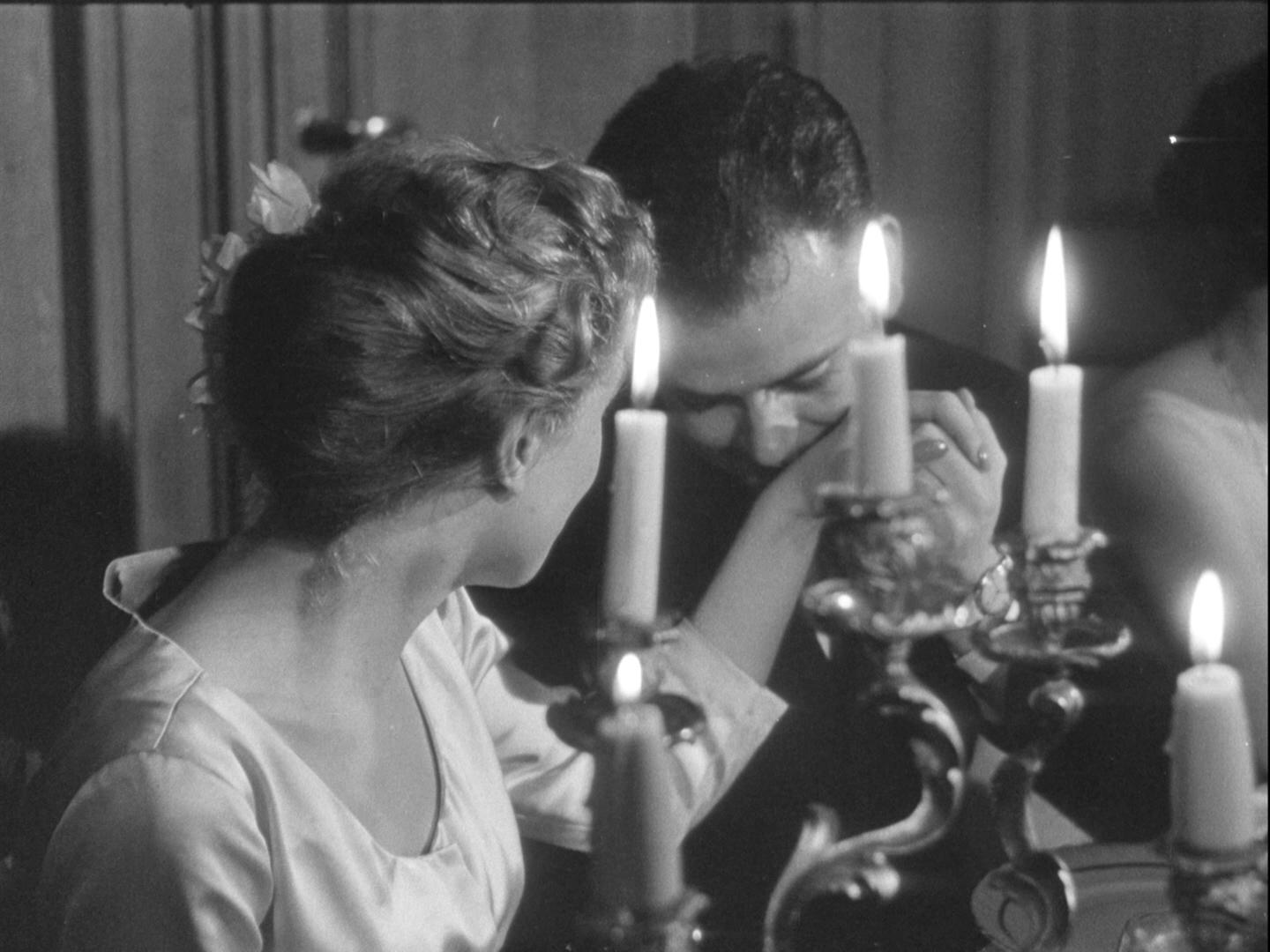
Gestes du repas (Luc de Heusch, 1958)
Ceci n’est pas un steak frites
Luc de Heusch’s Gestes du repas (1958)
De Heusch introduces the ritual of a film set and staging in an existing environment with existing codes in order to capture their essence. He could have done so as a serious observer, but rather opts for a satirical tone. De Heusch considers filming a “sociological game”. The playful and satirical touch of his films sometimes verges on the subversive.
Bjorn Gabriels
So De Heusch’s predicate as the ‘Belgian Rouch’ should be taken with a pinch of salt, and not just because of his more theoretical approach. Their film practices also differ considerably. De Heusch was an ardent defender of Rouch’s films and they both recognised the impact of fiction elements in documentaries, but deployed them in very different ways.
While Rouch explored the dynamics of street encounters with a handheld camera in various African countries or, for the influential Chronique d'un été (1961), in summertime Paris, De Heusch’s films prefer studio staging. In his book Cinéma et sciences sociales. Panorama du film ethnographique et sociologique (1962), De Heusch states that “most of the scenes [in Gestes du repas] were played by workers, bourgeois and peasants who participated in the ceremony of film”. The places where they usually ate, restaurants, kitchens or canteens, were transformed into temporary film studios. The great advantage of the gestures while eating, De Heusch writes, is that they are genuine reflexes that are not altered by cues for the mise-en-scène.
De Heusch introduces the ritual of a film set and staging in an existing environment with existing codes in order to capture their essence. He could have done so as a serious observer, but rather opts for a satirical tone. De Heusch considers filming a “sociological game”. The playful and satirical touch of his films sometimes verges on the subversive. Ideas from surrealism played an important role in De Heusch’s work from the very beginning, both as an anthropologist and as a filmmaker.
When, with some noise, the door of the Brussels restaurant swings open, the seven guests simultaneously turn their heads towards the camera. The mise-en-scène emphasises the group portrait, side by side on a wooden bench, while the timing makes the synchronised gazes undeniably a cinematic gesture. Playfully, De Heusch pairs his cinephile attention to banal acts with an anthropological observation of everyday habits. For this pioneer of anthropological cinema, film is a set-up game that uniquely captures rituals.