

Subscribe for €30 and get one-year access to the 70+ films in our streaming library. This supports not only our magazine but also the filmmakers we represent.
The Inextinguishable Fire
Nicht löschbares Feuer
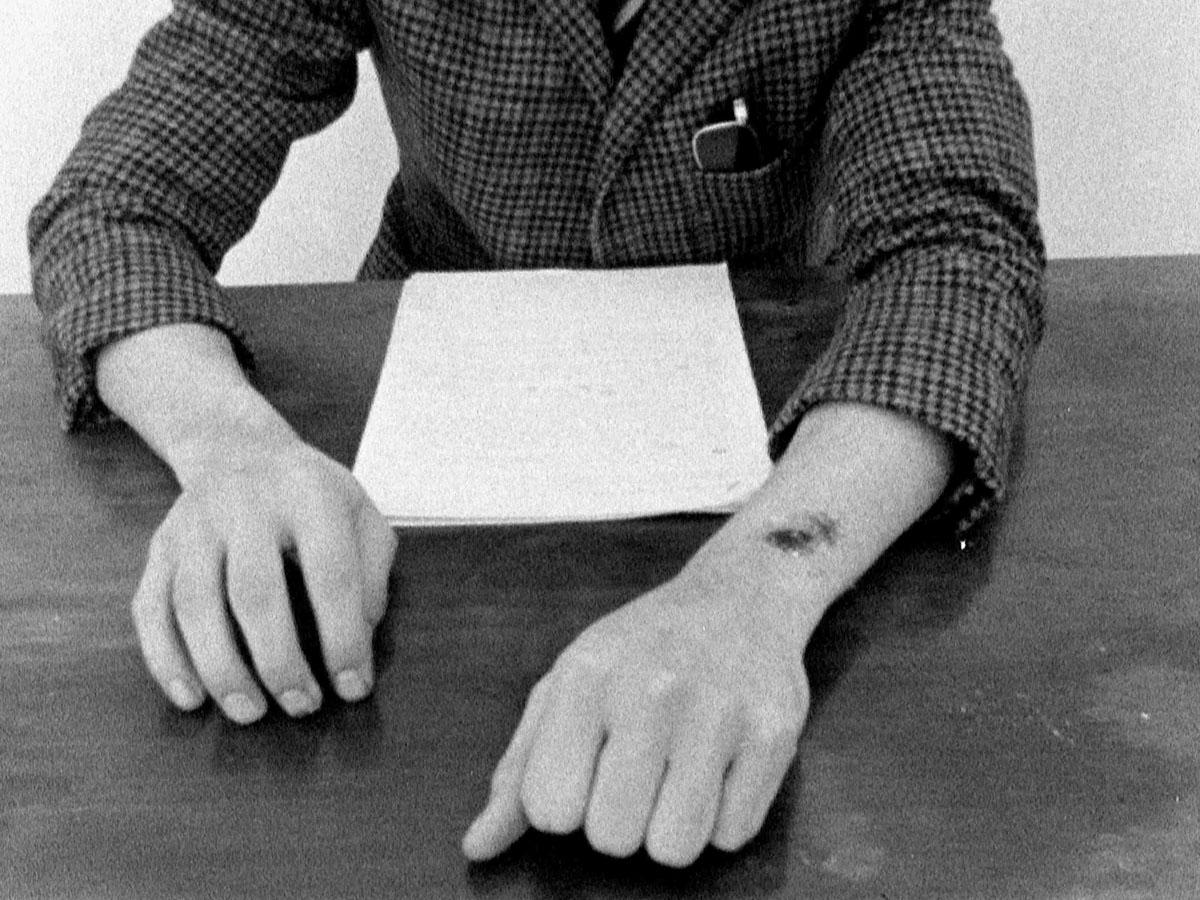
Like many of Farocki’s films, The Inextinguishable Fire adheres to a short experimental documentary format and an essayistic style combining text, narration, and images collected from the mass communications industry. Made early in the prolific artist's nearly fifty-year career, the film is a critique of the Vietnam War and the role of industry in the production of chemical weapons.
It begins with the following narration: “When we show you pictures of napalm victims, you’ll shut your eyes. You’ll close your eyes to the pictures. Then you’ll close them to the memory. And then you’ll close your eyes to the facts.” In analysing the production, dissemination, and consumption of images, he revealed the inextricable links between media culture, politics, technology, and violence.
Bio Harun Farocki
Harun Farocki (1944–2014) began his career as an editor at the film magazine Filmkritik. Farocki started making films in the late 1960s in a highly politicised cultural environment. Over the course of his career, he produced numerous radio broadcasts, video installations, and more than a hundred films, many of them for television. He is best known for his essay films, such as Zum Vergleich, Ich glaubte Gefangene zu sehen, Auge/Maschine I–III, Arbeiter verlassen die Fabrik, Bilder der Welt und Inschrift des Krieges, and Nicht löschbares Feuer. Many of these works are explicitly political and deal with themes such as labour practices and the production of images. His films also often explore the relationship between warfare, capitalism, and representation.
435
- This film was #18 in the “Greatest” Short Films of All Time 2025