yanco Home
Menu
  • Home
  • watch
  • magazine
  • calendar
  • index
  • Subscribe
Search Log in
  • nl
  • en
You are here
  • Home
  • Magazine
  • The Amateur and the Archive
Katherine May Fannon (Helga Dorothea Fannon, 2025)

The Amateur and the Archive

On “Glued & Screwed #33 (Meditation)”

essay by
Arta Barzanji
Unearthing the Archive!
14.09.2026

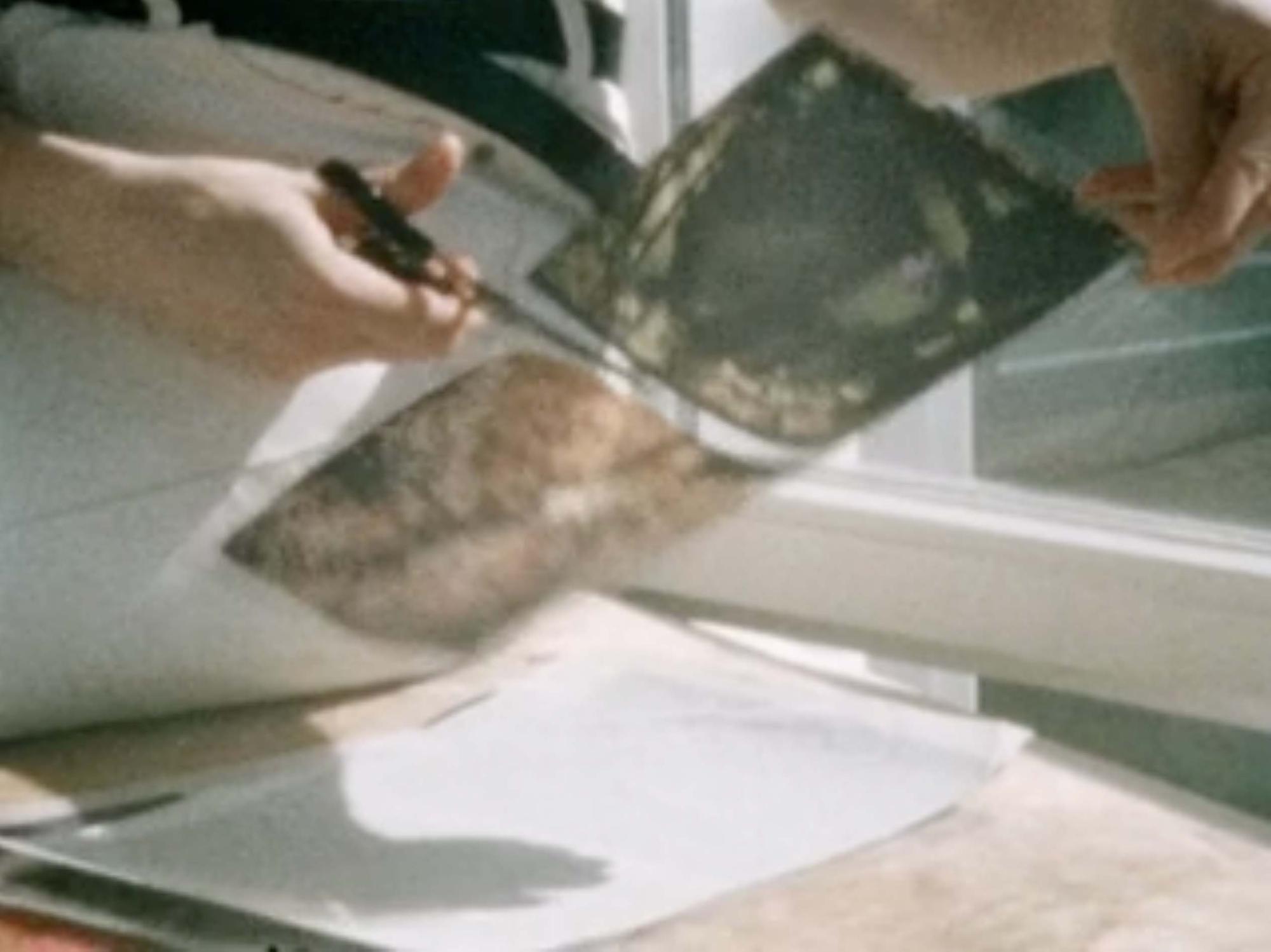
“An amateur is a lover,” Nathaniel Dorsky proposes in a passage recited early in Heavenly and Harrowing (2024). The older meaning of “amateur,” from the Latin amator, is especially dear to Dorsky: the word has also been used to dismiss his films. Annemarie Wadlow and Lucy Cordes Engelman take up Dorsky’s distinction between collecting the world as objects and making love to it: filmmaking not as possession, but as attention.

They arrive there through Dorsky’s Variations (1998), the New York Times critic Stephen Holden’s description of its plastic bag blown across a pavement, and the story of that image’s apparent migration into Sam Mendes’s American Beauty (1999). Stan Brakhage enters the conversation, alongside questions of theft, influence, embodiment and abstraction. What would it mean to encounter an image, a filmmaker or an archive without simply absorbing it into purposes already prepared for it?

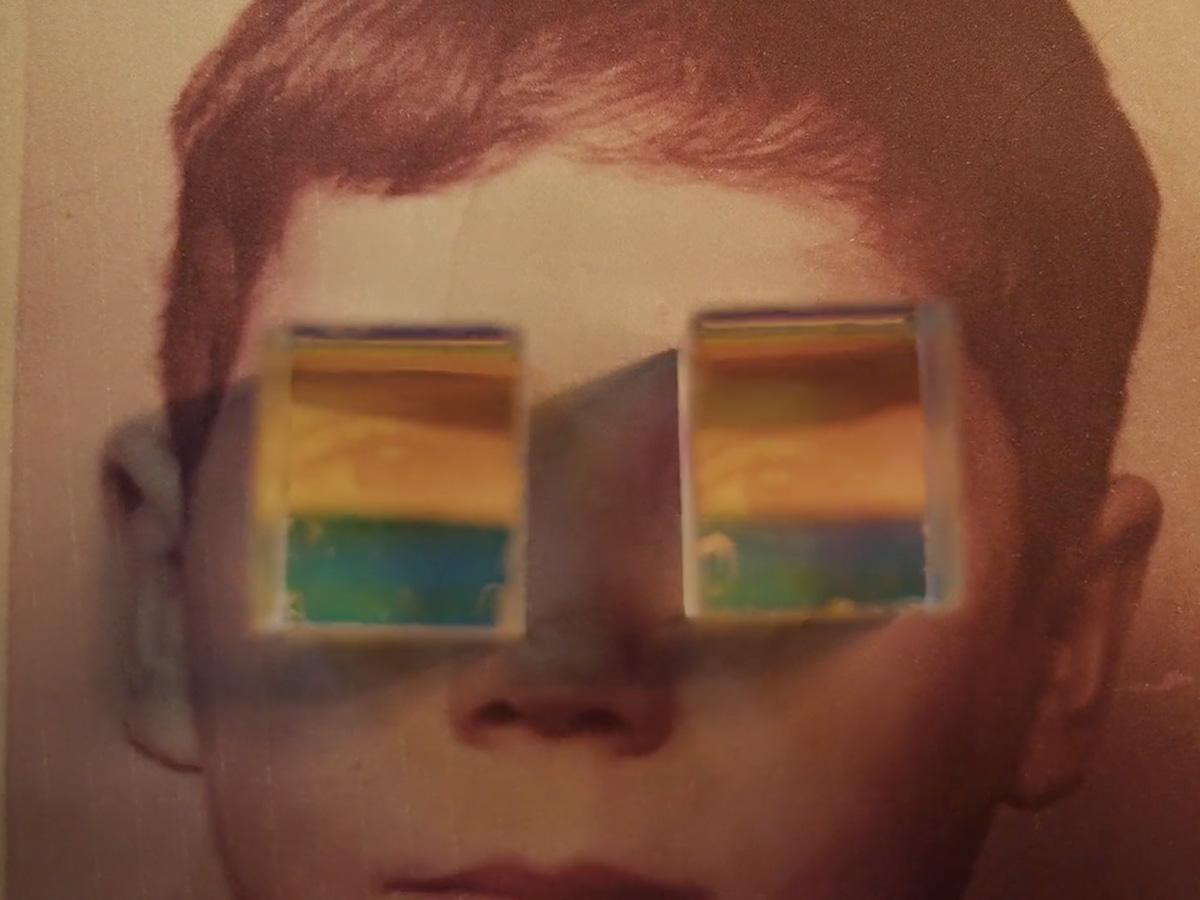
Only four minutes long, Helga Dorothea Fannon’s Katherine May Fannon (2025) offers one answer through concentration. Over family photographs, Fannon’s father recalls several generations: one grandfather returned abusive after being gassed during the First World War; another, shell-shocked, would throw himself to the ground at the sound of a car exhaust. He remembers his mother’s cancer, which the family barely acknowledged. The photographs cannot disclose these histories by themselves. Hands move them; paper rustles; glass cubes refract faces; images appear through liquids and other surfaces.

“I will hear this when I need you the most,” reads its opening sentence. The archive is not only what remains after loss; it can be made in anticipation of it. The father’s recognisable Liverpool accent seems to reach us through a recording device, and at the end his voice cuts out mid-sentence. The film never needs to announce that memory is mediated or incomplete. It gives that condition material form. There is something Cavellian in its refusal to turn connection into possession. For Stanley Cavell, acknowledgment does not overcome our separateness from another person; it is a way of responding to that separateness without pretending to dissolve it. Fannon makes the relation tactile: closeness to these people and objects does not make them transparent. Its brevity is part of its confidence.
Heavenly and Harrowing (Annemarie Wadlow, Lucy Cordes Engelman, 2023)

Dan Guthrie’s black strangers (2022) begins from almost the opposite condition. A research machine and old documents reveal an entry from 1719 recording the burial in Gloucestershire of “Daniel, a black stranger.” Guthrie addresses Daniel as his namesake and imagined companion. He wonders about Daniel’s shoe size, whether they might share a plantar fibroma, even whether the name was his. Finally the desire becomes explicit: “Daniel, right now I need you to be my mirror, my emotional doppelganger, my foot-lump twin.”

The question is compelling: how might one form a relation with somebody whom the archive has barely preserved as a person? Yet the film’s reflexivity repeatedly weakens its own wager. Despite the narration’s congenial, casual tone, Guthrie anticipates objections so insistently that what might gather emotional momentum is repeatedly second-guessed.

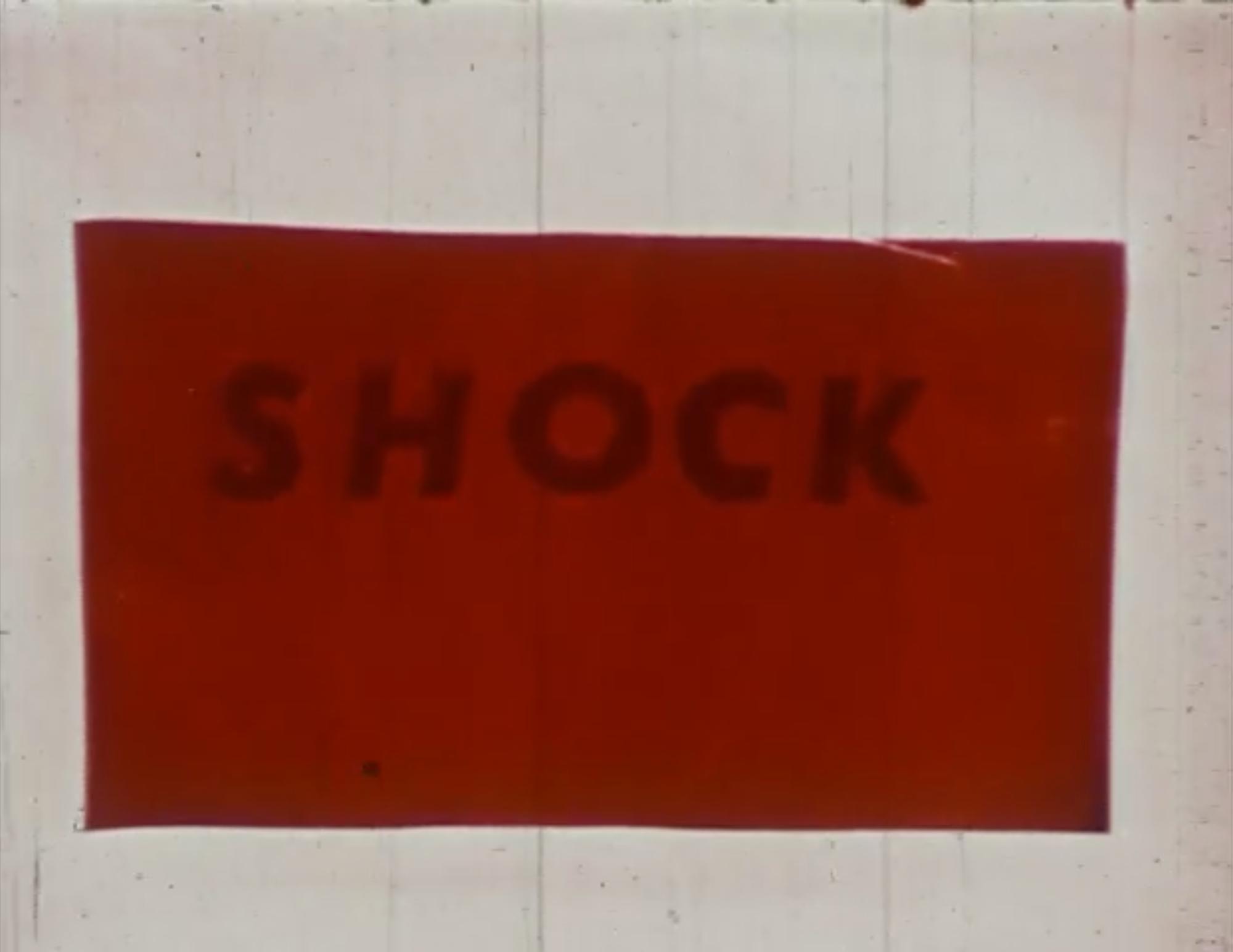
The problem is not that the relation is speculative; speculation may be all such an absence permits. The problem is that the film never generates the necessity of this particular speculation beyond Guthrie’s declaration that he needs Daniel as a mirror. By protecting the gesture against objection, the film also lowers the stakes that might have made it moving. More schematic yet paradoxically freer within its construction, Jay Rosenblatt’s Phantom Limb (2005) divides grief into twelve chapters. “Collapse” gives us demolished buildings, “Shock” laboratory rats receiving electric shocks, “Depression” images from the Great Depression. Some correspondences border on the literal. Yet through rhythm and music, the film commits to them with such force that the experience exceeds the neatness of the concept.

Love and respect for an archive cannot mean approaching it so delicately that one refuses to act upon it: every selection, montage, recollection or speculation transforms what it touches.

Arta Barzanji

Home-movie footage shows Rosenblatt’s younger brother Eliot; intertitles recount his illness, death, and Rosenblatt’s guilt after teasing him. Then direct autobiography largely recedes. Grief disperses into images belonging to other histories: mourners, demolition, a dead bird, laboratory animals, anonymous people in crisis. Rosenblatt does not search these archives for his brother. He searches them for forms through which his brother’s absence can be felt.

Late in the film, an amputee describes continuing to feel pain in an arm that is no longer there. The metaphor is obvious, but the film has built enough emotional conviction not to be exhausted by it. What has disappeared remains active as an absence. In “Communication,” a man discusses mediums and possible contact with the dead. Cinema, too, is a medium: Eliot can look again toward a camera while nothing about his death is undone. The separateness acknowledged by Fannon’s film becomes absolute here. Cavell’s account of photography turns on the same contradiction: cinema makes a world available to sight while preserving our separation from it.

Seen beside Katherine May Fannon and Phantom Limb, Heavenly and Harrowing and black strangers reveal a shared difficulty. Both belong to a recognisably contemporary academic mode of filmmaking, in which qualification and self-questioning are treated as signs of openness. While reflexivity can deepen an encounter, here it repeatedly interrupts one. black strangers comments upon the danger of its own imaginative gesture until that gesture loses force. Heavenly and Harrowing scarcely lets a wager develop into commitment.

Wadlow and Engelman themselves describe their “many burners” bubbling away before being added to a “cauldron.” The metaphor diagnoses the method: artistic and theoretical references accumulate, but rarely meet enough resistance to develop. The recurring “maybe,” “I think,” “I don’t know,” and “that might just be personal” is more than conversational texture. Preserved in a finished film, it becomes a formal decision: every proposition arrives with an escape route. The result resembles a notebook whose sketches have bypassed the stages through which they might have been tested or transformed. Thought moves sideways.

Phantomb Limb (Jay Rosenblatt, 2005)

The difference is not certainty against doubt. Katherine May Fannon is built around incomplete access; Phantom Limb openly displays the artificiality of its structure. What distinguishes them is conviction. They commit to their materials strongly enough to remain open to what those materials might produce. Fannon trusts a handful of fragments without explaining away their incompleteness. Rosenblatt imposes an almost crude structure and discovers an experience richer than it. By contrast, the demonstrative tentativeness of Heavenly and Harrowing and black strangers insulates their propositions from the consequences of making them.

This returns us to Dorsky’s amateur as lover rather than collector. Love and respect for an archive cannot mean approaching it so delicately that one refuses to act upon it: every selection, montage, recollection or speculation transforms what it touches. Nor does openness mean withholding commitment. It means committing strongly enough for an encounter to answer back—for an image, voice or vanished life to resist the meaning prepared for it and perhaps alter the form built around it. To acknowledge what survives is also to acknowledge what exceeds our possession of it. Love, respect, and openness begin in that resistance.

    From September to November 2026, three consecutive Glued & Screwed events, wysiwyg’s monthly screening series at Filmhuis Den Haag, form the triptych programme Unearthing the Archive!: a deep-dive into the world of archival films. “Meditation” is the second installment in the series, which focuses on the relationship between the filmmaker and the archive. Featuring intimate stories and personal insights, archival footage becomes a tool the filmmakers use to tell a (personal) story, share introspection, or deliver powerful realisations.

    To accompany the screenings, yanco presents a printed publication featuring reflections and interviews on archival film. The texts are also made available online. Made possible by Filmhuis Den Haag en Stroom Den Haag.

    Bio Arta Barzanji

    Arta Barzanji is an Iranian filmmaker, critic, curator, and lecturer based in London. He is an AHRC-funded PhD candidate at the University of Roehampton, where his practice-based research focuses on film criticism and dialectical thought. He is an alumnus of the critics’ programmes at the Locarno and Ghent Film Festivals, and his writing—in both Farsi and English—has appeared in outlets such as Cineaste, MUBI Notebook, Sabzian, and Documentary Magazine. Arta’s forthcoming academic publications include an essay for Routledge Resources Online and a book chapter for Edinburgh University Press.

    read more

    © Ethereal Rhythms, Everything Rhymes (Brecht Vanhoutte, 2025)
    interview
    Read more

    Welkom, welkom in mijn hoofd

    Brecht Vanhoutte over Ethereal Rhythms, Everything Rhymes

    Flo Vanhorebeek
    13.02.2025

    Brecht Vanhouttes masterfilm is een abstract beestje, dat de LUCA-alumnus zelf beschrijft als een koortsdroom die zijn gevoelswereld vertaalt naar het zilveren scherm. De film construeerde hij door tekst, beeld en audiofragmenten in een AI-generator te gieten en hierover met de bot in gesprek te gaan. Zijn werk bracht hem tot op het Internationaal Filmfestival van Rotterdam (IFFR).

    Read more
    © LITTLE LOWER THAN THE ANGELS (NEOZOON, 2019)
    interview
    Read more

    There Must Be a Way Out of This Disaster

    A conversation with NEOZOON

    Savina Petkova
    25.07.2025

    Do you like cat videos? Try watching a thousand in a row, spread them on a timeline, and map out the similarities and differences between them. This experiment could serve as a primer for the work of two-person art collective NEOZOON, whose preoccupation is human-animal relationality. Using only found footage and social media archives, the duo aims to expose the oppressive power structures that position humans as exceptional, and non-human animals as anything but.

    Read more
    © Untitled III (Sarah Pucill, 2001)
    Untitled III (Sarah Pucill, 2001)
    interview
    Read more

    Folding Time

    On Sarah Pucill’s Surrealism

    Laura Stoeckler
    23.08.2025

    Over the last thirty years, Sarah Pucill’s films have shown a sustained engagement with feminist politics, surrealist aesthetics, and the material language of cinema. Her work is connected by a visual and conceptual vocabulary that keeps evolving. Figures, motifs, and techniques reemerge—the principle of continuity is key to understanding how the artist’s work coheres, drawing strength from its self-reflection.

    Read more
    © BAN♡ITS (Omar Chowdhury, 2024)
    BAN♡ITS (Omar Chowdhury, 2024)
    article
    Read more

    Why So Serious?!

    On Omar Chowdhury’s BAN♡ITS

    Ren Scateni
    12.02.2025

    “There’s a reason why everybody hates Batman in those movies,” comments one of the titular protagonists in Omar Chowdhury’s BAN♡ITS. Set in a liminal space between Bangladesh and India, the film follows a group of self-proclaimed “destitutes” who rob the rich to give to the poor and are obsessed with Heath Ledger, because “he died for his art.” Inhabiting a lawless limbo where radical credos coexist with state-sanctioned anarchic stances these outlaws are as porous and opaque as Chowdhury’s film itself.

    Read more
    Les enfants ont des oreilles (Kumail Gasiewski, 2025)
    Les enfants ont des oreilles (Kumail Gasiewski, 2025)
    verslag
    Read more

    Lichting KASK 2024-2025

    Evi Cats, Boet Meijers, Kathy Vanhout
    03.12.2025

    In het multidisciplinaire microklimaat van KASK School of Arts in Gent ontspruit elk jaar opnieuw een uiteenlopende groep filmmakers en audiovisuele kunstenaars. Dit is een selectie van de masterproeven waarmee de lichting 2024-2025 afzwaait.

    Read more
    © La Chambre (Chantal Akerman, 1972)
    La Chambre (Chantal Akerman, 1972)
    article
    Read more

    A Room of Her Own

    Chantal Akerman’s La Chambre

    Öykü Sofuoğlu
    17.11.2024

    Lounging on a small bed, Chantal Akerman’s posture seems casual and relaxed at first glance, but the repetitive tilts of her head—to the left and then back to center—contrasting with the smooth glide of the camera suggest otherwise. Restlessness is in the air, yet before we can discern it, the image is already on the move, retracing its steps for a second time.

    Read more
    she asked me where i was from (Aulona Fetahaj, 2020)
    she asked me where i was from (Aulona Fetahaj, 2020)
    essay
    Read more

    Digital Roots

    Aulona Fetahaj’s she asked me where i was from

    Irina Trocan
    05.05.2023

    The story builds slowly and elliptically in the filmmaker’s spontaneous exploration, using digital visualization tools and the personal photo archive on her Mac. There is the bulk of automatically named .jpg files from a wedding. Everyone always goes back to their hometown for weddings. Some of these photos have a sort of tactility to them. Someone took care to put them in a frame, or else they, by themselves, have that power – the very easy-to-guess story behind the image draws you into the frame until it’s three-dimensional and surrounds you. An Eastern European village house, destroyed by a shell projectile, testament to the dissolution of Yugoslavia.

    Read more
    © Past Perfect (Jorge Jácome, 2019)
    artikel
    Read more

    Lijden in verleden tijd

    Jorge Jácome’s Past Perfect

    Bo Alfaro Decreton
    22.01.2020

    Leed neemt verschillende vormen aan. Het filmisch essay Past Perfect duwt ons, vanuit een ontreddering, kopje onder het verleden in.

    Read more

    Subscribe to our monthly newsletter for updates on new releases, publications, and events!

    Subscribe

    yanco is a magazine and streaming library for short-form moving image

    kortfilm.be vzw
    Boondaalse Steenweg 249
    1050 Elsene
    BE 0478 441 315
    info@yanco.be

    with the support of the Flanders Audiovisual Fund (VAF) of the Flemish Government

    VAF
    • about
    • colophon
    • privacy policy
    Facebook Instagram LinkedIn YouTube Letterboxd
    design by de Ronners
    website by eps en kaas