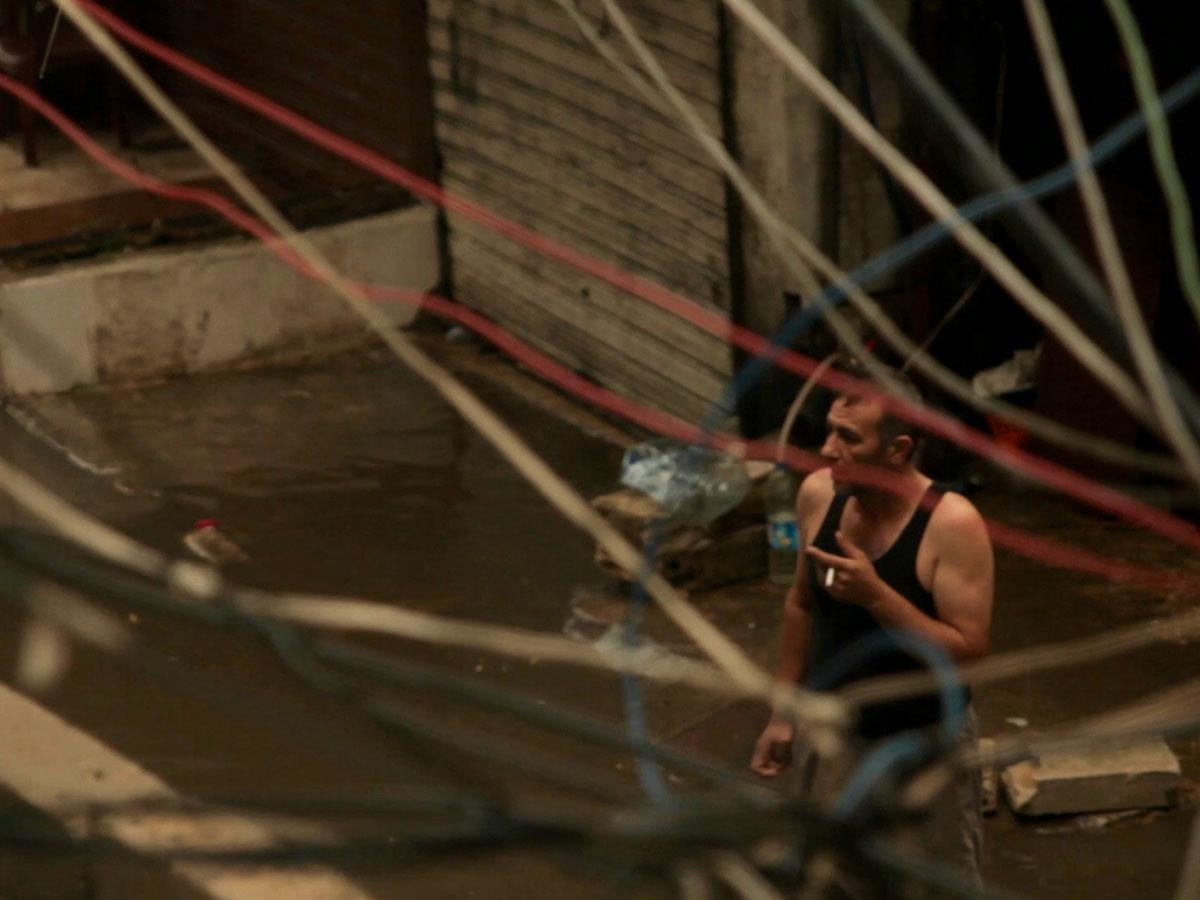
The film opens in darkness. The voice-over of a man with a Palestinian accent informs viewers that they are watching a “film”, highlighting the artifice of the images while also linking it to the reality of the Nakba. The man’s voice situates us as viewers within an imagined future, one “in which Palestine is free again.” Ironically, we watch this film in 2025, amidst the ongoing genocide in Gaza and the ethnic cleansing and apartheid in the West Bank. Juxtaposed with the harsh realities of the genocidal present, Ours is a Country of Words’s sci-fi-like imagination shows the desire for a future that is increasingly fought for. As the first dialogue unfolds, we are invited into this brighter future: Palestine is liberated, and refugees can return.
Poppe establishes a context that encourages viewers to ponder what such a future might entail. The vision of a liberated Palestine embodies the hopes of countless generations. Here, cinema proves to be a powerful medium to bridge disparate realities, as the narrative oscillates between ordinary scenes—dinners, studying—and profound discussions about the return. These conversations are not framed as whimsical fantasies; instead, they reflect practical considerations: where to store important papers and diplomas, which routes to take, how to gather enough funds for the journey, and, ultimately, what to do upon arrival.
The film’s title encapsulates this struggle: this country becomes one of words, and fighting to preserve language and imagination is a form of resistance. Words emerge from an otherworldly space, drifting from the realm of dreams and fiction into the harsh landscape of reality. The accompanying imagery starkly contrasts this introspection, serving as a reminder of the temporary existence the inhabitants face, always prepared to leave.
But once the right of return becomes a reality, who will have the will and the possibility to do so? Poppe also depicts the experiences of those who choose to remain in the camps, whether by desire or necessity. When younger generations of Palestinians, raised in refugee camps, dream of their homeland, vivid images of a picturesque village and farmland fill their minds. They envision it as frozen in time, as it was during their grandparents’ era, when they were uprooted from the land. They imagine a future that looks like a return to the past.
The mundane exchanges among the characters regarding their return are devoid of excitement or fear, yet imbued with determination, and, at times, even irony. Their resolute will to return is intrinsically linked to the idea that their existence in the camp was always intended to be temporary. What began as a provisional stay has stretched over time, giving rise to new generations that have known nothing but the confines of the camp where they were born and raised. Their material conditions—unstable housing, precarious employment, and a lack of healthcare—culminate in a powerful protest scene. Demonstrators assert their refusal of aid aimed at improving their lives; instead, they demand the means to continue their struggle for the liberation of their homeland.
In a subtle poetic equilibrium, Ours is a Country of Words captures the complexities of displacement, resilience, and hope, inviting viewers to reflect on the enduring nature of the Palestinian struggle and the persistent dream of return, no matter what.