yanco Home
Menu
  • Home
  • watch
  • magazine
  • calendar
  • index
  • Subscribe
Search Log in
  • nl
  • en
You are here
  • Home
  • Magazine
  • A Voice For The Ghosts
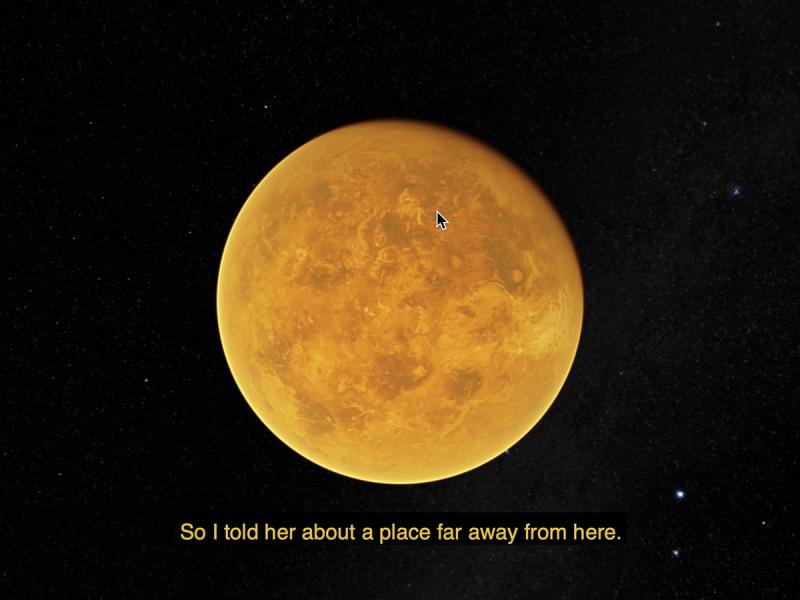
© In Flanders Fields (Sachin, 2024)
In Flanders Fields (Sachin, 2024)

A Voice For The Ghosts

Sachin’s In Flanders Fields

article by
Eneos Çarka
13.08.2025

In Flanders Fields is a ghost story. Directed by Rajasthan-based filmmaker Sachin, the short film is a poetic meditation on war, colonial erasure, and ancestral presence in foreign land. The director introduces us to a rarely acknowledged fact in dominant historical narratives: during the First World War, as many as 1.4 million Indians were conscripted by the British and sent to the frontlines in Flanders. This revelation sets the stage for a cinematic elegy to those forgotten men.

Using letters, archival photographs, and overlaying voices (including his own), the filmmaker crafts a slow, spectral narrative. Indian soldiers appear imposed onto the land they died for as silhouetted, grainy images—ghostlike—fusing the past and present into one unresolved image. The Flemish landscape becomes a field of memory, ephemeral, lightly dusted with snow. “How does one become a ghost?” asks the voice-over in the film’s opening, promising a reflection on the matter. The answer emerges gradually: the filmmaker’s voice reads fragments of letters from an anonymous soldier. He is not a narrator, but a medium that revives voices long buried.

The cutout photographs of soldiers that overlay present-day scenery and the measured pace of the soundscape suggest a refusal to let the past settle. But no closure is offered here, only echoes of existence mixed with folk songs and words suspended in the winter air. It is not an attempt to reconstruct what can’t be recovered, but rather a meditation. Doing so, In Flanders Fields becomes less a film about remembering war, but more about how we preserve history. This is a quiet, powerful act of mourning. These ghosts don’t haunt; they are waiting to be seen.

In Flanders Fields has no interest in detailing a historical account but instead chooses resonance over information. By embracing the slowness and stillness of spirits, it pays respect to these forgotten souls. It invites viewers to linger, to listen, and to imagine the texture of history not through facts alone, but through a cinematic revival. The result is a hybrid work that is part film, part installation, part invocation, blending documentary fragments, poetic voiceovers, and visual collages. This approach allows Sachin to explore history as a layered experience that feels deeply personal, his voice an intimate bridge between anonymous pasts and personal memory, as if reclaiming kinship with the long-forgotten.

In Flanders Fields reminds us that colonial violence is not a closed chapter, but an ongoing structure. The film’s meditation on land haunted by memory resonates strongly today in a world still marked by displacement, occupation, systematic destruction, and historical denial. In this light, Sachin’s film is a call to recognise those whose histories are being buried, whose landscapes are being rewritten, and whose voices we still fail to hear.

    Bio Eneos Çarka

    Eneos Çarka is a filmmaker, curator, and researcher. His films have screened at numerous festivals, galleries, and cultural events such as IDFA, HotDocs, FIPADOC, where he received the Tënk Award, Los Angeles Filmforum, Venice Architecture Biennale, and more. He received the FIPRESCI Award in 2023 for his MFA film The Silence of The Banana Trees and served as a Jury Member in the IDFA Competition for Youth Documentary in 2022. His first feature documentary, Another Day, debuted in the IDFA Luminous section in 2023, where it received a Best First Feature Nomination as well as the main award at DokuFest. He is an alumnus of the DocNomads MFA programme in Creative Documentary and is currently developing his second feature, a hybrid docufiction. 

    read more

    © Untitled III (Sarah Pucill, 2001)
    Untitled III (Sarah Pucill, 2001)
    interview
    Read more

    Folding Time

    On Sarah Pucill’s Surrealism

    Laura Stoeckler
    23.08.2025

    Over the last thirty years, Sarah Pucill’s films have shown a sustained engagement with feminist politics, surrealist aesthetics, and the material language of cinema. Her work is connected by a visual and conceptual vocabulary that keeps evolving. Figures, motifs, and techniques reemerge—the principle of continuity is key to understanding how the artist’s work coheres, drawing strength from its self-reflection.

    Read more
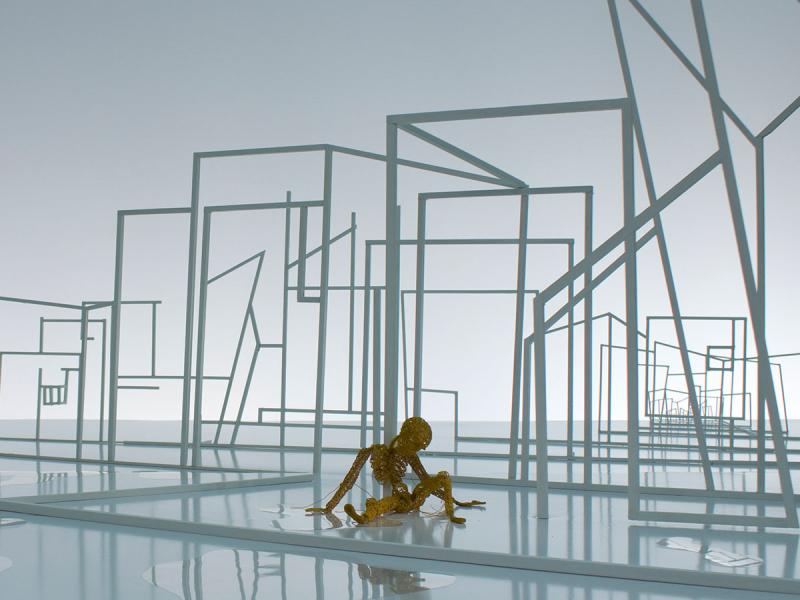
    Da-dzma (Jaro Minne, 2019)
    Da-dzma (Jaro Minne, 2019)
    essay
    Read more

    The Last Winter

    Jaro Minne’s Da-dzma

    Savina Petkova
    30.05.2025

    In his work, Belgian director Jaro Minne frequently explores the crossovers between East and West. He spent time in Georgia, resulting in the photography series “Passenger”, interested in the human face and the human scale of things in an overwhelming world. Rather painterly aesthetics are used to subtly convey a socio-political point. In Da-Dzma, Minne does something similar: through sparse compositions, little dialogue, and minimal sound design, the short lets us peek into a world of feelings one frame at a time.

    Read more
    Henry is a Girl Who Likes to Sleep (Marthe Peters, 2026)
    Henry is a Girl Who Likes to Sleep (Marthe Peters, 2026)
    article
    Read more

    In the Bosom of Images

    Marthe Peters’ Henry is a Girl Who Likes to Sleep (2026)

    Öykü Sofuoğlu
    31.03.2026

    Henry is a Girl Who Likes to Sleep finds the filmmaker once again looking back at herself, this time by orienting her gaze toward her beloved cat, the titular Henry—a chubby white feline with tricoloured splotches on her fur. Throughout the film, Marthe Peters delivers a playful voice-over addressed to Henry, drawing comparisons between their bodies, their unique habits and traits, while also questioning the love and affection she may be burdening her cat with.

    Read more
    Paradise (Laura Vandewynckel, 2014)
    Paradise (Laura Vandewynckel, 2014)
    essay
    Read more

    Impassable Gates

    Laura Vandewynckel’s Paradise (2014)

    Najrin Islam
    13.06.2026

    In five minutes, Paradise scans what determines movement for racially distinct peoples. Borders seek to contain, and any transgressions are preemptively curbed through restrictive legislation or bureaucratic rigmarole. As architect and researcher Shahram Khosravi and Mahmoud Keshavarz point out in their article, “The Magic of Borders”, border fortifications—materialised through visa protocols, military operations, or propaganda media—facilitate mobility for the white traveller as much as they restrict it for racialised refugees.

    Read more
    she asked me where i was from (Aulona Fetahaj, 2020)
    she asked me where i was from (Aulona Fetahaj, 2020)
    essay
    Read more

    Digital Roots

    Aulona Fetahaj’s she asked me where i was from

    Irina Trocan
    05.05.2023

    The story builds slowly and elliptically in the filmmaker’s spontaneous exploration, using digital visualization tools and the personal photo archive on her Mac. There is the bulk of automatically named .jpg files from a wedding. Everyone always goes back to their hometown for weddings. Some of these photos have a sort of tactility to them. Someone took care to put them in a frame, or else they, by themselves, have that power – the very easy-to-guess story behind the image draws you into the frame until it’s three-dimensional and surrounds you. An Eastern European village house, destroyed by a shell projectile, testament to the dissolution of Yugoslavia.

    Read more
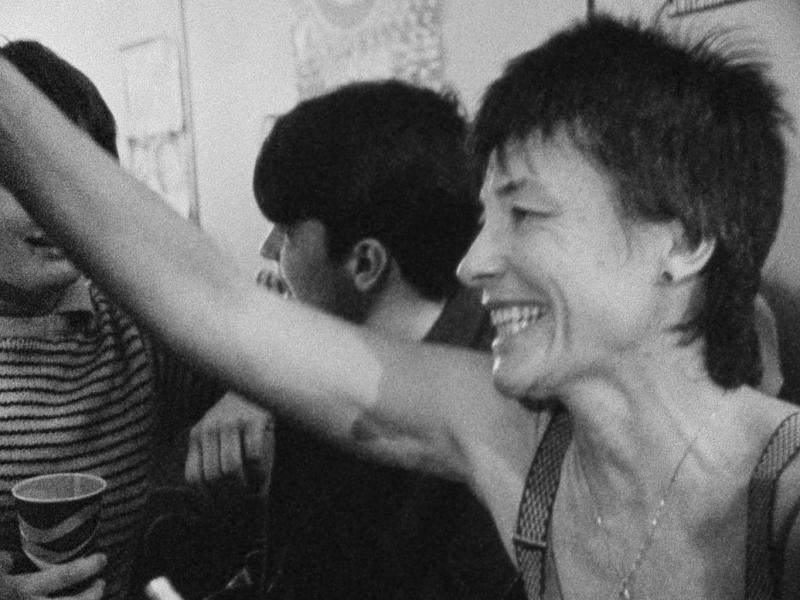
    Audience (Barbara Hammer, 1982)
    Audience (Barbara Hammer, 1982)
    essay
    Read more

    Dead, I Won’t Be Forgotten

    Barbara Hammer’s Legacy

    Carmel Curtis
    05.10.2026

    The five works in Film Fest Gent’s Barbara Hammer: A Short Film Retrospective, presented in collaboration with yanco and Art Cinema OFFoff, span thirty-five years and together they demonstrate a pattern in Barbara’s work: no disguise. What she felt in her own body and what she showed on screen were often the same sensation, not translated but transmitted. In that transparency, her personal vulnerability can expand outward into something universal that extends beyond the individual body and beyond the screen.

    Read more
    © Ramallah, Palestine, décembre 2018 (Juliette Le Monnyer, 2025)
    Ramallah, Palestine, décembre 2018 (Juliette Le Monnyer, 2025)
    article
    Read more

    Agents of Control

    Juliette Le Monnyer’s Ramallah, Palestine, décembre 2018

    Ren Scateni
    16.09.2025

    Juliette Le Monnyer’s Ramallah, Palestine, décembre 2018 (2025) wants us to bear witness. Within a tight ten-minute running time, this minimalist film unfolds as a controlled documentation of one moment of colonial violence during Israel’s occupation of Palestine—almost unremarkable in its sickening mundanity, even tame when compared to the genocidal atrocities livestreamed over the last twenty-three months.

    Read more
    Noonlight (Kayt Schneider, 1991)
    Noonlight (Kayt Schneider, 1991)
    essay
    Read more

    Wandering through the Intimate Public

    Kayt Schneider’s Noonlight (1991)

    Tianyu Jiang
    15.09.2025

    There’s something mesmerising about a bustling open-air market in a metropolis. Its space is shaped by loudness, tangled in the flux of languages and accents. Visually, colours spill across the full spectrum, as their vibrancy fuels commerce and connection. In Noonlight (1991), Kayt Schneider turns an ordinary walk through Brussels’s Zuidmarkt into a quiet study of the subtle dynamics between people, the city, and time. The gritty 16mm imagery, layered over the market’s constant white noise, leads us into a past that feels uncannily familiar.

    Read more

    Subscribe to our monthly newsletter for updates on new releases, publications, and events!

    Subscribe

    yanco is a magazine and streaming library for short-form moving image

    kortfilm.be vzw
    Boondaalse Steenweg 249
    1050 Elsene
    BE 0478 441 315
    info@yanco.be

    with the support of the Flanders Audiovisual Fund (VAF) of the Flemish Government

    VAF
    • about
    • colophon
    • privacy policy
    Facebook Instagram LinkedIn YouTube Letterboxd
    design by de Ronners
    website by eps en kaas