yanco Home
Menu
  • Home
  • watch
  • magazine
  • calendar
  • index
  • Subscribe
Search Log in
  • nl
  • en
You are here
  • Home
  • Magazine
  • The Beaches of Atopia
Atopia (Olivier De Vos, 2021)

The Beaches of Atopia

Olivier De Vos’s Atopia (2021)

essay by
Ren Scateni
20.12.2023

For gender non-conforming people, the rigid normative cage of gender binarism means a continuous fight against ever-tightening ropes, ever-crushing cogs, and ever-dimming hopes. Legal documents parade deadnames and assigned-at-birth genders, access to gender-affirming care is limited, and daily microaggressions spell out society’s necessity to uphold exclusionary standards. However, resilience is innate to queer individuals. To succumb would mean for cis-heteronormativity to win. To resist means to reappropriate our own narratives and, through it, to carve out pockets of reality for us to be free. Olivier De Vos’s meditative and reflexive video poem Atopia exemplifies this radical and affirmative posture.

Through a multilayered construction of archive materials, digitised as well as contemporary pictures, and original footage, De Vos charts their journey to the beaches of Atopia—a placeless place, brimming with both mesmerising potentiality and impossibility, a place you could be homesick for without being able to locate it exactly. As elusive as this promised land it invites viewers to, Atopia refuses easy classifications and finds a transitory place between fiction and documentary, between imagined ethnographic investigation and a research-led use of archival videos and photos to back up De Vos’s personal cognitive meanderings.

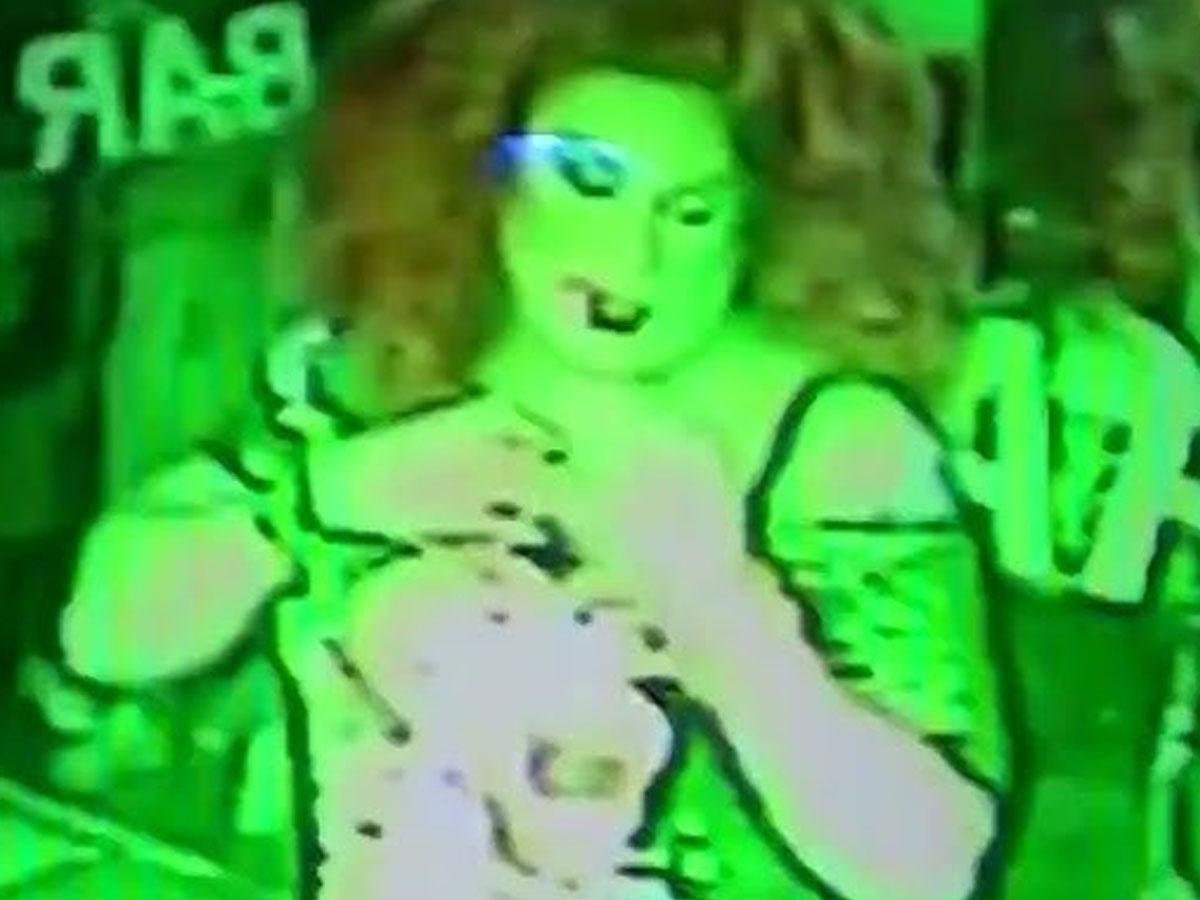
Interestingly, Atopia draws from the beach as a crucial locus for queer communities. Traditionally associated with spaces for gay men to meet and cruise, beaches have long been featured as queer places in art, film, and photography alike. In British painter Henry Scott Tuke’s work, for instance, the beach exists as a homo-utopian space where the bodies of young men are crystallised in a never-withering beauty that is at the same time immobile, vigorous, and disturbingly melancholic. In Atopia, however, the patch of sand and water allows for wider body representations and gender fluidity to seep through. During a magnetic, slightly blurred seaside sequence, the beach of Atopia manifests an alternative to the gender binary—a porous, in-between or all-encompassing understanding of liquid gender identity captured in a suggestive circular frame.

“Words do not look like the things they designate,” reads a quote from French philosopher Maurice Merleau-Ponty opening Atopia. Moving from here, De Vos’s astute use of archival materials—pictures and recorded interviews of unspecified sources—invites an onto-epistemological reading of the film. That is, De Vos’s film balances between polarised realms—in this case, the ontological, what a thing is, and the epistemological, what we understand a thing to be—alternatively seeking connections and disconnections. These reflections culminate in the film’s most achingly beautiful sequence featuring De Vos themself naked, their genitals tucked, wearing only some makeup and an azure wig while they confidently and sensually sit on the floor. Mere moments before, another person, naked and tucked, similarly sitting in their wig and makeup, accompanies De Vos’s commentary, “I’m making the man clear that the person on the screen is not a ‘dude’ but a woman, or not even that. Afraid of my cover being blown and revealing to him my longing for fluidity, I just sigh.”

The perceived incongruence between what society wants us to think our body signifies and our personal reading of our own gender as a superimposing marker disconnected from flesh and bones ultimately harbours Atopia’s meaning. Through archival manipulation and a visionary quest to find a place that is other, ineffable, and idealised, De Vos embarks on an experiment akin to myth-making. When language oppresses, resisting classification means ultimately resisting control.

Read more

Atopia

Olivier De Vos, Belgium, 2021, 18’

An introspective essay about the search for a place between reality and imagination: a placeless place made up out of dreams and a longing for fluidity. Slowly, the grains of the compressed image become the sands of the atopic beach, revealing an imaginary place.

Read more

    Bio Ren Scateni

    Ren Scateni is a film curator and writer whose practice embraces experimental works and artists’ moving image that explore the interstices of political, disruptive, and liminal identities. His writing has appeared in various art and film magazines, including ArtReview, Hyperallergic, and Sight and Sound. Ren is currently Curatorial Lead at Glasgow Short Film Festival and has been/is working across curation, consulting, editing, mentoring, and PR for festivals, cultural organisations, and companies, including Berwick Film & Media Arts Festival, Queer East, Festival du Nouveau Cinéma, BFI Doc Society, and Square Eyes. Ren is a Trustee of Alchemy Film & Arts.

    read more

    © Onde o Verão Vai (episódios da juventude) (David Pinheiro Vicente, 2018)
    artikel
    Read more

    De Portugese ‘saudade’ ontkracht?

    Michiel Philippaerts
    18.05.2020

    Welke (kort)filmmakers treden in de voetsporen van hun landgenoten en grootmeesters Miguel Gomes & Pedro Costa? Een focus op Portugese cinema tijdens de 66e editie van Kurzfilmtage Oberhausen biedt (misschien) antwoord.

    Read more
    Saute ma ville (Chantal Akerman, 1968)
    Saute ma ville (Chantal Akerman, 1968)
    artikel
    Read more

    Preludes van een visionair

    Chantal Akermans La Chambre (1972) en Saute ma ville (1968)

    Inge Coolsaet
    27.05.2021

    In haar vroege kortfilms tekende Chantal Akerman, moedwillig maar ook onbewust, de contouren van haar eigen toekomst uit. Alle fundamenten van haar oeuvre, vormelijk en inhoudelijk, werden er gezet.

    Read more
    © White Cloud / 白云 (Emmanuel Van der Auwera, 2023)
    White Cloud / 白云 (Emmanuel Van der Auwera, 2023)
    article
    Read more

    White Clouds in a Dark Age

    Emmanuel Van der Auwera’s White Cloud / 白云

    Ive Stevenheydens
    28.07.2025

    In this so-called post-truth era, the line between fact and fiction has blurred into a matter of style: what appears plausible is accepted as real. The rise of generative artificial intelligence has not merely accelerated this disintegration but formalised it. Truth is no longer something to be discovered, but something to be produced. Within this context, White Cloud / 白云 by Emmanuel Van der Auwera functions as a case study of the destabilisation of truth, image, and representation.

    Read more
    Ours is a Country of Words (Mathijs Poppe, 2017)
    Ours is a Country of Words (Mathijs Poppe, 2017)
    article
    Read more

    Recurring Dreams

    Mathijs Poppe’s Ours is a Country of Words (2017)

    Yara Yuri Safadi
    20.09.2025

    The voice-over of a man with a Palestinian accent informs viewers that they are watching a “film”, highlighting the artifice of the images while also linking it to the reality of the Nakba. The man’s voice situates us as viewers within an imagined future, one “in which Palestine is free again.” Ironically, we watch this film in 2025, amidst the ongoing genocide in Gaza and the ethnic cleansing and apartheid in the West Bank. Juxtaposed with the harsh realities of the genocidal present, Ours is a Country of Words’s sci-fi-like imagination shows the desire for a future that is increasingly fought for. As the first dialogue unfolds, we are invited into this brighter future: Palestine is liberated, and refugees can return.

    Read more
    +6 Gain (Jorn Plucieniczak, 2019)
    +6 Gain (Jorn Plucieniczak, 2019)
    article
    Read more

    Sound Bath

    Jorn Plucieniczak’s +6 Gain (2019)

    Ben Flanagan
    20.02.2024

    Plucieniczak is searching for the spiritual in the notion of Living For The Weekend, and as it gets closer, the colours are further enveloping, pink turning to red. Strobes flicker on Martens’ bald head. His body is out of focus, camera swerving left and right; it’s full Irréversible; the music begins to swoosh in, a trance banger waiting patiently to drop. But instead, we cut into the lounge.

    Read more
    © La Chambre (Chantal Akerman, 1972)
    La Chambre (Chantal Akerman, 1972)
    article
    Read more

    A Room of Her Own

    Chantal Akerman’s La Chambre

    Öykü Sofuoğlu
    17.11.2024

    Lounging on a small bed, Chantal Akerman’s posture seems casual and relaxed at first glance, but the repetitive tilts of her head—to the left and then back to center—contrasting with the smooth glide of the camera suggest otherwise. Restlessness is in the air, yet before we can discern it, the image is already on the move, retracing its steps for a second time.

    Read more
    Portret van Marcel Broodthaers (1972, Düsseldorf) © Joaquim Romero Frías
    artikel
    Read more

    Ceci ne serait pas du cinéma: de films van Marcel Broodthaers

    Jan Sulmont
    24.05.2023

    Een inkijk in het filmische werk van de Belgische poëet en kunstenaar Marcel Broodthaers (1924-1976), dit jaar postuum een eregast van het Internationale Kurzfilmtage Oberhausen.

    Read more
    Meander (Joke Liberge, 2005)
    Meander (Joke Liberge, 2005)
    essay
    Read more

    The In-Between

    Joke Liberge’s Meander (2005)

    Boet Meijers
    20.07.2026

    As on any successful summer’s day, close to nothing happens. The boys compete for the girls’ attention, while the girls, for their part, see them as nothing more than little brothers. Still, they do steal glances from one another. This emptiness contrasts with a wealth of sensory experiences: gentle breezes rustling through the treetops, feet on wooden decking and a summer sun generously casting its light over everything—all of which make the season feel like the protagonist, so tangibly rendered on the big screen. But unlike how such an afternoon would actually sound, Meander is devoid of dialogue.

    Read more

    Subscribe to our monthly newsletter for updates on new releases, publications, and events!

    Subscribe

    yanco is a magazine and streaming library for short-form moving image

    kortfilm.be vzw
    Boondaalse Steenweg 249
    1050 Elsene
    BE 0478 441 315
    info@yanco.be

    with the support of the Flanders Audiovisual Fund (VAF) of the Flemish Government

    VAF
    • about
    • colophon
    • privacy policy
    Facebook Instagram LinkedIn YouTube Letterboxd
    design by de Ronners
    website by eps en kaas