yanco Home
Menu
  • Home
  • watch
  • magazine
  • calendar
  • index
  • Subscribe
Search Log in
  • nl
  • en
You are here
  • Home
  • Magazine
  • Images in Fracture
Your Father Was Born 100 Years Old, and So Was the Nakba (Razan AlSalah, 2017)

Images in Fracture

On “Reclaiming Archives”

essay by
Arta Barzanji
11.05.2026

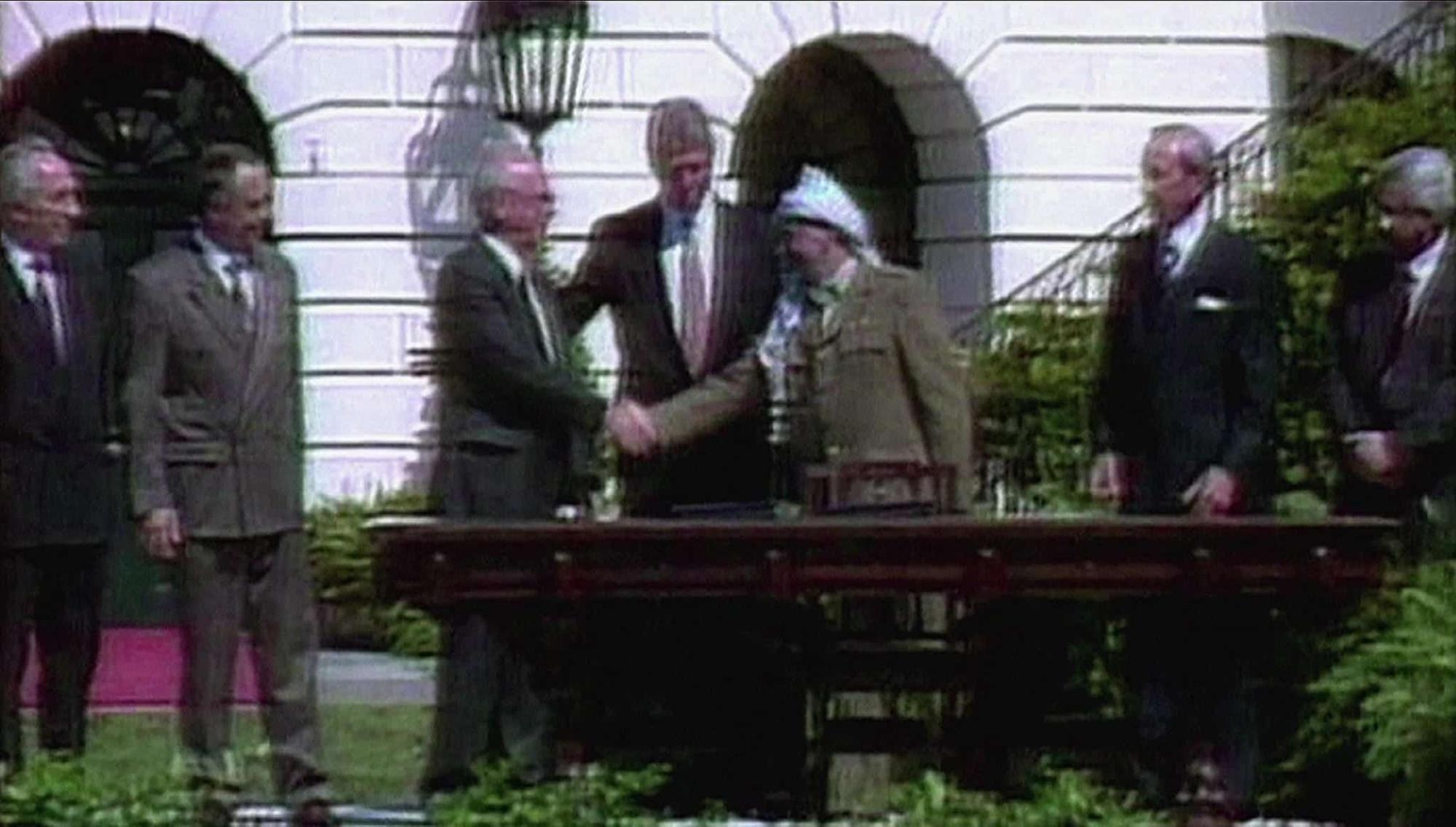
The image repeats: Yasser Arafat and Yitzhak Rabin clasp hands under the watchful gaze of Bill Clinton on the White House lawn. Each time, the camera moves closer, as if proximity might reveal something more. By the final repetition, the frame has closed in on only their hands —locked together, suspended between contact and constraint. On the soundtrack, Edward Said speaks of the Oslo Accords as a “Kafkaesque” arrangement that transformed political struggle into a managed appearance. The image promises peace, but does not deliver it.

This opening gesture in 20 Handshakes for Peace (2014) by Mahdi Fleifel sets the terms for “Reclaiming Archives”, a programme in which images—official, historical, and digital—no longer function as stable records of the past. Instead, they appear as sites of staging, distortion, and loss. The films approach archives through their gaps and distortions. Found footage is shown as incomplete and shaped by the systems that produced it.

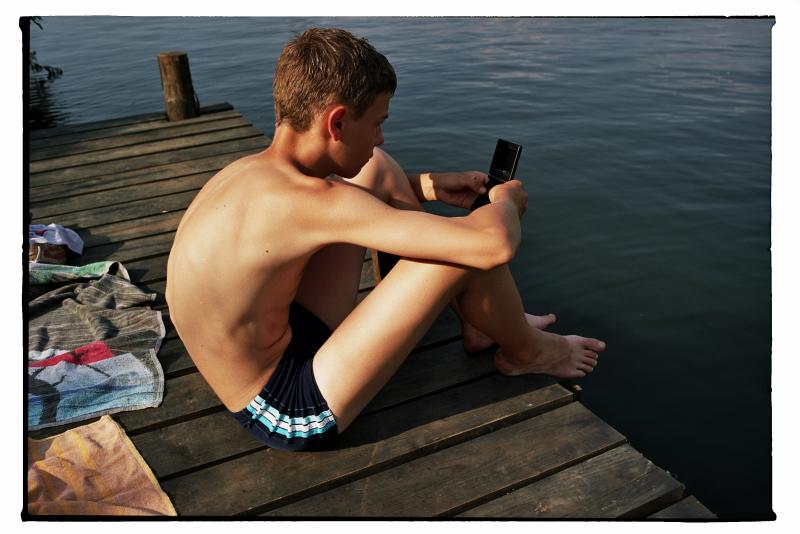
If Fleifel’s film reveals the political image as performance, The Motherfucker’s Birthday (2023) by Saif Alsaegh extends this logic through juxtaposition and excess. Archival images of Saddam Hussein—his portraits, his spectacles of authority—are set against scenes of forced celebration and brutal repression. The soundtrack slips between tenderness and violence, never settling into a stable register. A soft Arabic song accompanies the beating of prisoners; elsewhere, the voice of George W. Bush announcing the invasion of Iraq cuts across images of dance and festivity. The film culminates in a surreal pairing: Hussein and Bush dancing, cut together under the saccharine familiarity of “Sweet Caroline” (1969) by Neil Diamond. The sequence is disturbing rather than merely ironic. It suggests that political power often turns violence into spectacle, making domination appear familiar or even entertaining. Like the repeated handshake, these are not images that conceal reality so much as organise it—structuring how it can be seen, felt, and ultimately misrecognised.

watch now

Read more

The Motherfucker’s Birthday

Saif Alsaegh, Iraq, USA, 2024, 6’

Through dancing, The Motherfucker’s Birthday shows the evil of the dictator and the horror people endure under powerful political leaders. The film presents dancing, a universal and uniquely human activity often representing joy, with eerie footage of Saddam and his sons’ torture tools while they dance.

Read more
20 Handshakes for Peace (Mahdi Fleifel, 2014)

Yet not all the films operate through rupture or détournement. In 9 Days: From My Window in Aleppo (2015) by Issa Touma, Floor van der Meulen and Thomas Vroege, and The Flowers Stand Silently, Witnessing (2023) by Theo Panagopoulos, the image does not assert itself so forcefully. It endures. Touma’s fixed vantage point—looking down from an apartment window onto a street that gradually becomes a frontline—imposes a strict visual limit. Filmed in Aleppo during the Syrian civil war, at a moment when state authority and political allegiances appeared increasingly unstable, the film registers a moment in which categories of power and allegiance are still in flux. The camera remains suspended above the action, registering shifts in control, language, and perception. A young soldier takes cover at a corner; moments later, we hear a gunshot, and he is dragged away, the frame briefly disoriented before returning to its original position. The street remains the same.“I don’t want to film the war any longer,” he concludes. The image persists, but its capacity to resolve meaning collapses.

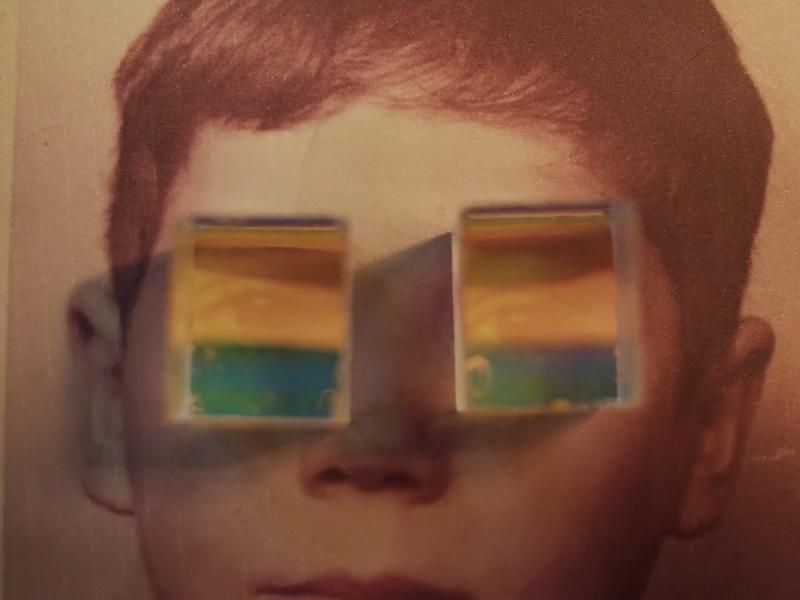
A different form of insufficiency emerges in Panagopoulos’s reworking of early colour footage of Palestine, shot under the British Mandate. The original films, with their vivid flowers and composed landscapes, appear at first as benign documents. But the intervention unsettles this surface. Through text, sound, and digital manipulation, the film exposes what these images omit: the structures of power that enabled their production. “These images of flowers hid violence in beauty,” the text reads. “The archive can’t hold my grief.” The sound design—low, continuous hums punctuated by dark tonal shifts—refuses to naturalise the images. The frame becomes unstable, punctured by zooms, freezes, and shifts in perspective, as if the image itself were unable to sustain the weight placed upon it. A boy meets the camera’s gaze; the film responds by fragmenting the image further, enlarging its grain until recognition gives way to abstraction. Here, the archive is not corrected or reclaimed. It is shown to be structurally inadequate.

At times, however, the programme risks becoming so focused on ambiguity and fragmentation that historical analysis recedes into atmosphere and mood, replaced by a more diffuse, subjective experience of the archive.

Arta Barzanji

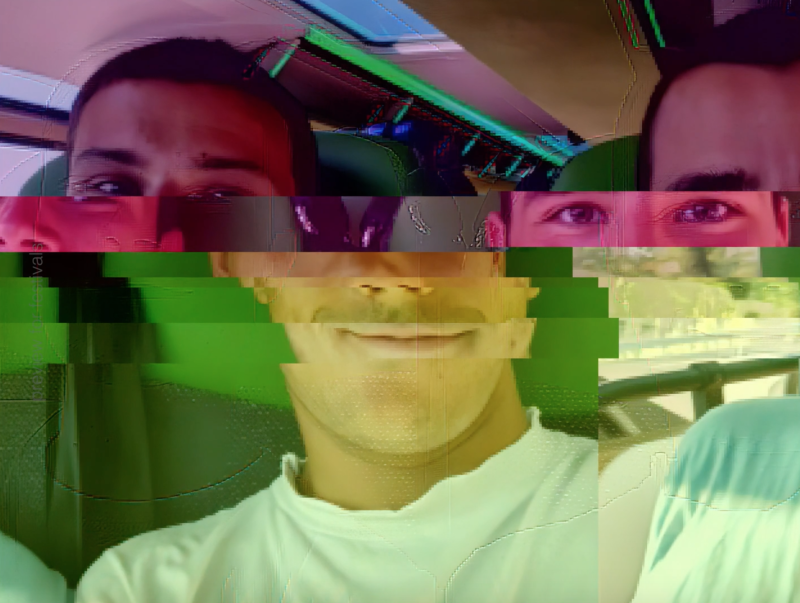
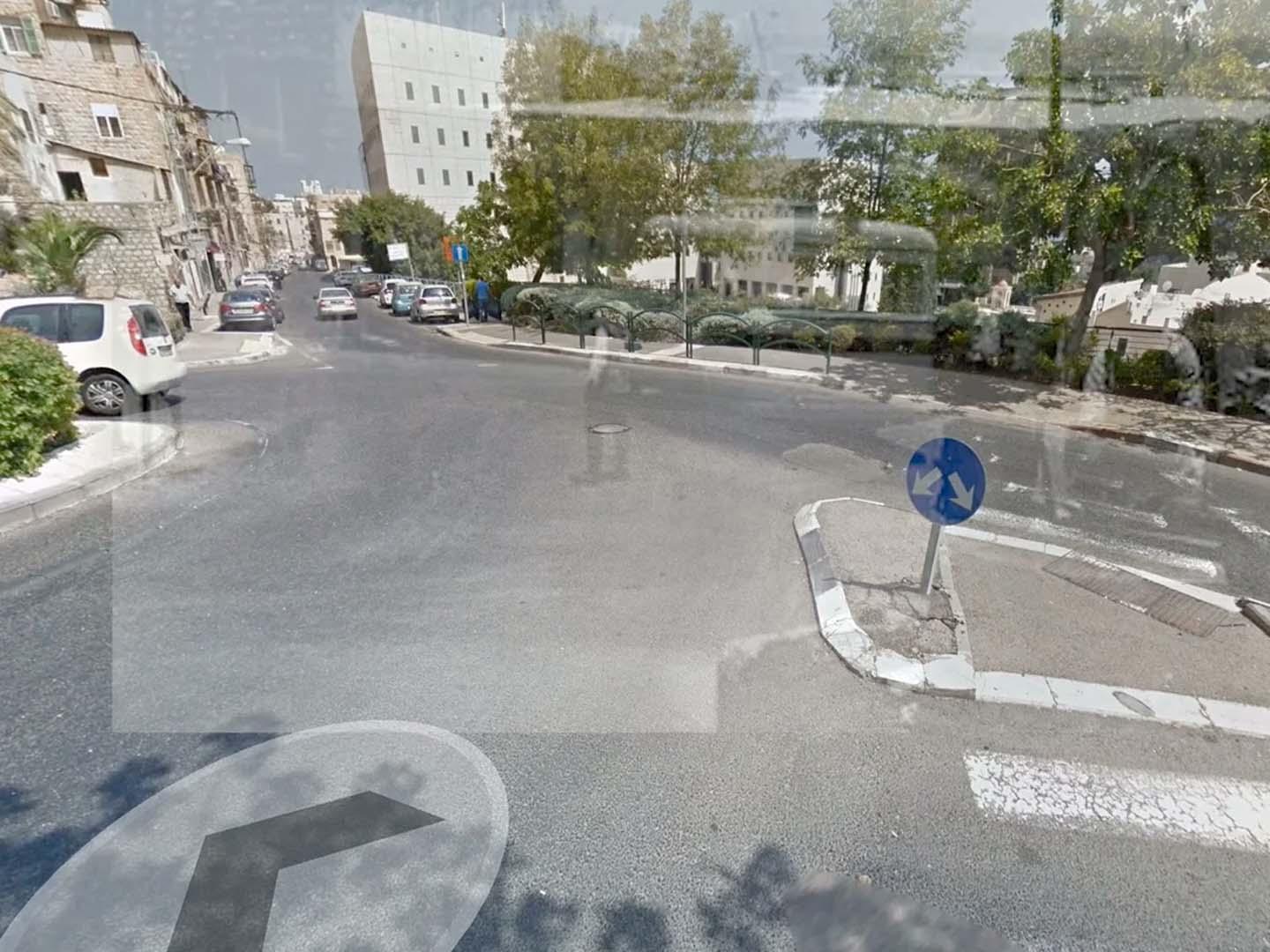
In Razan AlSalah’s film, the archive takes the form of Google Maps. Your Father Was Born 100 Years Old, and So Was the Nakba (2017) uses Street View as a contemporary archive: a continuous, navigable surface assembled from countless photographic fragments. The film moves through this space in search of a specific location—a well, a birthplace, a site bound to both personal memory and the history of the Nakba. Yet this movement is repeatedly frustrated. The image glitches, stretches, and resists coherence. The voiceover calls out to figures from the past, attempting to summon them into the present—“Ameen, Ameen, dear”—but receives no response. Even as the camera moves, it cannot arrive. Visibility does not produce recognition; access does not yield presence. The digital archive expands infinitely, yet remains fundamentally inaccessible.

A similar dislocation shapes And How Miserable Is The Home of Evil (2023) by Saleh Kashefi, in which Ali Khamenei appears suspended within an abstract, indeterminate space. The setting evokes both a prison and an afterlife—an environment that expands while denying any stable coordinates. Here, the figure of authority is isolated, diminished, and estranged. Around him, the soundtrack carries echoes of protest, violence, and collective suffering—distorted and detached from any identifiable source. If earlier films expose the constructed nature of political images, Kashefi’s work pushes further: it removes the image from any recognisable world, leaving it to drift in a space where representation itself begins to dissolve.

Across “Reclaiming Archives”, then, the archive does not emerge as something to be restored, but as something to be confronted. These films take the incomplete and conditional nature of the archive as a starting point, working within its gaps, distortions, and silences. At their strongest, they reveal how images are shaped by the conditions of their production and circulation, and how those conditions persist within them.

At times, however, the programme risks becoming so focused on ambiguity and fragmentation that historical analysis recedes into atmosphere and mood, replaced by a more diffuse, subjective experience of the archive. This tendency reflects a broader artistic condition shaped, in part, by the aftermath of political defeats and stalled revolutionary possibilities across the region: from the co-option and repression of movements that emerged around 2011, to the longer histories of colonial dispossession and authoritarian rule addressed by the films. In such a context, art can appear more capable of refusal and reflection than collective imagination or projection. The archive becomes less a field to be investigated than a space to be inhabited.

What remains, then, is a tension that the programme does not fully resolve. On one hand, these films insist that images cannot be taken at face value—that they are structured by absence, mediation, and power. On the other hand, they risk treating this condition as an endpoint rather than a starting point. The most compelling works here resist that closure. They do not simply declare the limits of representation as an endpoint; they test those limits, pushing images to the point where their contradictions become visible. What emerges is not the recovery of history, but the persistence of its fracture: an archive that continues to circulate, even as its capacity to represent what it claims is steadily undone.

    “Reclaiming Archives” was co-curated by Kortfilmfestival Leuven and yanco and first screened in December 2025 as part of the festival’s strand on militant cinema. A re-run of the programme will take place on May 21 at Cinema ZED Leuven.

    Bio Arta Barzanji

    Arta Barzanji is an Iranian filmmaker, critic, curator, and lecturer based in London. He is an AHRC-funded PhD candidate at the University of Roehampton, where his practice-based research focuses on film criticism and dialectical thought. He is an alumnus of the critics’ programmes at the Locarno and Ghent Film Festivals, and his writing—in both Farsi and English—has appeared in outlets such as Cineaste, MUBI Notebook, Sabzian, and Documentary Magazine. Arta’s forthcoming academic publications include an essay for Routledge Resources Online and a book chapter for Edinburgh University Press.

    As a curator, Arta has collaborated with ...

    Subscribe to our monthly newsletter for updates on new releases, publications, and events!

    Subscribe

    yanco is a magazine and streaming library for short-form moving image

    kortfilm.be vzw
    Boondaalse Steenweg 249
    1050 Elsene
    BE 0478 441 315
    info@yanco.be

    with the support of the Flanders Audiovisual Fund (VAF) of the Flemish Government

    VAF
    • about
    • colophon
    • privacy policy
    Facebook Instagram LinkedIn YouTube Letterboxd
    design by de Ronners
    website by eps en kaas